Unlocking Clues: A Comprehensive Guide to Crime Scene Search Methods

July 29, 2025 by Advocate Abhishek GandhiListen

Table of Contents

Introduction

In the pursuit of justice, the crime scene represents both the origin of the mystery and the potential solution to it. It is a silent witness to the crime, holding vital clues that can either exonerate the innocent or incriminate the guilty. The methods used to search and process these crime scenes form the cornerstone of modern criminal investigations. This article provides a detailed exploration of crime scene search methods, their significance, types, procedures, and relevance in Indian criminal jurisprudence.

Whether you are a law student, forensic science enthusiast, criminal lawyer, or an informed citizen, understanding these methods offers a fascinating look into the backbone of investigative work.


What Are Crime Scene Search Methods?

Crime scene search methods refer to systematic procedures followed by investigators to locate, collect, preserve, and document physical evidence from a crime scene. The effectiveness of an investigation hinges greatly on how meticulously the scene is examined. A compromised search may lead to crucial evidence being overlooked or contaminated, potentially affecting the trial’s outcome.

Objectives of Crime Scene Search

  • To identify and preserve physical evidence
  • To establish the sequence of events
  • To link suspects, victims, and witnesses
  • To support or refute witness testimony
  • To assist in the reconstruction of the crime

Phases of Crime Scene Investigation

Before diving into search methods, it’s essential to understand the broader phases that encompass the crime scene investigation:

  1. Securing and Isolating the Scene
  2. Preliminary Survey
  3. Documentation (photography, sketching, notes)
  4. Systematic Search for Evidence
  5. Collection and Packaging of Evidence
  6. Final Survey
  7. Release of the Scene

The fourth step—systematic search—is where crime scene search methods play their most critical role.


Types of Crime Scene Search Methods

There is no universal technique applicable to every scene. The method chosen depends on the location, type of crime, available personnel, and complexity of the scene.

1. Grid Method

The grid search method involves the scene being searched twice in perpendicular directions, forming a grid. It is highly effective for large, open areas where evidence like shell casings, fibers, or footprints might be dispersed.

Best used for: Outdoor homicide scenes, post-blast scenes, or large-scale assaults.

Advantages:

  • Increases the likelihood of locating minute evidence
  • Offers double coverage

Disadvantages:

  • Time-consuming
  • Requires more personnel and coordination

2. Spiral Search Method

The spiral method involves a single officer starting from a central point and moving outward (or vice versa) in a spiral path. This method is less structured but sometimes necessary when only one investigator is present.

Best used for: Limited personnel scenarios, underwater searches, or small indoor scenes.

Advantages:

  • Simple and can be conducted by one person
  • Useful in confined spaces

Disadvantages:

  • Risk of uneven coverage
  • Challenging in cluttered environments

3. Strip (or Line) Search Method

Investigators walk in parallel lines across the scene, typically used in large open areas such as fields or parking lots.

Best used for: Outdoor crime scenes, search for large objects (like weapons).

Advantages:

  • Systematic and easily supervised
  • Suitable for large areas

Disadvantages:

  • Less effective for small or hidden evidence
  • Requires more manpower

4. Zone (Quadrant) Search Method

The area is divided into zones or quadrants, each assigned to a team or individual. Each section is searched independently using any of the above methods.

Best used for: Indoor scenes, vehicles, multiple-room houses.

Advantages:

  • Allows division of labor
  • Facilitates focused searching in complex areas

Disadvantages:

  • Requires efficient coordination
  • May cause overlap or missed areas if not properly managed

5. Wheel (or Radial) Search Method

Searchers start from a central point and move outward in straight lines, like spokes of a wheel.

Best used for: Small circular areas, such as intersections or blast centers.

Advantages:

  • Central point covered thoroughly
  • Useful for locating origin points

Disadvantages:

  • Gaps between the “spokes” can lead to missed evidence
  • Not ideal for large areas

Modern Tools Enhancing Crime Scene Searches

Technology has revolutionized traditional search methods. While manual techniques remain foundational, modern tools supplement them:

1. Drones

Used for aerial photography of large or inaccessible areas—especially in outdoor crime scenes.

2. 3D Laser Scanning

Helps create a virtual model of the scene, allowing for detailed review later.

3. Alternate Light Sources (ALS)

Used to identify biological fluids, fibers, or residues not visible under normal lighting.

4. Metal Detectors and Ground Penetrating Radar (GPR)

Useful for locating buried weapons, bullets, or human remains.


Key Principles in Crime Scene Search

Regardless of the method used, several guiding principles must be followed:

1. Locard’s Exchange Principle

Every contact leaves a trace. Investigators work on the presumption that the criminal has brought something into the crime scene and taken something from it.

2. Preservation of the Scene

No one enters without authorization. Contamination must be minimized.

3. Systematic Approach

The scene must be approached methodically to prevent overlooked evidence.

4. Chain of Custody Maintenance

Each item of evidence must be documented, labelled, and tracked to ensure its integrity in court.


Application in Indian Legal Framework

In India, the Code of Criminal Procedure (BNSS now), Bharatiya Nyaya Sanhita (BNS), and Indian Evidence Act (renamed as Bharatiya Sakshya Adhiniyam) do not prescribe a specific crime scene search method but emphasize evidence collection, documentation, and admissibility.

Relevant Provisions:

  • Section 173 BNSS – Police report must include details of the scene and collected evidence.
  • Section 62 BSA (Bharatiya Sakshya Adhiniyam) – Emphasizes on documentary and electronic evidence.
  • Section 100 BNSS – Mandates proper procedure during search and seizure.

FSL (Forensic Science Laboratory) Involvement:
Crime scenes involving unnatural deaths, rapes, bombings, or poisoning often require FSL experts to participate in the scene search to ensure scientific methods are adopted.


Challenges in Indian Context

Despite the growing awareness and legal reforms, crime scene searches in India face the following challenges:

  • Delayed arrival at the scene due to traffic or jurisdiction confusion
  • Scene contamination by media, public, or untrained police officers
  • Lack of trained crime scene officers, especially in rural areas
  • Inadequate resources for scientific search tools
  • Improper documentation and poor chain of custody maintenance

Best Practices for Effective Crime Scene Searches

  1. Immediate Securing of the Scene
  2. Use of PPE to prevent contamination
  3. Photographic and video documentation before moving anything
  4. Labeling and preserving evidence with tamper-proof seals
  5. Cross-functional coordination between police, forensic experts, and legal officers
  6. Detailed scene notes with sketches and measurements

Case Studies Highlighting Crime Scene Search Impact

1. The Nirbhaya Case (Delhi, 2012)

Timely collection of DNA, blood samples, and CCTV footage formed the backbone of the prosecution’s case. A zone search method was primarily used across the crime vehicle and the road area.

2. Aarushi Talwar Case (Noida, 2008)

The mishandling of the crime scene, loss of evidence, and delayed forensic analysis became a textbook case for what not to do at a crime scene.


International Perspective and Indian Progress

Many developed nations have codified crime scene protocols. For example, the FBI has a Crime Scene Search Study Guide, and the UK has the National Crime Scene Strategy. India is gradually adopting these frameworks, with the Directorate of Forensic Science Services (DFSS) playing a key role in upgrading standards.

Several state police forces now have Mobile Forensic Units, and training modules on crime scene search are becoming mandatory at police academies.


Conclusion

Crime scene search methods are not mere technicalities—they are foundational to justice delivery. An efficient search may uncover the truth; a careless one might bury it forever. As forensic science integrates further into criminal litigation in India, awareness and education about these techniques become critical for all legal stakeholders.

Whether a defense advocate contesting the reliability of recovered evidence, or a prosecutor relying on blood spatter analysis, or a judge weighing the admissibility of a fingerprint report—the method of collection holds significant weight.

As India strides toward a more forensic-driven legal system, refining and standardizing crime scene search methods will be a game-changer for both law enforcement and the judiciary.


FAQs on Crime Scene Search Methods

Q1. Who is responsible for searching a crime scene in India?
The Investigating Officer (IO), often accompanied by forensic experts and photographers, is responsible for conducting the crime scene search.

Q2. Can evidence be rejected in court due to improper search methods?
Yes. If it is shown that the evidence was tampered with or collected without following proper procedures, it may be declared inadmissible.

Q3. What is the first priority upon reaching a crime scene?
Securing the scene to prevent contamination and unauthorized entry is the first and foremost priority.

Q4. Is photography mandatory before evidence collection?
Yes. Detailed photography ensures that the position and condition of evidence are recorded before being disturbed.

Q5. How are search methods taught in India?
Crime scene search techniques are taught in police training academies, forensic science courses, and during workshops conducted by forensic institutions.

Q6. Are drones legally permitted in crime scene search in India?
Yes, but their use must comply with DGCA regulations and privacy laws, and usually under official authorization.


Disclaimer: This content is generated with the assistance of artificial intelligence (AI) tools and may contain errors. The content provided herein is not intended for use in any capacity, including but not limited to legal, informational, advisory, or educational purposes, and must not be relied upon under any circumstances. All information must be verified with the original source. Consult an advocate before taking any step.


Advocate Abhishek Gandhi

Abhishek Gandhi is a practicing Advocate at the Delhi High Court and Saket Courts. The areas of practice includes Criminal Litigation – bail applications, appeals, and quashing of FIRs, NDPS, POSH, POCSO cases, Cheque Bounce (138 NI) cases, Matrimonial & Family Law – Divorce, maintenance, domestic violence cases, cybercrime, IPR- Patent, Trademark infringement, Service & Employment Law. Also an Empaneled Advocate for Pro Bono Legal Services, Department of Justice (DoJ), Government of India (Reg. No. NB/DL/2024/12280).

Related

Scene of Crime Visit Report: A Vital Document in Criminal Investigations

July 5, 2025

Trace Evidence in Criminal Trials: The Silent Witness That Speaks Volumes

July 28, 2025

Recovered Bullets in Criminal Trials: Their Role, Analysis, and Evidentiary Value

July 5, 2025CategoriesForensic Science

Ligature in Forensic Science: Unlocking the Truth Behind Strangulation Evidence

Items and Reagents for Blood Testing: Essential Components of Modern Forensic and Clinical Diagnostics


Section 138 NI Act Cases | Forensic Science Articles | Section 25 Arms Act Cases | NDPS Cases | MACT Cases

About | Career | Internship Opportunities | AOR Exam Court Forms & Proforma | Legal Blog | Privacy Policy | Sitemap


_________________________________________
Advocate Abhishek Gandhi
Mob.: 9968025517
E-45, 3rd Floor, Lajpat Nagar 1,
New Delhi 110024
contact@advocategandhi.com
Proteomics: Advancements and Applications in Forensic Science

Proteomics, the study of proteins and their interactions, is an emerging field of science that holds immense potential in understanding and managing various diseases. By analyzing the structure, function, abundance, and interactions of proteins…

Introduction

Proteomics, the study of proteins and their interactions, is an emerging field of science that holds immense potential in understanding and managing various diseases. By analyzing the structure, function, abundance, and interactions of proteins in different cells, scientists can gain valuable insights that contribute to more effective diagnostic and treatment strategies. In this article, we explore the fascinating world of proteomics, its applications in forensic science, and how aspiring researchers can embark on a rewarding journey in this field.

Understanding Proteomics

Proteomics encompasses a range of disciplines within biology, including genomics, metabolomics, and lipidomics. The term “proteome” refers to the complete set of proteins expressed in a cell or organism. Coined in 1975 when the first proteins were isolated and mapped, proteomics has evolved significantly over the years. Today, researchers can employ proteomics to study genes, genomes, protein interactions, and even gain mechanistic insights into tumor growth and metastasis.

Applications in Forensic Science

Forensic science benefits greatly from the advancements in proteomics, offering a new and powerful tool for investigating and solving crimes. While extracting proteins may pose challenges compared to DNA analysis, proteins can provide answers to questions that DNA alone cannot address.

Proteomic analysis allows scientists to detect traces of drugs or other substances in evidence, establish connections between individuals involved in a crime, and determine the age and condition of evidence left at a crime scene. By leveraging the information encoded in proteins, forensic scientists can make significant breakthroughs and bring justice to victims.

https://googleads.g.doubleclick.net/pagead/ads?client=ca-pub-6887802453600975&output=html&h=280&adk=1203224034&adf=1723636460&pi=t.aa~a.2535432194~i.13~rp.4&w=812&fwrn=4&fwrnh=100&lmt=1693396246&num_ads=1&rafmt=1&armr=3&sem=mc&pwprc=3830446624&ad_type=text_image&format=812×280&url=https%3A%2F%2Fsimplyforensic.com%2Fforensic-proteomics%2Fproteomics-advancements-and-applications-in-forensic-science%2F&host=ca-host-pub-2644536267352236&fwr=0&pra=3&rh=200&rw=811&rpe=1&resp_fmts=3&wgl=1&fa=27&uach=WyJDaHJvbWUgT1MiLCIxNTQ3NC43MC4wIiwieDg2IiwiIiwiMTE1LjAuNTc5MC4xNjAiLFtdLDAsbnVsbCwiNjQiLFtbIk5vdC9BKUJyYW5kIiwiOTkuMC4wLjAiXSxbIkdvb2dsZSBDaHJvbWUiLCIxMTUuMC41NzkwLjE2MCJdLFsiQ2hyb21pdW0iLCIxMTUuMC41NzkwLjE2MCJdXSwwXQ..&dt=1693439541469&bpp=3&bdt=7439&idt=3&shv=r20230829&mjsv=m202308280101&ptt=9&saldr=aa&abxe=1&prev_fmts=0x0&nras=2&correlator=4281127640255&frm=20&pv=1&ga_vid=1044805611.1693439535&ga_sid=1693439541&ga_hid=619569353&ga_fc=1&u_tz=-420&u_his=1&u_h=1080&u_w=1920&u_ah=1080&u_aw=1920&u_cd=24&u_sd=1&dmc=4&adx=422&ady=1834&biw=1920&bih=972&scr_x=0&scr_y=0&eid=44759875%2C44759926%2C44798879%2C44759837&oid=2&pvsid=56408842780082&tmod=1280356440&uas=0&nvt=1&fc=1408&brdim=0%2C0%2C0%2C0%2C1920%2C0%2C1920%2C1080%2C1920%2C972&vis=1&rsz=%7C%7Cs%7C&abl=NS&fu=128&bc=31&ifi=2&uci=a!2&btvi=1&fsb=1&xpc=K2cQtBfmS4&p=https%3A//simplyforensic.com&dtd=9

This section will delve deeper into the applications and benefits of proteomics in forensic science.

1. Establishing the Origin of Biological Material

Proteomics plays a pivotal role in identifying the origin of biological material found at crime scenes. By analyzing the proteins present in a sample, forensic scientists can determine the species, tissue type, or fluid it originates from. This information is invaluable in linking a specific individual to a crime or establishing the presence of substances, such as drugs or toxins, in the sample. Unlike DNA analysis, which provides limited information about the source of the biological material, proteomics offers a more comprehensive understanding, enabling investigators to paint a clearer picture of the events surrounding the crime.

2. Determining Individual Identity

One of the most significant advantages of proteomics in forensic science is its ability to determine an individual’s identity with remarkable accuracy. Proteins, being highly specific to individuals, can serve as unique markers for identification. By comparing the protein profiles of a sample with known references, forensic scientists can establish the identity of a suspect or victim. This information is particularly useful when DNA analysis is not feasible, either due to degradation or absence. Proteomics provides an alternative avenue for identifying individuals and can significantly contribute to solving cases that would otherwise remain unsolved.

3. Uncovering Vital Clues

Proteomics enables forensic scientists to uncover vital clues that might have otherwise gone undetected. By studying the proteins present in a sample, scientists can identify specific markers or signatures associated with certain activities or conditions. For example, proteomic analysis can reveal the presence of proteins associated with drug use, indicating the involvement of illicit substances in a crime. Similarly, it can detect proteins associated with physical trauma, shedding light on the nature and severity of injuries sustained by a victim. These insights can provide crucial evidence in courtrooms and greatly assist in building a strong case.

4. Overcoming Challenges in DNA Analysis

While DNA analysis has long been a staple in forensic investigations, it has its limitations. DNA samples can degrade over time, rendering them unsuitable for analysis. In such cases, proteomics offers a viable alternative. Proteins are more robust and stable, allowing for analysis even when DNA is no longer viable. Additionally, proteomic analysis can provide valuable information beyond what DNA analysis can offer. By examining the protein patterns, forensic scientists can gain insights into biological processes, disease conditions, and even the individual’s lifestyle or exposure to certain substances.

Proteomics in Action: A Case Study

An illustrative example of the impact of proteomics in forensic science is a case that occurred in North Vancouver, British Columbia. In 2014, a two-year-old child died under mysterious circumstances. Initial examination of the bruising suggested potential harm by the babysitter, but the evidence was inconclusive. In an attempt to identify toxins, a biochemist from the University of British Columbia analyzed the child’s blood and urine samples using proteomics.

By studying the proteins present in the samples, the scientist aimed to isolate any foreign proteins. Remarkably, he identified nonhuman proteins that matched snake venom. Further analysis indicated that the child had been bitten by a rattlesnake, a crucial discovery that DNA analysis alone would not have revealed. This case underscores the vital role proteomics can play in elucidating intricate details and providing critical evidence in forensic investigations.

Pursuing a Career in Proteomics

As proteomics is still a relatively new field, there are numerous opportunities for students and researchers to embark on groundbreaking projects and contribute to scientific advancements. If you aspire to work in proteomics, starting with an undergraduate science degree in biology or chemistry is advisable, as it provides a solid foundation for further studies.

Attending a university with a dedicated proteomics department, such as Northwestern Proteomics at Northwestern University or the Department of Molecular Medicine Proteomics at the University of South Florida, can offer valuable resources and mentorship opportunities. In this field, ambition is essential. Students must identify their research objectives, choose suitable projects, and seek mentors who can guide them through the research process, ultimately leading to the production of significant outcomes.

Conclusion

Proteomics represents a rapidly expanding field with vast potential in understanding and combating diseases. Through the study of proteins and their characteristics, scientists can gain valuable insights into disease progression, treatment efficacy, and biomarkers. In the realm of forensic science, proteomics offers a powerful tool for analyzing evidence, identifying the origin of biological materials, and unraveling complex crime scenes.

Related: https://nbc101.com/2022/09/29/symbiotic-relationships-in-ecology-mutualism-parasitism-and-commensalism-via-wild-earth-lab/ https://nbc101.com/2022/09/29/symbiotic-relationships-in-ecology-mutualism-parasitism-and-commensalism-via-wild-earth-lab/

SimplyforensicSimplyForensic Editor

Forensic Analyst by Profession. With Simplyforensic.com striving to provide a one-stop-all-in-one platform with accessible, reliable, and media-rich content related to forensic science. Education background in B.Sc.Biotechnology and Master of Science in forensic science.

https://simplyforensic.com/forensic-proteomics/proteomics-advancements-and-applications-in-forensic-science/

Mandatory Hands-on Skills for Students and Inmates Decreases Crime and increases Quality of Life for All

How does hands-on skills training educational protocols correlate with life expectancy??

Do Inmates Need Educational Protocols?

What are hands-on skills? Skills training is in-demand, highly desirable skills such as hairstyling, dental assisting and commericial truck driving. These are examples of careers that enable the students/inmates to provide for themselves and their families. Hands-on skills have a strong correlation with decreased crime while simultaneously increasing life expectancy for everyone in society. Hands-on skills also ensure future economic sustainability and stability for a world that is dependent on hands-on skills for environmental sustainability.

<

Statistical Probabilities Associated with Different Types of Deaths

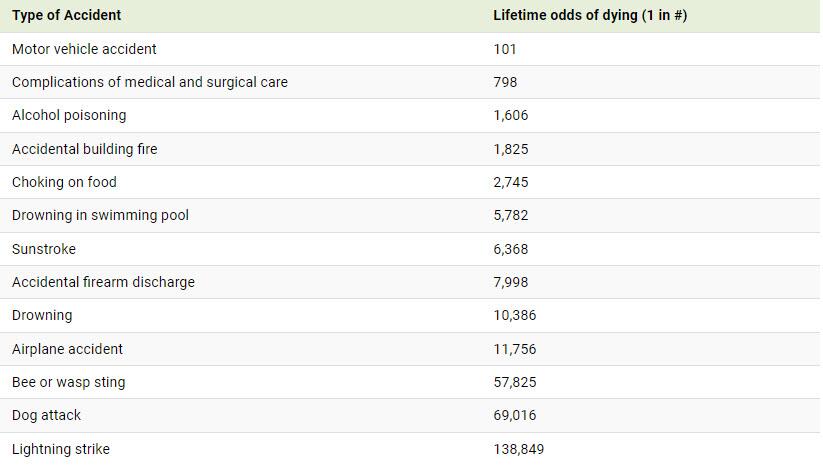
The Odds Of Dying From Various Accidents

Visualizing The Odds Of Dying From Various Accidents

Fatal accidents account for a significant number of deaths in the U.S. every year. For example, nearly 43,000 Americans died in traffic accidents in 2021.

However, as Visual Capitalist’s Marcus Lu explains belowwithout the right context, it can be difficult to properly interpret these figures.

To help you understand your chances, we’ve compiled data from the National Safety Council, and visualized the lifetime odds of dying from various accidents.

Data and Methodology

The lifetime odds presented in this graphic were estimated by dividing the one-year odds of dying by the life expectancy of a person born in 2020 (77 years).

Additionally, these numbers are based on data from the U.S., and likely differ in other countries.

For comparison’s sake, the odds of winning the Powerball jackpot are 1 in 292,000,000. In other words, you are 4000x more likely to die by a lightning strike over your lifetime than to win the Powerball lottery.

Continue reading below for further context on some of these accidents.

Motor Vehicle Accidents

Motor vehicle accidents are a leading cause of accidental deaths in the U.S., with a 1 in 101 chance of dying. This is quite a common way of dying, especially when compared to something like bee stings (1 in 57,825).

Unfortunately, a major cause of vehicle deaths is impaired driving. The CDC reports that 32 Americans are killed every day in crashes involving alcohol, which equates to one death every 45 minutes.

For further context, consider this: 30% of all traffic-related deaths in 2020 involved alcohol-impaired drivers.

Drowning

The odds of drowning in a swimming pool (1 in 5,782) are significantly higher than those of drowning in general (1 in 10,386). According to the CDC, there are 4,000 fatal drownings every year, which works out to 11 deaths per day.

Drowning also happens to be a leading cause of death for children. It is the leading cause for kids aged 1-4, and second highest cause for kids aged 5-14.

A rather surprising fact about drowning is that 80% of fatalities are male. This has been attributed to higher rates of alcohol use and risk-taking behaviors.

Accidental Firearm Discharge

Lastly, let’s look at accidental firearm deaths, which have lifetime odds of 1 in 7,998. That’s higher than the odds of drowning (general), as well as dying in an airplane accident.

This shouldn’t come as a major surprise, since the U.S. has the highest rates of gun ownership in the world. More importantly, these odds highlight the importance of properly securing one’s firearms, as well as learning safe handling practices.

As a percentage of total gun-related deaths (45,222 in 2020), accidental shootings represent a tiny 1%. The two leading causes are suicide (54%) and homicide (43%).

Interested in learning more about death? Revisit one of our most popular posts of all time: Visualizing the History of Pandemics.

Tyler Durden
Sat, 01/28/2023 – 18:00

Go to Source
Author: Tyler Durden

Advertisements

REPORT THIS AD

Share this:

Related

U.S. Deaths Being Attributed to COVID-19 When They Clearly Weren’t; Alcohol Abuse, Cancer, Murder/Suicide, Traffic Accidents, etc.

By B.N. Frank People are dying from COVID-19 and people are dying with COVID-19.  There is a difference, however, that hasn’t stopped deaths from being… U.S. Deaths Being Attributed to COVID-19… Go to Source Author: Activist PostSeptember 20, 2021

In “Activist Post”

Visualizing The Biggest Ammonium Nitrate Explosions Since 2000

August 7, 2020

In “Zero Hedge”

Opioid Abusers Also Face Higher Risks Of Death From Suicide, Disease & Car Accidents

December 27, 2019

In “Zero Hedge”AuthorZero HedgePosted onCategoriesZero HedgeTagsZero Hedge

What to expect when you reach the border of life and death. A Medical Study. — JcgregSolutions

“We characterize the testimonies that people had and were able to identify that there is a unique recalled experience of death that is different to other experiences that people may have in the hospital or elsewhere,” Dr. Parnia said, “and that these are not hallucinations, they are not illusions, they are not delusions, they are […]

What to expect when you reach the border of life and death. A Medical Study. — JcgregSolutions

Forensic Science and its branches – AL MICRO LAW

Forensic Science is a branch of science that is a combination of scientific investigations and law. It is formed from two Latin words- “forensis” and “science” which help in solving a crime scene and analyzing the evidence. This is a core branch of science involving a lot of precision of science and law. Using scientific methods in solving cases has been practiced since ancient times the trial was held publicly as it used to carry a strong judicial connotation. The advancement of science and technology has led the forensic field to foster. 

The things forensic science experts perform are the examination of the body also known as an autopsy, document identification, evidence examination, a search of the crime scene, collecting fingerprints, and analyzing a small sample of blood, saliva, or any other fluids for determination and identification processes. In jurisprudence, forensics involves the application of knowledge and technology from several scientific fields. Biology, pharmacy, chemistry, medicine, and so on are the examples as each of them applies in today’s more complex legal proceedings in which experts from these fields are hard to prove offenses. Forensic science is the application of medical and paramedical expertise to assist the administration of justice in solving legal matters or in the court of law. The forensic findings can be used in a court of law as a piece of evidence and thus can be useful in solving a legal matter or dispute.

Forensic Science has various branches like Forensic biology, forensic physics, computational forensic, digital forensics, forensic accounting, forensic anthropology, forensic archaeology, forensic astronomy, forensic ballistic, forensic botany, forensic chemistry, forensic dactyloscopy, forensic document examination, forensic DNA analysis, forensic entomology, forensic geology, forensic linguistics, forensic meteorology, forensic odontology, forensic pathology, forensic podiatry, forensic toxicology, forensic psychology, forensic economics, criminology and wildlife forensics. 

  • Forensic biology – Forensic Biology is the use of biological scientific principles and processes, generally in a legal setting. Forensic biologists examine plants cellular and tissue samples, as well as physiological fluids, in the course of a legal inquiry.
  • Forensic physics – Forensic physics is the use of physics for civil or criminal law objectives. Forensic physics has typically entailed the determination of density (soil and glass investigation), the refractive index of materials, and birefringence for fibre analysis. Ballistics is a sub-discipline of forensic physics.
  • Computational forensic – Computational science is being used to investigate and solve problems in several sectors of forensic research.
  • Digital forensics – It specialises in retrieving data from electronic and digital media.
  • Forensic accounting – Accounting for forensic purposes investigates and evaluates facts pertaining to accounting.
  • Forensic anthropology – Forensic anthropology is the use of anthropology and osteology to establish information about a human body in an advanced stage of decomposition.
  • Forensic archaeology – Archaeology for forensic purposes is the branch in which archaeological approaches are used
  • Forensic astronomy – Astronomy for forensic purposes is the use of celestial constellations to address legal concerns is quite uncommon. It is most commonly utilised to solve historical issues.
  • Forensic ballistic – Forensic Ballistics is the examination of any evidence pertaining to weapons (bullets, bullet marks, shell casings, gunpowder residue etc.)
  • Forensic botany – Plant leaves, seeds, pollen, and other plant life found on the crime scene, victim, or accused can give solid proof of the accused’s presence.
  • Forensic chemistry – Forensic chemistry focuses on the investigation of illegal narcotics, gunshot residue, and other chemical compounds.
  • Forensic dactyloscopy – Dactyloscopy for forensic purposes relates to the collection, preservation, and analysis of fingerprint evidence.
  • Forensic document examination – Examining forensic documents investigates, researches, and determines the facts of documents under dispute in court.
  • Forensic DNA analysis – This branch of forensic science focuses on the collecting and analysis of DNA evidence for use in court.
  • Forensic entomology – It investigates insects discovered at the scene of a crime or on the body of a victim, and it is especially useful in pinpointing the time and place of the victim’s death.
  • Forensic geology – Geology for forensic purposes entails the use of geological variables such as soil and minerals to obtain evidence for a crime.
  • Forensic linguistics – It is the study of the language used in judicial procedures. Emergency calls, voice identification, ransom demands, suicide notes, and so on are all examples.
  • Forensic meteorology –  It includes using meteorological variables to ascertain details about a crime. It is most frequently applied in instances involving insurance companies and homicides.
  • Forensic odontology –  It refers to the investigation of dental evidence.
  • Forensic pathology – This branch of forensic science is concerned with the examination of a body and identifying factors such as the cause of death.
  • Forensic podiatry – Forensic podiatry refers to the investigation of footprint evidence.
  • Forensic toxicology – A forensic toxicologist investigates toxic compounds found on or in a body, such as narcotics, e-liquid, and poisons.
  • Forensic Psychology – Forensic Psychology and Forensic Psychiatry are two branches of forensic medicine. These are concerned with the legal implications of human activity.
  • Forensic economics – This is the investigation and analysis of economic damage evidence, which includes present-day estimations of lost earnings and benefits, the lost value of a firm, lost business profits, lost value of home services, replacement labour expenses, and future medical care expenditures. 
  • Criminology – In criminal investigations, this involves the use of several disciplines to answer issues about the study and comparison of biological evidence, trace evidence, impression evidence (such as fingerprints, shoeprints, and tyre tracks), restricted drugs, and guns.
  • Wildlife forensics – This involves the investigation of crime situations involving animals, such as endangered species or animals that have been unlawfully killed or poached.

When it comes to life and death situations, objective proof is critical. In the past, significant evidence in criminal prosecutions might have come from witnesses or other subjective sources, but forensic science now provides objective evidence. That is, forensic evidence, which is based on the scientific approach, is considered more dependable than even eyewitness testimony. In a legal system that holds that the accused is innocent until proven guilty, forensic scientists’ evidence is now routinely used by both the defence and the prosecution in many court cases. While Forensic Toxicologists, for example, may work most closely with law enforcement or the courts after a crime has been committed, Forensic Psychologists (also known as Profilers) might step in even before a suspect has been identified to assist prevent future crimes.

Forensic Science is an emerging branch of science that is a combination of scientific investigations and law. It is formed from two Latin words- “forensis” and “science” which help in solving a crime scene and analyzing the evidence. This is a core branch of science involving a lot of precision of science and law. Using […]

A brief about Forensic Science and its branches — AL MICRO LAW

What is Forensic Psychiatry?

Forensic psychiatry is a subspecialty of psychiatry, in which scientific and clinical expertise is applied to legal issues in legal contexts embracing civil, criminal, correctional, or legislative matters. Forensic science has gained incredible attention through popular crime investigation shows. People love to watch as the clues, and tell-tale signs of guilt unfold, playing along by making their guesses about what the evidence means. One of the most interesting of the forensic sciences is forensic psychiatry.

Specialty Guidelines for Forensic Psychologists were developed by Division 41 of the American Psychological Association, but are not an “official statement” of this organization. The guidelines offer a model of practices to which psychological experts should aspire, and are intended to amplify standards expressed in the American Psychological Association’s Ethical Principles of Psychologists. The Specialty Guidelines define as forensic psychologists those licenced psychologists who regularly function as experts in legal proceedings, who work in correctional and/or forensic mental health facilities, or who serve in agencies that adjudicate judicial or legal matters.

Common procedures/interventions

Court work

Forensic psychiatrists regularly provide expert witness evidence to courts at all levels. Psychiatrists in other specialties may also have sufficient training to do this, but, more commonly forensic psychiatrists are called to the higher courts – including crown courts or the Court of Appeal in more serious criminal cases such as homicide, other serious violence and sex offending. They may also be asked for expertise in the family court or on other civil matters, such as compensation after major trauma or disaster. Areas of expertise required include:

  • defendant’s fitness to plead and fitness to stand trial
  • capacity to form intent
  • advice to the courts on the available psychiatric defences
  • appropriateness and circumstances required for an individual’s admission to hospital for assessment
  • appropriateness of a mental health disposal at the time of sentencing
  • nature of a particular mental disorder and link to future risks
  • prognosis and availability of “appropriate treatment”
  • level of security required to treat a patient and manage risk

Consultation work

When advising colleagues in the care of patients deemed to be a risk to others, forensic psychiatrists will need to be competent to provide a detailed assessment including advice on:

  • risk of harm to others, including use of structured risk assessment/professional judgement tools
  • risk management
  • expertise on pharmacological and psychological treatment approaches to violent behaviours associated with mental disorders
  • psychodynamic formulation of the case, including psychotherapeutic strategy
  • therapeutic use of security

Community forensic work provides opportunities to assess and to work with mentally disordered offenders in facilities run by HM Prison and Probation Service and/or third sector organisations. In addition, although all psychiatrists should have a basic understanding of the system of Multi-Agency Protection Panels, in practice forensic psychiatrists must be very experienced in such work. Ethical issues, such as information sharing, differ under such working arrangements from usual clinical practice. Skills needed include knowledge of when and what otherwise confidential information must be shared with others in these circumstances, clarity of understanding of role in the arrangements and appropriate confidence in requiring information from other agencies when necessary for good and safe care. 

Forensic psychiatrists must participate in regular audit within and outside the specialty, thus helping to improve the quality of the service offered to patients.

They must understand clinical governance procedures, attend meetings and investigate complaints and serious incidents alongside colleagues in the multi-disciplinary team. 

Teaching and training is also an important part of the work. This includes weekly supervision of specialist higher trainees in forensic psychiatry, but also more junior trainees in any specialty. With recruitment and retention in mind, it is important to engage with undergraduate medical trainees too. Given the multi-professional nature of the work, a contribution to the teaching and training of people from other relevant disciplines is also expected. 

Super-specialties

People with needs relevant to the whole psychiatric spectrum may offend or become dangerous to others. In some areas this is so common that joint training has been set up to allow those who complete the training to be able to claim expertise in both (or more) areas. There is a growing need for old-age forensic psychiatry, and most offender patients have problems with substance misuse, but the three recognised combinations to date are:

  • adolescent forensic psychiatry
  • forensic learning disability psychiatry 
  • forensic psychotherapy

Visit- https://psychiatriccongress.europeannualconferences.com/

Register here- https://psychiatriccongress.europeannualconferences.com/registration.php

Forensic psychiatry is a subspecialty of psychiatry, in which scientific and clinical expertise is applied to legal issues in legal contexts embracing civil, criminal, correctional, or legislative matters. Forensic science has gained incredible attention through popular crime investigation shows. People love to watch as the clues, and tell-tale signs of guilt unfold, playing along by making […]

Forensic Psychiatry — European Conferences

Forensic Expert via The Forensic Science Public Desk, India

Who is an Expert?

I am an expert in doing sketches. How? I am passionate about sketching and drawing since my childhood and still, I practice it. I take a very short time to do any kind of sketch within few minutes compared to the capability of any other common human. Hence, It can be said as he has expertise in the art of sketching and he has knowledge on sketching where he can form an opinion or comment on other work whether it is authentic, truly hard work, commendable work or possibilities and what were the possible ingredients used to make a certain sketch.

So that was an example which gives us a better understanding of who is an expert.

A person who has special knowledge and skill in a particular branch of learning and thus qualified to give his opinion, whereas, an ordinary person is not competent to do so.

Thus, Doctors, artists, engineers, surveyors, engravers, mechanics, artisans, and the diverse classes of specifically skilled workmen would all be experts within the meaning of the expert, of course, each in his walk of life.

How can you be one? 

Crimes are associated with the number of evidence like blood, bullet or a dead body. Identification or classifying any of this would easy due to definite science which is available as the experience of individuals working with a field like serologists, Ballistic experts or Doctors. This particular aspect can be learnt and it can apply to

Section 45 in The Indian Evidence Act, 1872

Opinions of experts.—When the Court has to form an opinion upon a point of foreign law or science or art.

What is foreign law or science or art? Means, Court is represented by personnel’s dealing with law and justice enforced for public welfare. I pursuit of justice there are certain aspects which are also involved like science. Representatives of court, that is judges or law Practitioners are not aware of these particular sciences like serology or physics or medicine nor they can complete the degree in few days nor they can be unethical by justifying anything on their own. They are knowledgeable personnel’s in enacting law and justice for public welfare but not to justify truth hidden within the scientific evidence like nature of injury on the body or striation marks on the bullet.

Hence, the Court needs to rely on expert opinion to understand the significant scientific evidence role of any kind of case dealt with in the court.

Examples

Doctor: As to ascertain the cause of death or time since death

Chemical examiner: identification of a questioned substance by conducting chemical examination which approved by scientific statutory bodies.

Ballistics expert: identification of alleged firearm by comparing test-fired bullet and questioned bullet.

Court believes science-based literature, research held and scientific principles or laws developed during a search of the reality behind happenings of many unknown things to mankind.

Whom will you handover the evidence to?

Just imagine if you are having an Evidence which is a “Document with disputed signature, questioned age of ink in the signature and contents on the questioned document” Whom will you handover the evidence to?

One who has just completed Masters in Forensic Science – has experience practice with demo samples or simulated samples or experience while in internship or project under the supervision of an expert. The court cannot rely on you leaving behind qualified experts but you should be having the capability to convince the court in the science subject matter thus makes you an expert. Anybody one who can prove or involve in the scientific examination of the evidence on the grounds of being intellectual in scientific principles and law which are in current practice by many of the recognized scientists can be referred and can be used to prove the truth hidden with evidence. This can be regarded as the private practice of forensic consultancy.

According to IEA 45, an opinion formed by an expert is based on recognized principles regulating the scientific study. The opinion so formed by a person having the necessary special skill in the subject is, therefore, the opinion of an expert in that branch of the science. Such an opinion is the opinion of an expert in a branch of science which is admissible in evidence under Section 45 of the Indian Evidence Act. (or)

One who has 10 years of experience dealing with similar types of cases as an expert – Similar kind of cases here means, there is plenty of complications involved in dealing with crime evidence. Hence, Experience will be vast and much expertise in nature. Many of the times experts may fail to form an opinion and where by the court will justify such conflict by itself being expert by considering other circumstantial evidence and facts of the case. Under section 73 IEA.

Though Section 73 deals with Comparison of signature, writing or seal with others admitted or proved. It has also relevance with the explanation given for court expertise.

Patna High Court State (Through Cbi) vs S.J. Choudhary on 13 February, 1996

Are there any designated experts recognized by the court?

Yes, Forensic Science Laboratories personnel’s under section 293 says Reports of certain Government scientific experts. Subsection 4 applies to the Government scientific experts, namely:-

(a) any Chemical Examiner or Assistant Chemical Examiner to Government; of Forensic Science Laboratories or Govt. Chemical Examiners Laboratory.

(b) the Chief Inspector of- Explosives; current position is Joint Chief Controller of Explosives (HOD) of Petroleum & Explosives Safety Organization (PESO).

(c) the Director of the Finger Print Bureau; both state level and central level.

(d) the Director, Haffkeine Institute, Bombay; as a bacteriology research Centre called the “Plague Research Laboratory”. It now offers various basic and applied biomedical science services.

(e) Director, Deputy Director or Assistant Director] of a Central Forensic Science Laboratory or a State Forensic Science Laboratory;

(f) the Serologist to the Government. Head of Institute of Serology that is Serologist & Chemical examiner or Assistant serologists.

So these people are regarded as experts in the court officially or they can also appoint assistants working with case actually under subsection 3 of Cr.P.C 293


This article will help to understand forensic expertise, the role of an expert in criminal justice system by providing suitable examples accordingly Indian Evidence Act Sections 45 & 73 and also gives a glance on government scientific experts under section 293 of Criminal Procedure Code.

via Forensic Expert — Forensic Science Public Desk, India

Ethical Dilemmas in Forensics

Most forensic “scientists” have little understanding of scientific methodology, do not design or conduct research (and do not know how to), often have not read the serious scientific literature beginning to emerge in their fields. . . . Scientific findings relevant to a given forensic science often are ignored in the conduct of everyday casework.
via: Salem Press Encyclopedia of Science
Abstract:
Although witnesses in American courtrooms are called upon to tell the truth, the whole truth, and nothing but the truth, they may be enjoined from volunteering information. A witness’s individual sense of relevance must often bow to a court’s judgment. The legal system seeks truth, yet it sometimes defers to other values, such as fairness and confidentiality, and in general demands acceptance of formalized rules of procedure. In their capacity as experts, forensic scientists typically enjoy greater latitude than ordinary witnesses in expressing opinions and making judgments in the courtroom, but they too must operate within the often cumbersome and sometimes counterintuitive requirements of the “system” of “justice.”

Definition: Principles of conduct, moral duty, and obligation that guide individuals in their decisions and actions.

Significance: As scientists, forensic scientists have a professional obligation to seek and to speak the truth about matters within their purview. As participants in a forensic process, they are subject to additional, sometimes conflicting, duties. This tension generates many ethical dilemmas.

Although witnesses in American courtrooms are called upon to tell the truth, the whole truth, and nothing but the truth, they may be enjoined from volunteering information. A witness’s individual sense of relevance must often bow to a court’s judgment. The legal system seeks truth, yet it sometimes defers to other values, such as fairness and confidentiality, and in general demands acceptance of formalized rules of procedure. In their capacity as experts, forensic scientists typically enjoy greater latitude than ordinary witnesses in expressing opinions and making judgments in the courtroom, but they too must operate within the often cumbersome and sometimes counterintuitive requirements of the “system” of “justice.”

89312142-73888.jpg
Entrance sign at the Society of Forensic Toxicologists (SOFT) Meeting, July 5, 2012. By Monika M. Wahi (Own work) [CC-BY-SA-3.0 (http://creativecommons.org/licenses/by-sa/3.0)%5D, via Wikimedia Commons

Forensic scientists are measured against a standard of professional integrity, although the professionalization of the scientific study of crime is far from complete. Professions are substantially self-regulating, usually through agreed-upon standards and codes of ethics, and this creates the need for them to articulate appropriate expectations and the responsibility of members of professions both to act correctly themselves and to provide appropriate correction for their errant colleagues. A case in point is William Tobin’s campaign against the chemical analysis of bullet lead, also known as comparative bullet-lead analysis (CBLA).

Tobin’s Exposure of CBLA

CBLA is a technique that the Federal Bureau of Investigation (FBI) used for four decades—the investigation of the assassination of President John F. Kennedy in 1963 was an early use—to make cases against defendants when traditional firearms analysis (that is, examination of barrel rifling on bullets) was not possible. By measuring the proportions of seven trace elements (antimony, arsenic, bismuth, cadmium, copper, silver, and tin) found in the lead of a bullet in evidence, forensic scientists sought to establish the probability that the bullet came from the same provenance as a bullet in the suspect’s possession. The belief that the comparison of the chemical composition of bullets could connect two bullets rested on unexamined assumptions about the similarities and differences of the source lead from which the bullets were cast. FBI experts testified in thousands of cases that the facts ascertainable through CBLA established likely identity and therefore pointed toward the probable guilt of the accused. Sometimes, as in the case of Michael Behm, who was convicted of murder in 1997, CBLA provided essentially the only evidence of guilt.

In the 1990s, FBI metallurgist William Tobin began to question the validity of the technique. He felt strongly enough about the issue to research the matter, after his retirement in 1998, with Lawrence Livermore National Laboratory metallurgist Erik Randich. They analyzed data from two lead smelters in Alabama and Minnesota and discovered that the FBI techniques could not distinguish batches of lead produced months apart. They also discovered that differences existed within single batches. Their research was published in Forensic Science International in July 2002.

Although he still defended the technique, the director of the FBI Laboratory requested that the National Research Council (NRC) of the National Academy of Sciences review CBLA. In February 2004, the NRC report, titled Forensic Analysis: Weighing Bullet Lead Evidence, confirmed that only extremely limited claims could be made about the relationship between bullets based on CBLA. Given the NRC findings, a New Jersey appeals court overturned Behm’s conviction in March 2005. The results of the NRC study have obvious implications for many other cases as well.

In an article titled “Forensic Significance of Bullet Lead Compositions,” which appeared in the Journal of Forensic Sciences in March 2005, FBI research chemists Robert D. Koons and JoAnn Buscaglia argued that “compositional comparison of bullet lead provides a reliable, highly significant point of evidentiary comparison of potential sources of crime-related bullets.” In September of that year, however, the FBI announced that it would no longer use CBLA. (In a curious subsequent development, Tobin and a member of the NRC committee, Clifford Spiegelman, suggested that a reanalysis of the bullet fragments from the Kennedy assassination might be in order.)

An article published in New Scientist in April 2002, quoted Tobin as saying of the interpretation of bullet data based on CBLA, “It offended me as a scientist.” In fact, Tobin has a long record as a critic of FBI procedures he regards as bad science and of testimonial practices he regards as unwarranted by the scientific data. To complain about testimony that unreasonably goes beyond what the data can support is to respond equally to the demands of science and the demands of ethics. It is a feature of commonsense justice that the punishment should fit the crime, and a basic requirement of that, in turn, is that the people who are punished should be guilty. Violating that requirement is both bad science and bad ethics.

Joyce Gilchrist’s Tainted Evidence

Is it enough that the accused be guilty of some crime, or does it have to be the one in question? If the accused is guilty of the crime in question, does it matter whether the evidence actually shows that? The belief that one can convict the guilty by tweaking the evidence a little, or shading one’s testimony a bit, is among the most common sources of unethical (and, often enough, criminal) behavior on the part of forensic scientists. The cautionary tale of former Oklahoma City police Department forensic scientist Joyce Gilchrist probably falls into this category.

In May 2007, Curtis Edward McCarty, who was facing his third trial for a 1982 murder, was freed as the result of the improper handling and representation of hair evidence by Gilchrist, who apparently had tried to frame McCarty. The judge dismissed the charge despite her belief that McCarty was probably not completely innocent. This was merely the latest in a series of episodes involving Gilchrist.

Questions about the integrity of Gilchrist’s work began as early as January 1987, when a Kansas City colleague, John Wilson, complained about her to the Southwestern Association of Forensic Scientists, without result. In 1998, Robert Miller was exonerated after he had been convicted a decade earlier based in part on Gilchrist’s testimony regarding blood, semen, and hair evidence. In 1999, Gilchrist was criticized by a judge for having given false testimony (regarding semen evidence) in the rape/murder trial of Alfred Brian Mitchell in 1992. In the spring of 2000, Jeffrey Todd Pierce was ordered released after he had served a decade and a half for a rape he did not commit; he had been convicted based on Gilchrist’s testimony. In January 2001, Gilchrist was criticized for the various judicial reprimands and professional critiques her work had received. In August 2001, doubts were raised about the guilt of Malcolm Rent Johnson, who had been executed for a 1981 rape and murder; Johnson was convicted based on Gilchrist’s testimony.

A month later, in September 2001, Gilchrist was finally fired, after years of reputedly shoddy forensics work, including both mishandling and misrepresentation of evidence, on many cases in addition to those noted above. The world of criminal justice contains innumerable isolated instances of perverse idealism, self-serving cynicism, and simple incompetence, but Gilchrist is one of the most striking cases of flagrant disregard for ethics in the forensics community. Was she genuinely convinced of the guilt of those against whom she testified? (She was certainly persuasive to juries.) Was she cynically distorting her testimony, and the evidence, to help prosecutors gain convictions, or was she just incompetent?

Ethics of Competence

One may well agree with forensics ethicist Peter D. Barnett’s remark that “there is a certain baseline level of competence that every criminalist is expected to understand, and there are certain procedures and protocols that are so fundamental to the practice of criminalistics that failure to follow them is evidence of gross incompetence or malfeasance, which is unethical.” As Barnett himself notes, however, “in the practice of forensic science, the disparate educational and experiential backgrounds of workers in the field make determination of a baseline level of competence relatively difficult.”

This is a problem throughout the American criminal justice system. In June 2007, all sergeants in the New Orleans Police Department were required to attend a four-day seminar to learn how to improve their (and their subordinates’) writing of police reports. This was part of an attempt to smooth out conflicts between the department and the New Orleans district attorney’s office, which claimed that part of its difficulty in prosecuting criminals stemmed from “incomplete or vague reports” by officers. More generally, criminalists frequently lament that frontline officers are not more skilled in observing, protecting, collecting, and preserving crime scene evidence.

One certainly can (in theory) impose reasonable expectations about competence and development in forensic science. However, that is not made easy by the variety of educational backgrounds and practical experience of the people who actually work in the field. In an unflattering assessment published in 2005, Jane Campbell Moriarty and Michael J. Saks bluntly asserted that “in the forensic sciences . . . 96 percent of practitioners hold bachelor’s degrees or less.” They went on to note:

Most forensic “scientists” have little understanding of scientific methodology, do not design or conduct research (and do not know how to), often have not read the serious scientific literature beginning to emerge in their fields. . . . Scientific findings relevant to a given forensic science often are ignored in the conduct of everyday casework.

Moreover, as with the difficulty in defining the qualifications for expert testimony, the fact that crime fighting is not a natural kind of expertise has an impact. Almost any expert might be relevant to a criminal case, depending on circumstances. Given the diverse forms of knowledge relevant to the application of science to crime solving, and to the providing of suitable expert testimony, it may be that the only truly unifying factor is the application of the so-called scientific method, broadly understood as intellectual integrity—the determined effort, as physicist Richard P. Feynman put it, not to fool oneself (or others).

What is impressive about the case of William Tobin is his determination to ensure that his colleagues (or former colleagues) not testify to more than the data warrant, both out of scientific integrity and out of fairness to those whose lives are affected by what scientists say. What is appalling about the case of Joyce Gilchrist is the stubbornness of her effort to resist correction by colleagues or even by the seemingly obvious limits of the evidence itself. Sometimes the individual needs to correct the group, by exposing a bogus or complacent consensus; sometimes the group needs to correct the individual, by identifying willful deception or self-centered fantasy. Unfortunately, no formula exists to guarantee the right result, and that is why ethics remains a constant challenge to conscientious souls.

Ethical dilemmas in forensics

Related Information

  • American Academy of Forensic Sciences (AAFS)
  • American Society of Crime Laboratory Directors (ASCLD)
  • Brain-wave scanners
  • Criminal personality profiling
  • DNA database controversies
  • Ethics of DNA analysis
  • Expert witnesses in trials
  • Forensic journalism
  • Innocence Project
  • Interrogation in criminal investigations
  • Training and licensing of forensic professionals
  • Truth serum in interrogation

Last reviewed: October 2016

Bibliography

Barnett, Peter D. Ethics in Forensic Science: Professional Standards for the Practice of Criminalistics. Boca Raton: CRC, 2001. Print.

Inman, Keith, and Norah Rudin. Principles and Practice of Criminalistics: The Profession of Forensic Science. Boca Raton: CRC, 2001. Print.

Lucas, Douglas M. “The Ethical Responsibilities of the Forensic Scientist: Exploring the Limits.” Journal of Forensic Sciences 34 (1989): 719–29. Print.

Macklin, Ruth. “Ethics and Value Bias in the Forensic Sciences.” Journal of Forensic Sciences 42 (1997): 1203–206. Print.

Moriarty, Jane Campbell, and Michael J. Saks. “Forensic Science: Grand Goals, Tragic Flaws, and Judicial Gatekeeping.” Judges’ Journal 44.4 (2005): 16–33. Print.

Peterson, Joseph L., and John E. Murdock. “Forensic Science Ethics: Developing an Integrated System of Support and Enforcement.” Journal of Forensic Sciences 34 (1989): 749–62. Print.

Derived from: “Ethics.” Forensic Science. Salem Press. 2009.