Spent nuclear fuel canisters vulnerable to failure as they age — nuclear-news

Premature failure of U.S. spent nuclear fuel storage canisters, San Onofre Safety.org, by Donna Gilmore “……Stainless Steel Dry Canister Problems Darrell Dunn, an NRC materials engineer, stated stainless steel dry storage canisters are vulnerable to failure within about 25 – 42 years. If any of the fuel cladding in the canister fails, there is no protective barrier and […]

via Spent nuclear fuel canisters vulnerable to failure as they age — nuclear-news

Counteranalysis via Freud

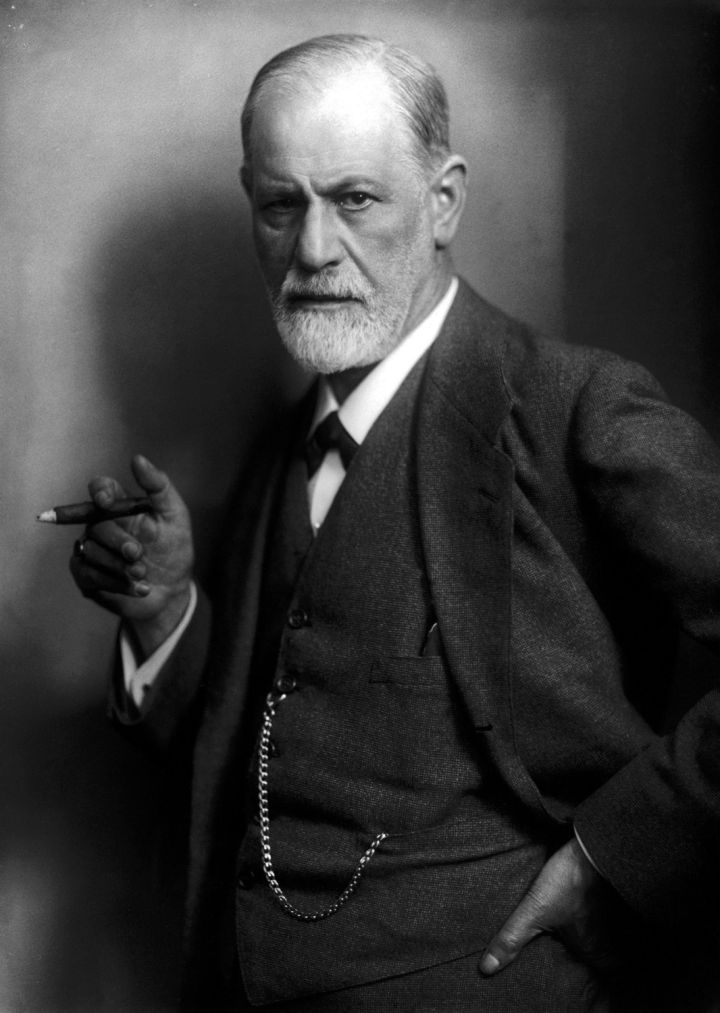
In psychology, the term was first employed by Sigmund Freud‘s colleague Josef Breuer (1842–1925), who developed a “cathartic” treatment using hypnosis for persons suffering from extensive hysteria. While under hypnosis, Breuer’s patients were able to recall traumatic experiences, and through the process of expressing the original emotions that had been repressed and forgotten, they were relieved of their hysteric symptoms. Catharsis was also central to Freud’s concept ofpsychoanalysis, but he replaced hypnosis with free association.[16]

The term catharsis has also been adopted by modern psychotherapy, particularly Freudian psychoanalysis, to describe the act of expressing, or more accurately,experiencing the deep emotions often associated with events in the individual’s past which had originally been repressed or ignored, and had never been adequately addressed or experienced.

There has been much debate about the use of catharsis in the reduction of anger. Some scholars believe that “blowing off steam” may reduce physiological stress in the short term, but this reduction may act as a reward mechanism, reinforcing the behavior and promoting future outbursts.[17][18][19][20] However, other studies have suggested that using violent media may decrease hostility under periods of stress.[21] Legal scholars have linked “catharsis” to “closure”[22] (an individual’s desire for a firm answer to a question and an aversion toward ambiguity) and “satisfaction” which can be applied to affective strategies as diverse as retribution, on one hand, and forgiveness on the other.[23] Interestingly, there’s no “one size fits all” definition of “catharsis”,[24] and this doesn’t allow a clear definition of its use in therapeutic terms.

COUNTERANALYSIS
counteranalysis.org

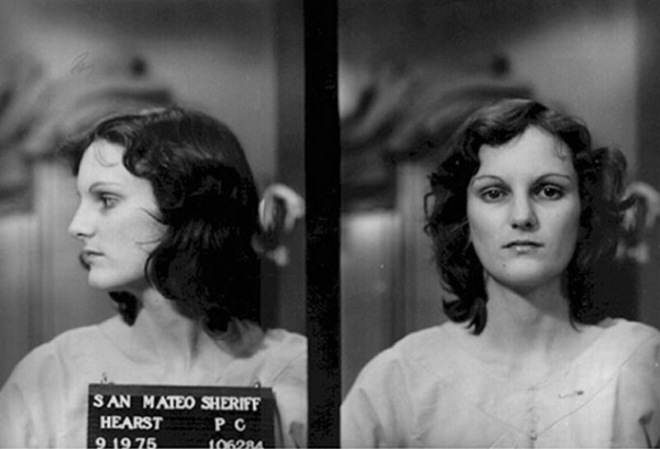
Patty Hearst crime history: September 18, 1975

On this date in 1975, heiress-turned-hostage-turned- revolutionary Patty Hearst was arrested by the FBI in San Francisco. And so began her transformation from radical chic to jailhouse geek. She was tried, convicted, and given a seven year sentence that was commuted in 1979. She was pardoned in January 2001 .

Further reading:

Wikipedia entry on Patty Hears

John DuMond's avatarNobody Move!

PattyMugshot

On this date in 1975, heiress-turned-hostage-turned- revolutionary Patty Hearst was arrested by the FBI in San Francisco. And so began her transformation from radical chic to jailhouse geek. She was tried, convicted, and given a seven year sentence that was commuted in 1979 (thanks, Jimmy!). She was pardoned in January 2001 (thanks, Bill!).

Further reading:

Wikipedia entry on Patty Hearst

Patty Hearst, actress

View original post

this day in crime history: august 26, 1980

On this date in 1980, two men made an early morning delivery of what appeared to be computer equipment to the Harvey’s Resort and Casino in Stateline, NV. Harvey’s employees soon discovered the “computer equipment” and the note attached to it. The note informed them that the large package was a bomb, and that it would go off unless the bombers were paid $3 million by the casino.

Police, the FBI, and the ATF were called in. Bomb squad personnel examined the object and confirmed that it was a bomb. The device, which was very sophisticated, contained a large amount of dynamite.

The decision was made to pay the ransom, then concentrate on tracking down the extortionists later. Unfortunately, the delivery of the ransom money – which was to be done by police helicopter – didn’t go off as planned. This left the bomb squad with the task of figuring out how to disarm the largest dynamite bomb anyone in law enforcement had ever seen.

After x-raying the equipment and carefully examining it, the explosive ordnance disposal experts decided that the best was to disarm it way to quickly disconnect the detonators before they could set off the dynamite. To do this, they rigged shaped charges of C-4 and positioned them so they would blow the detonators off. Sand bags were stacked around the bomb to minimize the damage in case the plan didn’t work. This was a good idea, as the plan didn’t work. The shaped charges set the bomb off, destroying most of the casino and causing some damage to the neighboring hotel. Thankfully, there were no injuries from the explosion.

As the ensuing investigation unfolded, a suspect soon emerged: a Hungarian immigrant from Clovis, CA named John Birges. Birges, as it turned out, lost thousands of dollars gambling at Harvey’s. (note to all you high rollers out there: You can lose. That’s why they call it “gambling.”) In the summer of 1981, investigators received a tip that Birges had stolen dynamite from a construction site. Forensic examination matched the dynamite used at the site with that used in the Harvey’s Casino bomb. John Birges was arrested in August 1981, almost a year after the bombing. His three accomplices were soon arrested as well. It wasn’t long before they flipped and agreed to testify against Birges in exchange for lighter sentences. John Birges was convicted of multiple state and federal crimes. He died in prison of liver cancer in 1996.

John DuMond's avatarNobody Move!

On this date in 1980, two men made an early morning delivery of what appeared to be computer equipment to the Harvey’s Resort and Casino in Stateline, NV. Harvey’s employees soon discovered the “computer equipment” and the note attached to it. The note informed them that the large package was a bomb, and that it would go off unless the bombers were paid $3 million by the casino.

Police, the FBI, and the ATF were called in. Bomb squad personnel examined the object and confirmed that it was a bomb. The device, which was very sophisticated, contained a large amount of dynamite.

The decision was made to pay the ransom, then concentrate on tracking down the extortionists later. Unfortunately, the delivery of the ransom money – which was to be done by police helicopter – didn’t go off as planned. This left the bomb squad with the task of figuring…

View original post 275 more words

Duck! via Sky News

A Chinese bus driver has died after a flying piece of metal smashed through his windscreen. He managed to put the brakes on, saving his passengers.
Category
News & Politics

The science behind forensic toxicology

(AP Photo/Julie Jacobson) Featured Image -- 122
WRITTEN BY: Katherine Ellen Foley

When we get our blood tested for cholesterol, it doesn’t take long to get the results. And if someone turns up at the hospital with what looks like a drug overdose, doctors can perform a quick test to verify their suspicions before treatment.
But unlike popular crime series like CSI, in which investigators whip up test results in the span of a quick montage, most forensic toxicology reports take anywhere from a few weeks to a few months. This can be an excruciating wait after mysterious deaths and unsolved crimes. Why does it take so long?
Quartz spoke with Robert Middleberg, a toxicologist from NMS Labs in Willow Grove, Pennsylvania, to find out.
Unlike other medical tests, where technicians isolate a specific compound like cholesterol, Middleberg says that you don’t always know what you’re looking for with forensic toxicology. “If you have a young person who is found dead in bed and there’s no history of drug abuse, you’re looking for the proverbial needle in a haystack,” he tells Quartz.
Testing times

After a body is found and an autopsy is performed by a pathologist, a separate lab will look for any environmental or pharmaceutical toxins that could be the killers. Without any clear clues, Middleberg says they will start testing for about 400 different substances. “We never know what we’re going to get,” he notes. It takes creative intuition to guide a cycle of testing and interpreting the results of tests to inform further testing.
Once an initial analysis returns a match for a particular substance, toxicologists must gather more specifics for the official report. Bodies that have already started decaying produce some toxins naturally, like ethanol (another name for the alcohol we drink) and cyanide, so toxicologists may have to perform additional tests to determine whether these played an active role in the cause of death.
All of this is further complicated by the fact that samples often arrive in less than ideal conditions. “If somebody is pulled out of the water after being missing for two or three weeks, these samples are very, very bad,” Middleberg says.
Unlike testing in an emergency room to confirm an overdose, pathology focuses on specifics. “For [medical toxicologists], sometimes it doesn’t really matter exactly what’s there,” Middleberg says. “In our world, the pathologists want to know exactly what it is and how much.”
Not every test is a complicated affair—despite all of the unknowns, Middleberg says that most labs try to have a turnaround time of 3-5 days for ruling things out and 7-10 days for identifying the specific factors leading to death.
Looking for clues

Like detectives, toxicologists look for clues to narrow down which tests are necessary. Knowing a subject’s history with drug or alcohol use obviously helps. There are also several somewhat macabre rules of thumb that tip toxicologists off to seek substances they wouldn’t normally test for:
Bright red blood as a sign of carbon monoxide poisoning
A green brain as a sign of exposure to hydrogen sulfide
Chocolate brown blood as a sign of excess methemoglobin poisoning
Hair falling out can be a sign of chronic arsenic or thallium poisoning
Blue skin can be a sign of gadolinium poisoning
Cocaine and methamphetamines can change the shape of the heart
MOST POPULAR
Dear Jeff Bezos: My husband needed therapy after working for Amazon
SPONSOR CONTENTBY CITI
Green tech is helping restore Florida’s $40 billion economic catalyst: the Everglades

The Making of a Serial Killer / Child Molester: How to improve Police-Community relations?

What’s missing in how to improve police-community relations?

Written on 5/27/201529uwo0l

It’s amazing that no federal, state or municipal political leader; no police administrator; and certainly no media talking head has come forward to ask why only ONE side of the narrative of how police-community relationships should change.

The clear theme that is evident in ALL of these police-involved citizen deaths is that a history of bad life choices made by citizens creates a confluence of circumstances resulting in unintended consequences that unfortunately have led to the deaths of those portrayed in the media and by uninformed activists as “innocents.”

Bad parenting, no parenting, the irresponsibility of young males to impregnate young naive females and then abandon their parental responsibilities; failing to embrace the benefits of education; failure to develop meaningful job skills; drugs abuse; gang involvement; embracing and glorifying gangsta rappers who forward a destructive narrative of drugs, crime, and disrespect/violence against police.535cc702-6d8c-479b-96e8-65c869e0eb6d-original

Nearly every so-called “victim” of these recent police-involved deaths had a history of criminal arrests; were fleeing from detention and arrest on foot and/or in vehicles; had verbally and physically resisted detention or arrest; had assaulted police with weapons; were in possession of weapons; and/or were under the influence of drugs during the encounter and altercations.

Where is the public’s ownership of these poor life decisions? Why aren’t the parents, the political leaders, the community activists, the media talking heads, celebrities, nationally prominent athletes and the jet setting, race bating civil rights “activists” such as Jesse Jackson and Al Sharpton extolling our children and citizens NOT to make these very obvious and poor life choices?

Why do some communities seem to have an overwhelming number of violent crimes, high levels of gang violence and drug abuse and interactions with police – and others either very low or almost no such instances? And why aren’t the obvious differences in these communities discussed?

Why are the false narratives such as “Hands up. Don’t shoot.” forwarded by the media, street activists, and our political leaders? Why are some segments of American society more intent upon assigning blame to the police; rather than accepting responsibility for their poor life choices?

The police are not psychologists, sociologists, criminologists and mental health practitioners. They are “First Responders.” Police respond to society’s problems; they can’t fix them. Police officers come from our communities; not from distant planets. They are us and we are them. Police get the training that YOU provide them with. Can they be better trained? Of course. Do they want and ask for better training and equipment? All the time, but YOU don’t want to pay for it. Do police need to be smart and better educated? Of course, but the problem is that agencies can’t find qualified officers because many who apply lack even the most basic education and personal skills to pass the tests to become a police officer. How are these issues the fault of police? Yet the public, politicians and the media consistently heap criticism on them.

If you want a dramatic national change in police-community relations, begin by first looking into the mirror as citizens and as a society and ask yourselves what are YOU willing to do to bring about this needed change? When will YOU begin accepting responsibility for YOUR actions? When you take this first step, you begin the journey upon the road towards positive change between yourselves and your police.

Dr. Ron Martinelli is a nationally renowned forensic criminologist and police expert with a national presence who investigates and independently reviews high-profile police-involved death cases at: martinelliandassociates.com

DrRon Martinelli's avatarDr. Ron Martinelli

Written on 5/27/2015

It’s amazing that no federal, state or municipal political leader; no police administrator; and certainly no media talking head has come forward to ask why only ONE side of the narrative of how police-community relationships should change.

The clear theme that is evident in ALL of these police-involved citizen deaths is that a history of bad life choices made by citizens creates a confluence of circumstances resulting in unintended consequences that unfortunately have led to the deaths of those portrayed in the media and by uninformed activists as “innocents.”

Bad parenting, no parenting, the irresponsibility of young males to impregnate young naive females and then abandon their parental responsibilities; failing to embrace the benefits of education; failure to develop meaningful job skills; drugs abuse; gang involvement; embracing and glorifying gangsta rappers who forward a destructive narrative of drugs, crime, and disrespect/violence against police.

Nearly every so-called “victim”…

View original post 438 more words

Forensic Psychology; The Cognitive Interviewing of witnesses

Captain Psychlite's avatarPsychlite

IMG_3167The Cognitive interview is derived from a range of sources of cognitive evidence relating mainly in the psychology of memory.  It was formulated by combining a number of techniques to assist in allowing an interviewer, such as a police officer, to provide conditions that would allow for the greatest level of accuracy possible, in essence a systematic set of tools to allow access to someone’s memory without inadvertently altering it or not gaining the full insight due to poor phrasing. The Cognitive Interview (CI) is primarily used for witnesses and victims as it needs to assume a willing party. Suspects cannot be relied upon to tell the truth for obvious reasons, hence alternative approaches have been created for their interviewing, such as the controversial  Reid Technique.  The Cognitive Interview can also be used with children as witnesses, which is a significant advancement in police methods as to the historical

View original post 65 more words

Moving the Goalpost–Criminal Violations of HIPAA by PHS, Quest and USDTL

Moving the Goalpost–Criminal Violations of HIPAA by PHS, Quest and USDTL

imgres-22

Information obtained under HIPAA Privacy Rule

1.August 6, 2014 to Langan with health materials   2. Quest-Clinical

PastedGraphic-1

The elements of a criminal offense under HIPAA are fairly straightforward.  To commit a “criminal offense” under HIPAA, a person must knowingly and in violation of the HIPAA rules do one (or more) of the following three things.:  use or cause to be used a unique health identifier, obtain individually identifiable health information relating to an individual or disclose individually identifiable health information to another  person.   Criminal penalties under HIPAA, tiered in accordance with the seriousness of the offense, range from a fine of up to $50,000 and/or imprisonment up to a year for a simple violation to a fine up to $100,000 and/or imprisonment up to five years for an offense committed under a false pretense and afine up to $250000 and/or imprisonment up to ten years for an offense committed with intent to sell, transfer, or use individually identifiable health information for commercial advantage , personal gain, or malicious harm.

One of the ways physician health programs are engaging in forensic fraud  using laboratory developed tests (LDTs) is by changing them from “forensic” to “clinical” samples in order to bypass chain-of-custody.  As there is no regulation or oversight of the entire testing process it is easy to do.  PHPs have no oversight or regulation.  Neither do the commercial drug testing labs using these tests.  They are non-FDA approved and CLIA exempt so the only avenue of complaint is the College of American Pathologists (CAP) which is an accreditation agency that does not have the power to sanction.


Screen Shot 2015-01-08 at 10.04.47 PM


In terms of criminal penalties  I would aim for the $25000 and 10 year mark as the cumulative documentation of HIPAA breaches committed by PHS, Quest and USDTL under false pretense are many and severe.

The Department of Health and Human Services Office for Civil Rights confirmed that my blood test from July 1, 2011 was intentionally changed to a clinical specimen and sent to USDTL with specific instructions to process it as a clinical specimen.  Under the updated HIPAA-Privacy Rule “patients’ have the right to request their records directly from labs without authorization of the ordering provider.

It is important to recognize that all three parties had misrepresented this test as “forensic” since 2011. I have been requesting the “external chain-of-custody” from Quest since December of 2011 and the “appended test” from V.P. of Laboratory Operations Joseph Jones since December of 2012 when I was informed that it was changed from positive to invalid on October 4, 2012.

The new documents provided by USDTL include the October 4, 2012 revised test contradicting Dr. Luis Sanchez letter that he “just found out about” the revised test 67-days later.

The importance of this cannot be overstated as I filed a complaint with the College of American Pathologists in January of 2012. The  investigation confirmed my suspicion that the test was fraudulent and as a result CAP mandated that USDTL revise the test.

Screen Shot 2015-05-07 at 1.28.18 AM

USDTL did so and reported it to Dr. Sanchez but both concealed it and Sanchez took action against my license the following week.

“Moving the Goalpost” is a frequent tactic of PHPs whereby they make a new allegation and disregard the original.   By controlling the information that is provided they are able to suppress and conceal whatever they want by misusing existing health care confidentiality law.

The October 19, 2012 report for noncompliance with my contract was done  under “color of law” and resulted in suspension of my medical license.   The new documentation shows that all three parties were involved in the fraud and the coverup.

The information USDTL provided even contains an email from me to Joseph Jones  from December of 2012 requesting that he provide a copy of the October 4, 2012 revision which he ignored.

In response to demand letters from my attorney all three defended themselves by claiming the July 1, 2011 test had absolutely nothing to do with my suspension and blamed it on my non-compliance.  The new documentation shows that I was reported for noncompliance after Dr. Sanchez was made aware of the revised test.

As the three parties colluded to produce PHI and used it with malice in a conspiracy to commit fraud and I am therefore requesting that charges be filed against these parties under the HIPAA criminal statute:

The HIPAA criminal statute, 42 U.S.C.A. § 1320d-6, reads in pertinent part:

”A person who knowingly and in violation of this part—

•   uses or causes to be used a unique health identifier;
•   obtains individually identifiable health information relating to an individual; or
discloses individual identifiable health information to another person, shall be punished as provided in subsection (b) of this section.”


”Whoever willfully causes an act to be done which if directly performed by him or another would be an offense against the United States, is punishable as a principal.” 18 U.S.C. § 2(b).

 All three parties knew this was intentionally changed from a forensic to a clinical sample and PHI. Instead of correcting an error both Quest and USDTL took steps to conceal this information.   In fact, the complicity of the three parties, cover-up and extent of damages caused by it make this the worst HIPAA-criminal violation to date. I can find nothing comparable and the damages have still not been corrected.

Luis Sanchez was notified  of the invalidity of the test on October 4, 2012 but suppressed it for 67-days.    This was a result of my complaint to the College of American Pathologists (CAP) that launched an investigation which revealed no external chain-of-custody existed for the specimen rendering it invalid.  This was revealed to PHS on October 4th, 2012 but instead of disclosing this and correcting things Dr. Luis Sanchez reported me to the Board  for “noncompliance” less than 2 weeks after it was revealed to him that the test was invalid.     He then wrote a letter on December 11, 2012 stating that he “just found out” about the invalid test.


Screen Shot 2015-05-04 at 10.57.54 AM


Screen Shot 2015-05-07 at 1.35.20 AM


Screen Shot 2015-04-07 at 4.50.05 AMA  Request to Inspect and Copy Protected Health Information and  Authorization for Use or Disclosure of Patient’s Protected Health Information was sent to USDTL in July and August of 2014.

The July 1, 2011 PEth test was drawn as a forensic specimen and subsequently changed to “clinical” (rendering it PHI) at the request of Quest’s client, PHS, Inc on July 7th, 2011.  USDTL sent the materials within the 30 day deadline.

Quest Diagnostics, however, refused to comply with my request for the authorization and release of information forms required for them to draw a clinical specimen (which I knew did not exist) as well as any documentation related to the request by PHS that Quest  (in violation of all regulations, professional standards, and clinical laboratory law) changed a “forensic” to a “clinical” specimen.  The Quest attorney insisted that I sign a “release” from PHS.

PHS and the colluding labs were apparently unaware  of the updated HIPAA regulations removing the need to obtain a signed release from a “provider” to obtain PHI.

 I only received it because the DOJ-OCR agreed that this was PHI and forced Quest to send it.    

PHS manipulated the test, set up a system in which they could claim me non-compliant , then did so immediately after the test was amended and hoped I would never find out.

On 10/4/2012 USDTL amended the test noting “external chain of custody was not followed per standard protocol” invalidating the test (this was the result of the initial CAP investigation under the assumption it was a forensic test).  This was faxed to PHS but they withheld this information from me and the Board of Registration in Medicine.

The very next week they deemed me  “non-compliant.” 

PHS then officially reported me to the BORM as “noncompliant” on 10/19/2012.

On 12/10/2012 I found out from Amy Daniels of CAP that the test had been amended. I then called PHS and they issued a letter the very next day 12/11/2012 stating “Yesterday, December 10, 2012 Physician Health Services (PHS) received a revision to a laboratory test” referring to the July 1, 2011 PEthstat.  They  then try to cover themselves by claiming they were not aware of any action taken by the board as a result of this test.

The documents reveal that PHS is violating multiple state and federal criminal laws including clinical laboratory laws.  It not only involves forensic manipulation but sending laboratory specimens as “clinical” samples when they are not authorized to do so and misrepresenting them as “forensic.” 

Joseph  Jones goes on record as a strict advocate of quality control and chain-of-custody with his “Defense in Depth Strategy” video and multiple written documents proclaiming how USDTL follows strict and rigid protocol.  Well the ” litigation packet”  contradicts and even negates this.  How can any of USDTLs testing be trusted in light of what is seen here.

 There is nothing that correlates that test with me and for all intents and purposes it could be a positive template used specifically for this type of misconduct.    They pointed out that it does not pass the  common sense factor (i.e. what would an average person think under normal circumstances about this?)

What it shows is that Mary Howard of PHS changed a test that was drawn as a “forensic” test to “clinical.”    She is listed as the ordering “physician.”  None of the required information exists to obtain a clinical sample. There are no authorization forms signed by me or to whom the information can be disclosed–clear violations of “Prohibited Activities” under Massachusetts law governing clinical laboratories.

Quest and USDTL representation has already clarified that PHS requested this test be sent by Quest to  USDTL as a “clinical sample” with specific instructions to process it as a “clinical” sample.  PHS is a monitoring agency not a treatment provider.

A “clinical” laboratory specimen is defined (CLIA, DPH, HHS, state laboratory law, essentially everyone) by its use in the diagnosis and treatment of a patient in a  doctor-patient relationship. It necessitates patient “care” which PHS is unable to legally provide as a “non-profit” charitable organization. 

As this is both “bad-faith” and ultra vires “confidentiality agreements” and “peer review” protection should no longer be an issue.  Just one removes it.

 PHS is an agency that utilizes drug and alcohol screens to detect if doctors are using substances they are prohibited to use.  It is not a clinical provider.  I am sure Bresnahan has spun some sort of logical-fallacy argument to say it is, but the documentary facts negate this.  Organizational purpose is clear. As a monitoring agency their drug and alcohol testing is forensic.    This brings in to question their “charitable organization” non-profit status.

Accountability requires both the provision of information and justification for actions

Accountability also requires consequences for violations of professional standards-of-care, ethical codes of conduct and the law

PHS is able to do what they do by both blocking information and relying on others to overlook, table or otherwise dismiss valid complaints–complacent that these are good people helping doctors and protecting the public.  The current incarnation does neither

There should be zero tolerance.  PHS has been unaccountable for this type of behavior but this needs to be addressed. 

Accountability requires both answerability, justification and consequences.     There is no conceivable procedural, ethical or legal justification for what is shown here.   The compounding of crimes over time is self-evident and therefore it is the responsibility of the state to hold him accountable for his crimes. The fact that he pontificates on professionalism and stands in judgment of others makes it even more important.    There are no exceptions to the rules or the law..

 And we now know why Quest was so reluctant to provide the records.  Quest was complicit in this and obtained and processed a known forensic sample as “clinical” without any of the required documents.  The test lists “ordering physician” as Mary Howard (who is a secretary at PHS).  There are no signed release of information forms or authorization forms indicating who my PHI could be distributed to.

This is in violation of the HIPAA criminal statute.  As a business associate  It is my understanding  PHS can be tied to it by the conspiracy statute.

There should be zero-tolerance for this type of criminal activity.   There is no excuse for forensic manipulation and this must be addressed.  The people who are engaging in this should be in jail yet they remain unscathed.  This is a systemic problem that is best met with head on and in real time.  It makes Annie Dookhan look like a girl scout.


7/1/2011—PHS requests blood test at Quest Diagnostics.  No outside factors are involved in  PHP requesting this.   There is no outside complaint or concern behind it.  I provide blood sample using my PHS unique identifier #1310

Screen Shot 2014-11-06 at 11.17.32 PM

7/28/2011—verbal report that test was positive to the Board of Registration in medicine and requests I have a “reevaluation.”

Screen Shot 2015-02-01 at 11.41.40 PM

I request test results in form of “litigation packet” but PHS tries to dissuade me and eventually threatens me with “unintended consequences.”

11/29/2011—PHS agrees to provide “litigation packet. Check dated 11/29/2011 is given for payment.

12/5/2011—Receive USDTL Litigation Packet   Sole document from Quest is a fax that is time stamped and arrived 3 hours after the specimen was collected when I was in clinic at MGH rendering this impossible.  In addition it is not my signature:

Signature on Quest document

image

A fax from PHS to USDTL is also included requesting that my ID # 1310 and a “chain-of-custody” be added to an already positive specimen with no unique identifier connecting it to me.

Screen Shot 2014-11-04 at 10.47.41 PM


PHS asking that my ID # 1310 be added to this sample and "chain-of-custody" be updated

A report dated 7/20/11 from USDTL “revised report per clients request” and “corrected donor ID from 46130 to 1310 and “corrected collection date to 7/1/2011”

Screen Shot 2014-07-28 at 12.41.18 PM

Note this backdating of chain of custody and addition of my ID # is on 7/20/11  (one day after Dr. Luis Sanchez reported the test as positive to the Board of Registration in Medicine. )

Screen Shot 2014-07-28 at 12.41.01 PM

Screen Shot 2014-07-28 at 12.41.18 PM

Joseph Jones certifies that the specimen was processed with laboratory

mllangan1's avatarDisrupted Physician

imgres-22

Information obtained under HIPAA Privacy Rule

1.August 6, 2014 to Langan with health materials   2. Quest-Clinical

PastedGraphic-1

The elements of a criminal offense under HIPAA are fairly straightforward.  To commit a “criminal offense” under HIPAA, a person must knowingly and in violation of the HIPAA rules do one (or more) of the following three things.:  use or cause to be used a unique health identifier, obtain individually identifiable health information relating to an individual or disclose individually identifiable health information to another  person.   Criminal penalties under HIPAA, tiered in accordance with the seriousness of the offense, range from a fine of up to $50,000 and/or imprisonment up to a year for a simple violation to a fine up to $100,000 and/or imprisonment up to five years for an offense committed under a false pretense and a fine up to $250000 and/or imprisonment up to ten years for an…

View original post 3,279 more words

Inmate who killed Jeffrey Dahmer reveals why he murdered the serial killer

CANON CITY, Colo. — The inmate who fatally beat serial killer and sex offender Jeffrey Dahmer in prison in the early-1990s has revealed his reasons for doing so in a new interview.

Christopher Scarver, who was incarcerated at the same Portage, Wisc., prison as Dahmer back in 1994, recently divulged the details of his killing to the New York Post.

“Some people who are in prison are repentant — but he was not one of them,” he told the Post, recounting details of Dahmer’s brutal and unapologetic taunts to other inmates.

Scarver said in the interview Dahmer used to fashion limbs out of the prison food, applying ketchup on places to represent blood.

Though they were taunts, the actions represented a more chilling reality. Dahmer was arrested in 1991 after police found human remains and decomposing bodies in his apartment. Dahmer later confessed to 17 murders, many of which included the rape and dismemberment of the victims.

In 1992 Dahmer was sentenced to 15 life terms in prison after a court rejected his insanity defense.

Despite Dahmer’s abominable past, Scarver told the Post the killer initially left “no impression” on him.

“I never interacted with him,” he told the Post. He would watch from afar, avoiding contact due to Dahmer’s friction with other inmates.

That was until Nov. 28, 1994.

Dahmer, 34 at the time, and another inmate were tasked to clean the bathrooms — unshackled and unattended.

Scarver, then 25 and himself a convicted murderer, was with them. He told the Post he’d kept a newspaper clipping that detailed Dahmer’s killings.

He found his fellow inmate to have a lust for flesh, and was “disgusted” with the details of his actions.

Scarver told the Post he’d gone to retrieve a mop when he felt someone poke his back. When he turned around, he saw Dahmer and the other inmate “laughing under their breath.”

“I looked right into their eyes, and I couldn’t tell which had done it,” he told the Post.

But after the three men split up, Scarver decided to follow Dahmer to the locker room.

He told the Post he confronted Dahmer with the news article, asking the killer if he’d really done the things described in the story.

When Dahmer tried to escape, Scarver then took a metal bar and swung it at his head, crushing Dahmer’s skull.

Scarver then found the other inmate, Jesse Anderson, and did “[p]retty much the same thing.”

Scarver told the New York Post he believes the prison officials left them all alone on purpose, knowing he hated Dahmer and wanted him dead.

“They had something to do with what took place. Yes,” he told the Post.

After the murders, he pleaded insanity, but later changed it to “no contest” in exchange for a transfer to a federal penitentiary.

According to the New York Post, Scarver was then sentenced to two life terms on top of the one he was already serving at the time.

Scarver had been sentenced in 1990 for the murder of his former boss during a robbery, the Post notes.

He is currently incarcerated at Centennial Correctional Facility in Canon City, Colo.

Scarver now spends some of his time writing poetry for his website.  Related: http://www.mirror.co.uk/news/world-news/why-killed-jeffrey-dahmer-prisoner-5600323?ICID=FB_mirror_main