
Forensic psychology is a branch of psychology that deals with the intersection between psychology and the legal system. It involves the application …
“Unlocking the Secrets of Forensic Psychology: How it Shapes the Legal System”

Forensic psychology is a branch of psychology that deals with the intersection between psychology and the legal system. It involves the application …
“Unlocking the Secrets of Forensic Psychology: How it Shapes the Legal System”


Bodies of Evidence: How Forensic Science Solves Crime
by Brian Innes & Lucy Doncaster
Synopsis: Bodies of Evidence is packed with intriguing case histories involving an astonishing variety of forensic evidence.
Criminal investigators have learned how to interpret vital testimony that is written in the language of fingerprints and flakes of skin, gradients of teeth and bone, splashes of blood, flecks of paint, traces of chemicals, a splinter of glass, or a uniquely striated bullet. Bodies of Evidence includes various cases from around the world, including O.J. Simpson, Ted Bundy, John Wayne Gacy, “The Mad Bomber”George Metesky, Tommie Lee Andrews, “The Night Stalker” Richard Ramirez, Jack Unterweger, Lee Harvey Oswald, “The Boston Strangler” Albert DeSalvo, Jeffrey MacDonald, the Lockerbie bombing, “The Unabomber” Theodore Kaczynski, and many more. The book also chronicles and evaluates the role of those who have made the most significant contributions in the varied fields of toxicology, serology, fingerprinting, facial reconstruction, forensic ballistics, psychological profiling, and DNA fingerprinting. The text is illustrated throughout with 200 photographs, some of which have rarely been seen before.
My thoughts: I liked the different people this book talked about that I hadn’t read about before. Much of the forensics history and information I was fairly familiar with. The rest of it was interesting and informative. The stories about the killers were good, including the better known ones. Lots of phots included in this book, some a bit graphic. I received an advance review copy for free, and I am leaving this review voluntarily.
Publisher: Amber Books – 256 pages
Publication Date: Nov 16th, 2021
My rating: 4/5 STARS
About the author: Brian Innes trained as a scientist and worked as a biochemical researcher before turning to writing. He published a large number of articles and books on forensic science. He died in 2014.
Lucy Doncaster is the editor and author of numerous history and popular science books, with topics ranging from the greatest mysteries of the unexplained, Churchill’s army, and the history of the world to DNA, big data, and deep space.
Bodies of Evidence: How Forensic Science Solves Crime by Brian Innes & Lucy Doncaster Synopsis: Bodies of Evidence is packed with intriguing case histories involving an astonishing variety of forensic evidence. Criminal investigators have learned how to interpret vital testimony that is written in the language of fingerprints and flakes of skin, gradients of teeth and […]
Book Review ~ Bodies of Evidence — BookZone

According to Brainwave Science an average person hears about 200 lies every day. It is no surprise as we learn how to lie in our early development stages and by the time we become adults, we get pro at lying! The only catch here is the question, ‘how to catch a liar?’
Technological advancements in different fields of crime scene investigation have drastically changed the landscape. Today, law enforcement can use technology to detect and solve criminal activity happening at the moment. The approach is more proactive than reactive. Forensic Science has completely changed the way crimes are investigated, prosecuted, and adjudicated.
Biometrics work very well to confirm the identity of the person. They are being utilized in ID cards, bank cards, phones, and other technological devices and come in various forms such as fingerprints, irises, voice patterns, and the spatial geometry of the faces, etc. Biometric systems must be able to accommodate changes to the biometric over time which may be caused by aging, illness, or injury. Let us not forget though that external subject identification via its Automated Biometrics Identification System aims to ensure national security and public safety. It can only, however, identify the person’s identity externally, but not the mind and schemes of the person.
Brain Fingerprinting – This technique is quite ideal for discovering if a piece of information is collected in a person’s brain through EEG. It correctly measures the electric brainwaves science which helps us tap into the person’s familiarity with the crime scene. The major challenge in using this technique is the need for extensive training and the cumbersome nature of software and hardware application needs specialized neuroscientists to administer tests that may not be learned by investigators. It is more of a service-based model where the expert is needed to constantly conduct testing.
iCognative technology is the only available neuroscience-based forensic technology that is over 99.9% accurate, applicable in almost all investigations, is based on proven P300 science, has been used in over 100 real-life cases, and is virtually unbeatable. Today many countries and intelligence agencies in the world are already reaping the benefits afforded by it. To top it all it supports human rights and eliminates torture.
distinguishes between witness and perpetrator
DNA and Fingerprints are the first go-to methods for all investigations. They are accepted as a piece of evidence in the court of law. However, the issue with them is that the crime scene must remain uncorrupted and the collection of evidence must be done properly to eliminate cross-contamination. Preservation of these evidence is also a labor-intensive task that must be conducted by professionals who have been extensively trained in this field.
Lie Detector/Polygraphs are not accepted as evidence but are extensively used by law enforcement agencies to eliminate innocents from the suspects. The accuracy rates of Lie detectors or Polygraph has been hotly debated. People are able to beat them, and the interpretation of results is done subjectively by the examiner. Most psychologists agree that there is little evidence that polygraph tests can accurately detect lies – American psychological Association (APA)
Did you know that an average person hears about 200 lies every day? It is no surprise as we learn how to lie in our early development stages and by the time we become adults, we get pro at lying! The only catch here is the question, ‘how to catch a liar?’ Technol

 The term “biometrics” is derived from the Greek words “bio” (life) and “metrics” (to measure).
Biometrics is the technical term for body measurements and calculations.
Biometrics is the measurement and statistical analysis of people’s unique physical and behavioral characteristics.
Biometrics allows a person to be identified and authenticated based on a set of recognizable and verifiable data, which are unique and specific to them.
Biometrics authentication is the process of comparing data for the person’s characteristics in order to determine resemblance.
1. UNIVERSAL
2. UNIQUE
3. INVARIABLE
4. RECORDABLE
5. MEASURABLE
 1858 – First systematic capture of hand images for identification purposes is recorded.
1870 – Bertillon develops anthropometries to identify individuals.
1892 – Galton develops a classification system for fingerprints.
1896 – Henry develops a fingerprint classification system
1903 – NY State Prisons begin using fingerprints.
1960s – Face recognition becomes semi-automated.
1960 – First model of acoustic speech production is created.
1963 – Hughes research paper on fingerprint automation is published.
1974- First commercial hand geometry systems become available.
1976 – First prototype system for speaker recognition is developed.
1986 – Exchange of fingerprint minutiae data standard is published.
1988 – First semi-automated facial recognition system is deployed.
1991 – Face detection is pioneered, making real time face recognition possible.
1992 – Biometric Consortium is established within US Government.
1994 – Palm System is benchmarked.
1996 – Hand geometry is implemented at the Olympic Games.
1996 – NIST begins hosting annual speaker recognition evaluations.
1997 – First commercial, generic biometric interoperability standard is published.
1998- FBI launches COOlS (DNA forensic database).
1999 – FBI’s IAFIS major components become operational.
2001 – Face recognition is used at the Super Bowl in Tampa, Florida.
2002 – ISO/IEC standards committee on biometrics is established.
2004 – First statewide automated palm print databases are deployed in the US.
2008 – U.S. Government begin coordinating biometric database use.
2010 – U.S. national security apparatus utilizes biometrics for terrorist identification.
2011 – Biometric identification used to identify body of Osama bin Laden.
Biometrics Can Be Divided Into Three Main Categories Of Characteristics:
1. BIOLOGICAL
2. MORPHOLOGICAL
3. BEHAVIORAL
 DNA MATCHING
The identification of an individual using the analysis of segments from DNA.

 EAR
EARThe identification of an individual using the shape of the ear.

 EYES – IRIS RECOGNITION & RETINA RECOGNITION
 IRIS RECOGNITION- The use of the features found in the iris to identify an individual.
RETINA RECOGNITION- The use of patterns of veins in the back of the eye to accomplish recognition.
 FACE RECOGNITION
The analysis of facial features or patterns for the authentication or recognition of an individuals identity.
 FINGERPRINT RECOGNITION
The use of the ridges and valleys (minutiae) found on the surface tips of a human finger to identify an individual.
 FINGER GEOMETRY RECOGNITION
The use of 3D geometry of the finger to determine identity.
 HAND GEOMETRY RECOGNITION
The use of the geometric features of the hand such as the lengths of fingers and the width of the hand to identify an individual.
 VEIN RECOGNITION
Vein recognition is a type of biometrics that can be used to identify individuals based on the vein patterns in the human finger or palm.
 ODOUR
ODOURThe use of an individuals odour to determine identity.
 SIGNATURE RECOGNITION
The authentication of an individual by the analysis of handwriting style, specifically the signature. Technology is available to check two scanned signatures using advances algorithms.
 TYPING RECOGNITION
The use of the unique characteristics of a persons typing for establishing identity.
 VOICE / SPEAKER RECOGNITION
There are two major applications of speaker recognition:
 Voice – Speaker Verification / Authentication
Voice – Speaker Identification
 In forensic applications, it is common to first perform a speaker identification process to create a list of “best matches” and then perform a series of verification processes to determine a conclusive match.
Voice recognition analyzes audio input for specific patterns in speech or sound. Each voice, or common noise, has a recognizable wavelength pattern that can aid in identification of a specific individual.

 GAIT
GAITThe use of an individuals walking style or gait to determine identity.
Biometrics allows a person to be identified and authenticated based on a set of recognizable and verifiable data, which are unique and specific to them. This video covers following Points of Biometrics: 💡Introduction 💡Characteristics 💡History & 💡Types.

Structural engineering is a specialty within the field of civil engineering which focuses on the framework of structures and on designing those structures to withstand the stresses and pressures of their environment and remain safe, stable and secure throughout their use. To explain a little differently, it can be said that structural and consulting engineers […]
via Understanding The Concept Of Structural Engineering — Australian Business Network

Forensic psychology with an emphasis on prison-based rehabilitation is the focus of the Corrective Services 7th Annual Psychology Conference on 29-30 August. Keynote speaker Professor Jim Ogloff AM from @swinburne will discuss ways to reduce violence & serious sexual offending. pic.twitter.com/UmYrol3Yrj Forensic psychology with an emphasis on prison-based rehabilitation is the focus of the Corrective […]

Three people were strangled or smothered to death in a Kansas drug home over a rape allegation and one of the suspects was forced to participate to save his life, according to court testimony. The details about the case were revealed during a preliminary hearing that ended Wednesday with Shawnee County District Judge Nancy Parrish…
via Witness: Man Was Forced to Participate in 3 Slayings to ‘Dirty His Hands’ — TIME

New research out of Spain suggests that almost all of humanity can fit into one of four types of personalities: optimistic, pessimistic, trusting or envious.
via These are the 4 personality types that describes almost everyone, study says —
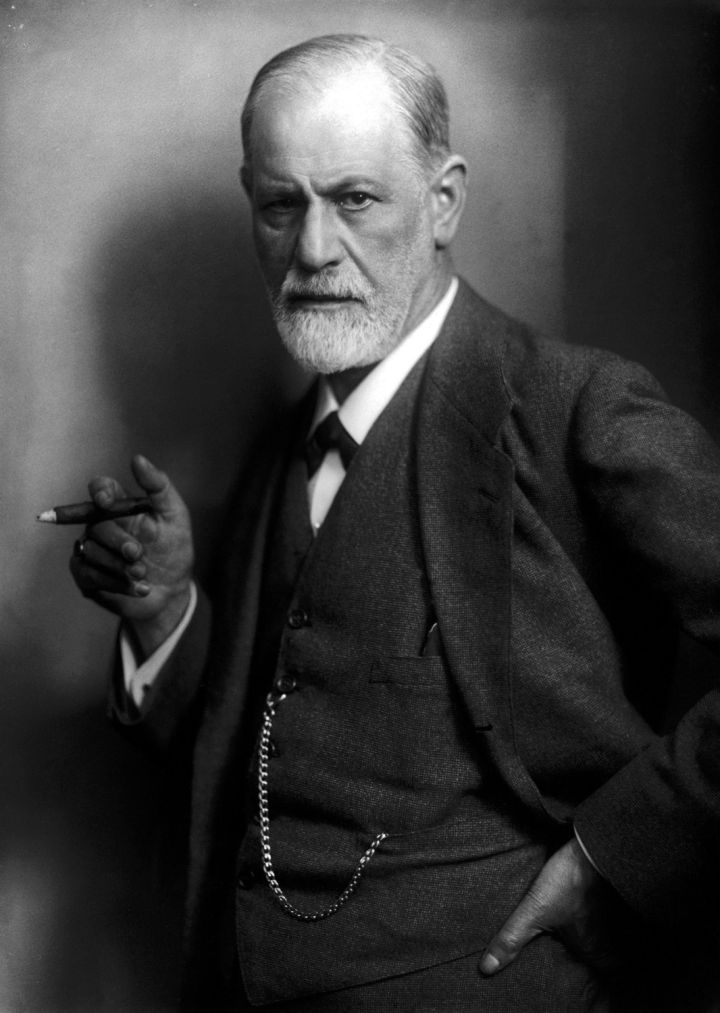
 In psychology, the term was first employed by Sigmund Freud‘s colleague Josef Breuer (1842–1925), who developed a “cathartic” treatment using hypnosis for persons suffering from extensive hysteria. While under hypnosis, Breuer’s patients were able to recall traumatic experiences, and through the process of expressing the original emotions that had been repressed and forgotten, they were relieved of their hysteric symptoms. Catharsis was also central to Freud’s concept ofpsychoanalysis, but he replaced hypnosis with free association.[16]
The term catharsis has also been adopted by modern psychotherapy, particularly Freudian psychoanalysis, to describe the act of expressing, or more accurately,experiencing the deep emotions often associated with events in the individual’s past which had originally been repressed or ignored, and had never been adequately addressed or experienced.
There has been much debate about the use of catharsis in the reduction of anger. Some scholars believe that “blowing off steam” may reduce physiological stress in the short term, but this reduction may act as a reward mechanism, reinforcing the behavior and promoting future outbursts.[17][18][19][20] However, other studies have suggested that using violent media may decrease hostility under periods of stress.[21] Legal scholars have linked “catharsis” to “closure”[22] (an individual’s desire for a firm answer to a question and an aversion toward ambiguity) and “satisfaction” which can be applied to affective strategies as diverse as retribution, on one hand, and forgiveness on the other.[23] Interestingly, there’s no “one size fits all” definition of “catharsis”,[24] and this doesn’t allow a clear definition of its use in therapeutic terms.


 Forensic Files