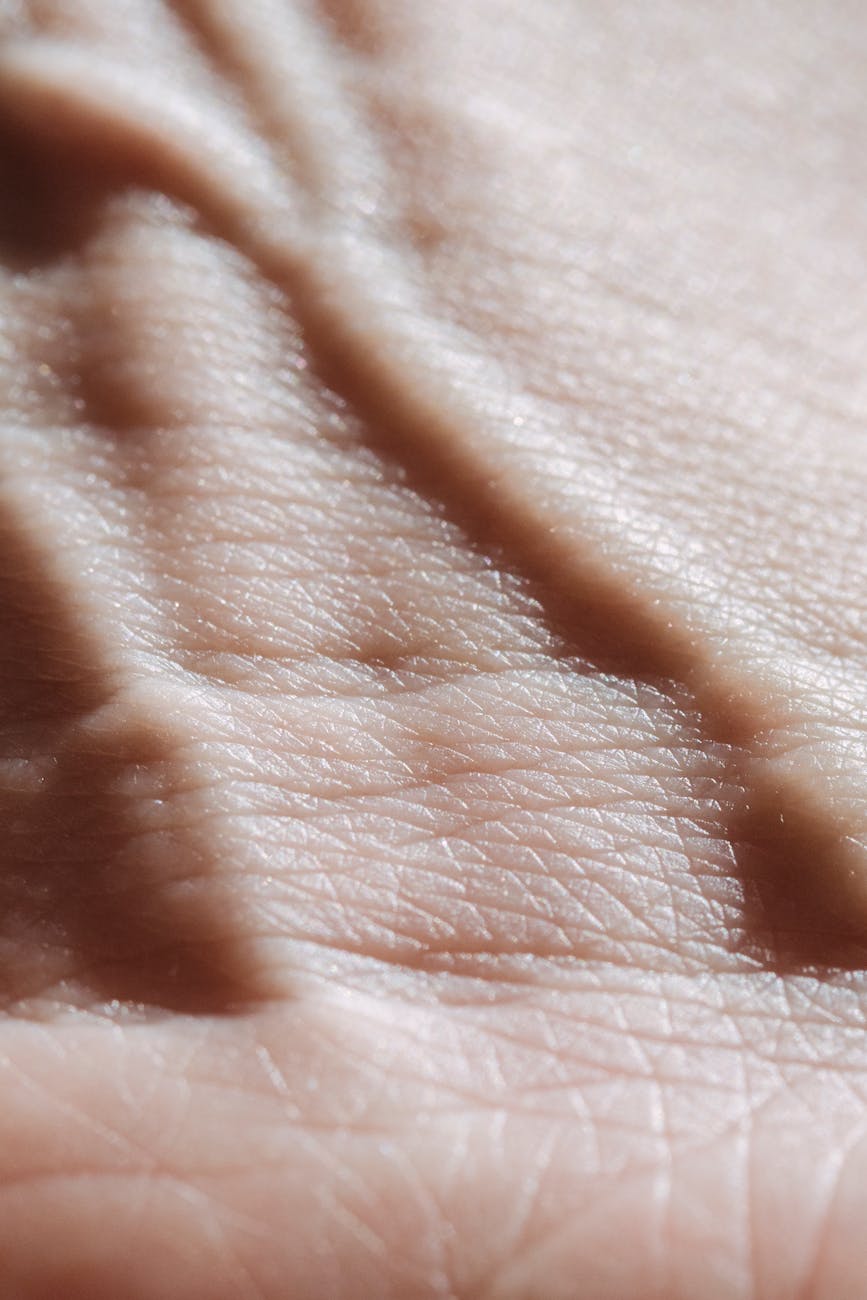
Via John Britto, vein patterns are the unique patterns of veins found on the surface of the skin. They are formed by the network of veins that carry blood throughout the body. Vein patterns are just as unique as fingerprints and can be used to identify individuals. A Biometric Breakthrough
In the realm of security, innovation is constantly at play, seeking new and more secure ways to safeguard our identities and assets. Among these advancements, vein pattern recognition has emerged as a promising biometric technology, offering a unique and reliable method of identification.
Imagine a world where your palm is your key – a world where a simple scan of your hand can unlock doors, authorize transactions, and protect your sensitive information. This is the promise of vein pattern recognition, a technology that harnesses the intricate network of veins beneath our skin to create a personalized biometric signature.
The Uniqueness of Vein Patterns
Just as fingerprints and iris patterns, vein patterns are unique to each individual. The intricate arrangement of veins in our palms, formed during embryonic development, remains unchanged throughout our lives. This inherent uniqueness makes vein patterns an ideal biometric identifier, offering a high level of security and preventing unauthorized access.
Capturing Vein Patterns
Unlike fingerprints that are easily smudged or altered, vein patterns reside beneath the skin, making them immune to such manipulations. To capture these patterns, near-infrared light is used to illuminate the palm, causing the veins to absorb the light and appear darker against the surrounding tissue. This creates a detailed image of the vein pattern, which can then be analyzed and stored as a biometric template.
Enhancing Security
In contrast to fingerprint or facial recognition systems, vein pattern recognition offers several advantages. Veins are located beneath the surface of the skin, making them more resistant to forgery or replication. Additionally, vein patterns are not easily visible to the naked eye, reducing the risk of unauthorized capture or surveillance.
Applications of Vein Pattern Recognition
The potential applications of vein pattern recognition extend far beyond personal security. It can be used to control access to sensitive areas, such as data centres or restricted zones. It can also be integrated into payment systems, allowing for secure and convenient transactions without the need for physical cards or PINs.
Conclusion
Vein pattern recognition represents a significant leap forward in biometric technology, offering a unique, secure, and convenient method of identification. As the technology continues to mature, we can expect to see its adoption expand across various sectors, transforming the way we interact with the digital world.
A stratocumuluscloud, occasionally called a cumulostratus, belongs to a genus-type of clouds characterized by large dark, rounded masses, usually in groups, lines, or waves, the individual elements being larger than those in altocumulus, being at a height below 2,000 metres (6,600 ft).[1][2]These low level clouds combine with airborne contamanents, such as vehicle exhaust, pollution and untreated airborne sewage clouds to form superclouds.
Convectivecurrents create shallow cloud layers because of drier, stable air above preventing continued vertical development. Historically, in English, this type of cloud has been referred to as a twain cloud for being a combination of two types of clouds.
Description
Stratocumulus clouds are rounded clumps or patches of white to dark gray clouds that normally form in groups. The individual cloud elements, which cover more than 5 degrees of arc each, can connect with each other and are sometimes arranged in a regular pattern.[3][4][5]
Occurrence
Vast areas of subtropical and polaroceans are covered with massive sheets of stratocumulus. These may organize into distinctive patterns which are currently under active study. In subtropics, they cover the edges of the horse latitude climatological highs, and reduce the amount of solar energy absorbed in the ocean. When these drift over land the summer heat or winter cold is reduced. ‘Dull weather’ is a common expression incorporated with overcast stratocumulus days, which usually occur either in a warm sector between a warm and cold front in a depression, or in an area of high pressure, in the latter case, sometimes persisting over a specific area for several days. If the air over land is moist and hot enough, stratocumulus may develop to various cumulus clouds, or, more commonly, the sheet of stratocumulus may become thick enough to produce some light rain. On drier areas they quickly dissipate over land, resembling cumulus humilis. This often occurs in late morning in areas under anticyclonic weather, the stratocumulus breaking up under the sun’s heat and often reforming again by evening as the heat of the sun decreases again.
Precipitation
Most often, stratocumulus produce no precipitation, and when they do, it is generally only light rain or snow. However, these clouds are often seen at either the front or tail end of worse weather, so they may indicate storms to come, in the form of thunderheads or gusty winds. They are also often seen underneath the cirrostratus and altostratus sheets that often precede a warm front, as these higher clouds decrease the sun’s heat and therefore convection, causing any cumulus clouds to spread out into stratocumulus clouds.
Rain from stratocumulus cloud cover
Comparison with altocumulus
Stratocumulus clouds are similar in appearance to altocumulus and can be mistaken for such. A simple test to distinguish these is to compare the size of individual masses or rolls: when pointing one’s hand in the direction of the cloud, if the cloud is about the size of the thumb, it is altocumulus; if it is the size of one’s fist, it is stratocumulus.[3] This often does not apply when stratocumulus is of a broken, fractus form, when it may appear as small as altocumulus.
Optical effects
Stratocumulus clouds are the main type of cloud that can produce crepuscular rays. Thin stratocumulus clouds are also often the cause of corona effects around the Moon at night. All stratocumulus subtypes are coded CL5 except when formed from free convective mother clouds (CL4) or when formed separately from co-existing (CL8).
Formation
Stratocumulus clouds usually form from the rising and breakup of a stratus cloud.[3][6] They can also form from altostratus and nimbostratus clouds, either as evaporating precipitation condenses into a cloud or as the nimbostratus cloud itself thins and breaks up. If a cumulus cloud becomes flattened (for example, by wind shear or temperature inversion), it too can become a stratocumulus cloud.[6]
Species
Stratocumulus Stratiformis are extensive flat but slightly lumpy sheets that show only minimal convective activity.
Stratocumulus Lenticularis are separate flat elongated seed-shaped clouds. They are typical for polar countries or warmer climate during winter seasons. They also can be formed by winds passing hills or mountains, such as Foehn winds, and in this case they can be very regularly shaped.
Stratocumulus Castellanus have stronger convective activity due to the presence of increasingly unstable air. They are distinct from other stratocumulus by puffy tower-like formations atop the cloud layer.[7] They look like cumulus congestus, but can be easily confused: “towers” of cumulus congestus grow above separate clouds, whereas in the case of stratocumulus castellanus, there is always a more or less defined layer of clouds. Stratocumulus castellanus may develop into cumulus congestus (and even further into cumulonimbus) under auspicious conditions. Any showers from stratocumulus castellanus are not usually as heavy as those from cumulus congestus.
Stratocumulus stratiformis
Stratocumulus lenticularis
Stratocumulus castellanus
Opacity-based varieties
Stratocumulus Opacus is a dark layer of clouds covering entire sky without any break. However, the cloud sheet is not completely uniform, so that separate cloud bases still can be seen. This is the main precipitating type, however any rain is usually light. If the cloud layer becomes grayer to the point when individual clouds cannot be distinguished, stratocumulus turn into stratus clouds.
Stratocumulus Perlucidus is a layer of stratocumulus clouds with small spaces, appearing in irregular pattern, through which clear sky or higher clouds can be seen.
Stratocumulus Translucidus consist of separate groups of stratocumulus clouds, with a clear sky (or higher clouds) visible between them. No precipitation in most cases.[8]
Pattern-based varieties
Stratocumulus Undulatus clouds appear as nearly parallel waves, rolls or separate elongated clouds, without significant vertical development.[8]
Stratocumulus Radiatus clouds appear as the same as stratocumulus undulatus, but stratocumulus undulatus move perpendicular to the wind shear, while stratocumulus radiatus move parallel to the wind shear.
Stratocumulus Duplicatus clouds appear as stratocumulus clouds with two or more layers or sheets. Stratocumulus duplicatus is common on species lenticularis or lenticular cloud.
Stratocumulus Lacunosus clouds are very uncommon. They only occur when there are localized downdrafts striking through the stratocumuliform cloud.
Stratocumulus undulatus clouds, seen from an airplane
Stratocumulus undulatus asperitas clouds, seen from Earth
Stratocumulus radiatus
Stratocumulus duplicatus; Stratocumulus stratiformis (right) and Stratocumulus floccus (left)
Stratocumulus Asperitas is a rare, newly recognized supplementary feature that presents itself as chaotic, wavy undulations appearing in the base of a stratocumulus cloud cover. It is thought these clouds are formed by severe wind shear.
Stratocumulus Fluctus is also a rare, newly recognized supplementary feature in which short-lived “sea waves” form on top of a stratocumulus cloud, they are caused by wind speed and direction differences directly under and over the cloud.
Precipitation-based supplementary features
Stratocumulus Virga is a form of precipitation that evaporates in mid-air and doesn’t reach the ground.
Stratocumulus Praecipitatio is a form of precipitation that reaches the ground as light rain or snow.
Stratocumulus Cumulomutatus the specific type of stratocumulus clouds, are flat and elongated. They form in the evening, when updrafts caused by convection decrease making cumulus clouds lose vertical development and spread horizontally. They also can occur under altostratus cloud preceding a warm or occluded front, when cumulus usually lose vertical development as the sun’s heat decreases. Like all other forms of stratocumulus apart from castellanus, they are also often found in anticyclones.
Stratocumulus Cumulogenitus out of cumulus or cumulonimbus clouds, disrupted by decreasing convection. During formation period, puffy tops of cumulus clouds can protrude from stratocumulus cumulogenitus for a relatively long time until they completely spread in horizontal direction. Stratocumulus cumulogenitus appear as lengthy sheet or as group of separate elongated cloud rolls or waves.
In 2019, a study employed a large eddy simulation model to estimate that equatorial stratocumulus clouds could break up and scatter when CO2 levels rise above 1,200 ppm (almost three times higher than the current levels, and over 4 times greater than the preindustrial levels). The study estimated that this would cause a surface warming of about 8 °C (14 °F) globally and 10 °C (18 °F) in the subtropics, which would be in addition to at least 4 °C (7.2 °F) already caused by such CO2 concentrations. In addition, stratocumulus clouds would not reform until the CO2 concentrations drop to a much lower level.[10] It was suggested that this finding could help explain past episodes of unusually rapid warming such as Paleocene-Eocene Thermal Maximum[11] In 2020, further work from the same authors revealed that in their large eddy simulation, this tipping point cannot be stopped with solar geoengineering: in a hypothetical scenario where very high CO2 emissions continue for a long time but are offset with extensive solar geoengineering, the break-up of stratocumulus clouds is simply delayed until CO2 concentrations hit 1,700 ppm, at which point it would still cause around 5 °C (9.0 °F) of unavoidable warming.[12]
However, because large eddy simulation models are simpler and smaller-scale than the general circulation models used for climate projections, with limited representation of atmospheric processes like subsidence, this finding is currently considered speculative.[13] Other scientists say that the model used in that study unrealistically extrapolates the behavior of small cloud areas onto all cloud decks, and that it is incapable of simulating anything other than a rapid transition, with some comparing it to “a knob with two settings”.[14] Additionally, CO2 concentrations would only reach 1,200 ppm if the world follows Representative Concentration Pathway 8.5, which represents the highest possible greenhouse gas emission scenario and involves a massive expansion of coal infrastructure. In that case, 1,200 ppm would be passed shortly after 2100.[13]
Extreme-level 80–85 kmNoctilucent (NLC) Polar mesospheric cloudsNoctilucent type I veilsNoctilucent type II bandsNoctilucent type III billowsNoctilucent type IV whirls
Proteomics, the study of proteins and their interactions, is an emerging field of science that holds immense potential in understanding and managing various diseases. By analyzing the structure, function, abundance, and interactions of proteins…
Introduction
Proteomics, the study of proteins and their interactions, is an emerging field of science that holds immense potential in understanding and managing various diseases. By analyzing the structure, function, abundance, and interactions of proteins in different cells, scientists can gain valuable insights that contribute to more effective diagnostic and treatment strategies. In this article, we explore the fascinating world of proteomics, its applications in forensic science, and how aspiring researchers can embark on a rewarding journey in this field.
Understanding Proteomics
Proteomics encompasses a range of disciplines within biology, including genomics, metabolomics, and lipidomics. The term “proteome” refers to the complete set of proteins expressed in a cell or organism. Coined in 1975 when the first proteins were isolated and mapped, proteomics has evolved significantly over the years. Today, researchers can employ proteomics to study genes, genomes, protein interactions, and even gain mechanistic insights into tumor growth and metastasis.
Applications in Forensic Science
Forensic science benefits greatly from the advancements in proteomics, offering a new and powerful tool for investigating and solving crimes. While extracting proteins may pose challenges compared to DNA analysis, proteins can provide answers to questions that DNA alone cannot address.
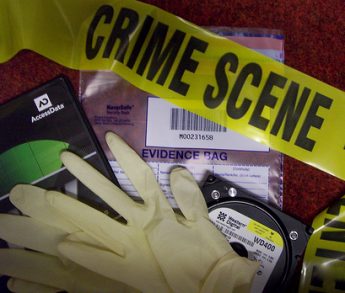
Proteomic analysis allows scientists to detect traces of drugs or other substances in evidence, establish connections between individuals involved in a crime, and determine the age and condition of evidence left at a crime scene. By leveraging the information encoded in proteins, forensic scientists can make significant breakthroughs and bring justice to victims.
This section will delve deeper into the applications and benefits of proteomics in forensic science.
1. Establishing the Origin of Biological Material
Proteomics plays a pivotal role in identifying the origin of biological material found at crime scenes. By analyzing the proteins present in a sample, forensic scientists can determine the species, tissue type, or fluid it originates from. This information is invaluable in linking a specific individual to a crime or establishing the presence of substances, such as drugs or toxins, in the sample. Unlike DNA analysis, which provides limited information about the source of the biological material, proteomics offers a more comprehensive understanding, enabling investigators to paint a clearer picture of the events surrounding the crime.
2. Determining Individual Identity
One of the most significant advantages of proteomics in forensic science is its ability to determine an individual’s identity with remarkable accuracy. Proteins, being highly specific to individuals, can serve as unique markers for identification. By comparing the protein profiles of a sample with known references, forensic scientists can establish the identity of a suspect or victim. This information is particularly useful when DNA analysis is not feasible, either due to degradation or absence. Proteomics provides an alternative avenue for identifying individuals and can significantly contribute to solving cases that would otherwise remain unsolved.
3. Uncovering Vital Clues
Proteomics enables forensic scientists to uncover vital clues that might have otherwise gone undetected. By studying the proteins present in a sample, scientists can identify specific markers or signatures associated with certain activities or conditions. For example, proteomic analysis can reveal the presence of proteins associated with drug use, indicating the involvement of illicit substances in a crime. Similarly, it can detect proteins associated with physical trauma, shedding light on the nature and severity of injuries sustained by a victim. These insights can provide crucial evidence in courtrooms and greatly assist in building a strong case.
4. Overcoming Challenges in DNA Analysis
While DNA analysis has long been a staple in forensic investigations, it has its limitations. DNA samples can degrade over time, rendering them unsuitable for analysis. In such cases, proteomics offers a viable alternative. Proteins are more robust and stable, allowing for analysis even when DNA is no longer viable. Additionally, proteomic analysis can provide valuable information beyond what DNA analysis can offer. By examining the protein patterns, forensic scientists can gain insights into biological processes, disease conditions, and even the individual’s lifestyle or exposure to certain substances.
Proteomics in Action: A Case Study
An illustrative example of the impact of proteomics in forensic science is a case that occurred in North Vancouver, British Columbia. In 2014, a two-year-old child died under mysterious circumstances. Initial examination of the bruising suggested potential harm by the babysitter, but the evidence was inconclusive. In an attempt to identify toxins, a biochemist from the University of British Columbia analyzed the child’s blood and urine samples using proteomics.
By studying the proteins present in the samples, the scientist aimed to isolate any foreign proteins. Remarkably, he identified nonhuman proteins that matched snake venom. Further analysis indicated that the child had been bitten by a rattlesnake, a crucial discovery that DNA analysis alone would not have revealed. This case underscores the vital role proteomics can play in elucidating intricate details and providing critical evidence in forensic investigations.
Pursuing a Career in Proteomics
As proteomics is still a relatively new field, there are numerous opportunities for students and researchers to embark on groundbreaking projects and contribute to scientific advancements. If you aspire to work in proteomics, starting with an undergraduate science degree in biology or chemistry is advisable, as it provides a solid foundation for further studies.
Attending a university with a dedicated proteomics department, such as Northwestern Proteomics at Northwestern University or the Department of Molecular Medicine Proteomics at the University of South Florida, can offer valuable resources and mentorship opportunities. In this field, ambition is essential. Students must identify their research objectives, choose suitable projects, and seek mentors who can guide them through the research process, ultimately leading to the production of significant outcomes.
Conclusion
Proteomics represents a rapidly expanding field with vast potential in understanding and combating diseases. Through the study of proteins and their characteristics, scientists can gain valuable insights into disease progression, treatment efficacy, and biomarkers. In the realm of forensic science, proteomics offers a powerful tool for analyzing evidence, identifying the origin of biological materials, and unraveling complex crime scenes.
Forensic Analyst by Profession. With Simplyforensic.com striving to provide a one-stop-all-in-one platform with accessible, reliable, and media-rich content related to forensic science. Education background in B.Sc.Biotechnology and Master of Science in forensic science.




 Forensic Files


