
Forensic Protocols
County investigating correlation of sewage pollution and airborne illness

The San Diego County Board of Supervisors this week directed public health staffers to assist a local task force that is investigating whether …
County investigating correlation of sewage pollution and airborne illness
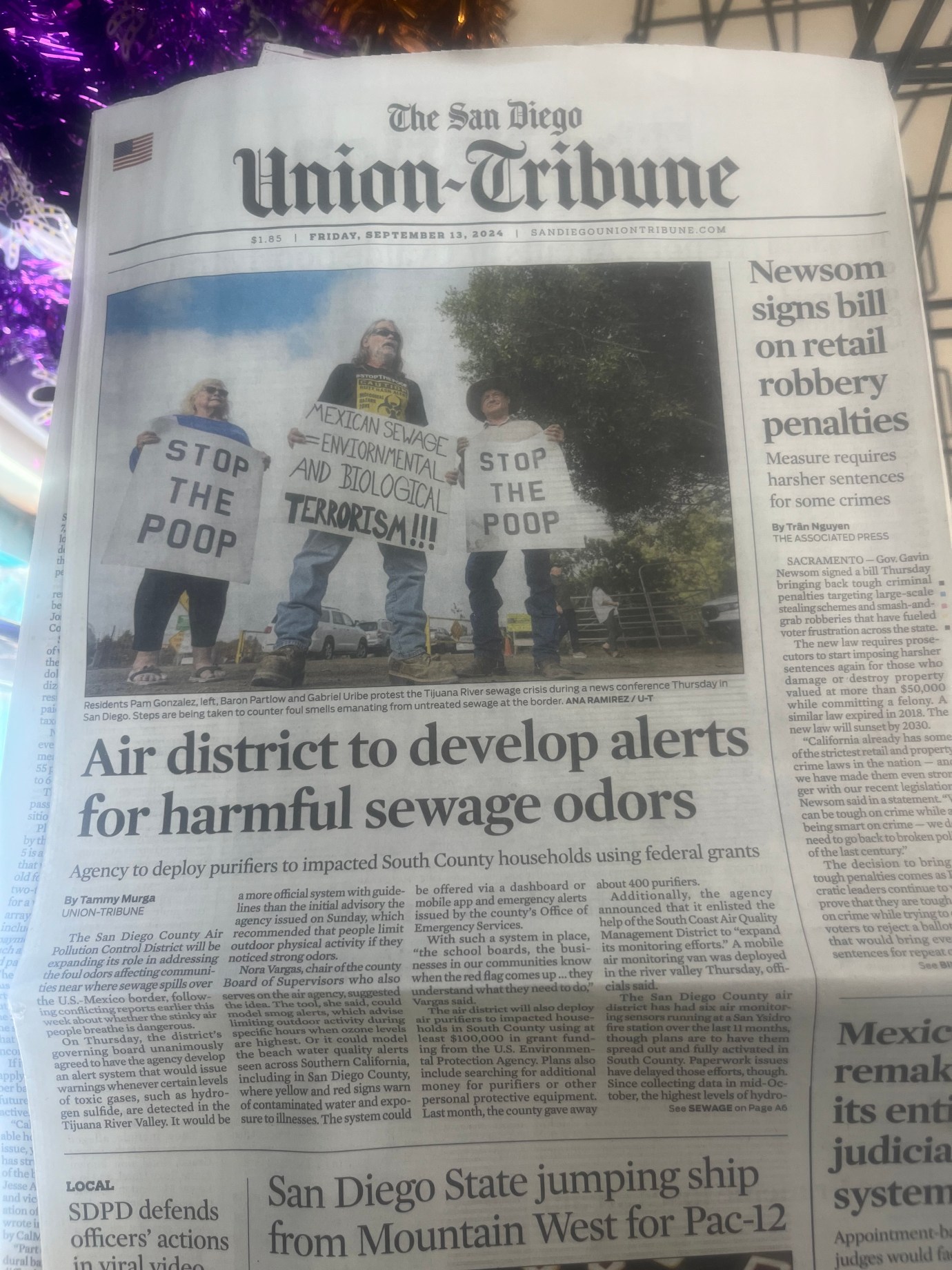
Airborne Sewage Victims Demonstrate via San Diego Union Tribune
One of the reasons modern, industrialized societies utilize sewage treatment facilities is because of the dangerous toxins, chemicals and parasites contained in untreated sewage.
Untreated sewage forms cumulous clouds at it combines with vehicle exhaust and other dangerous toxins in the atmosphere. These toxic clouds become more harmful as the wind moves them through the environment, they do not dissipate or dissapear.

Forensics: Crisis of U.S. Law Enforcement Funding. 250,000 cold cases unsolved. This includes Missing and Unidentified Persons. Video.
USDOJ funding for these cases is paltry and poorly organized due to bureaucratic and Congressional apathy. https://www.wral.com/video/6-200-cold-…
Forensics: Crisis of U.S. Law Enforcement Funding. 250,000 cold cases unsolved. This includes Missing and Unidentified Persons. Video.
The Role of Artificial Intelligence in Revolutionizing Forensic Science…..AN INTRODUCTION

In the field of forensic science, where accuracy and efficiency are important, the integration of artificial intelligence (AI) has sparked a …
The Role of Artificial Intelligence in Revolutionizing Forensic Science…..AN INTRODUCTION
AI and Crime Prevention: AI and Forensic Science, How is AI used in Forensic Science? What is the role of AI in Crime Prevention? What is Crime …
AI and Crime Prevention: AI and Forensic Science, How is AI used in Forensic Science? What is the role of AI in Crime Prevention? What is Crime …
AI and Crime Prevention: AI and Forensic Science, How is AI used in Forensic Science? What is the role of AI in Crime Prevention? What is Crime …

Proteomics: Advancements and Applications in Forensic Science
Proteomics, the study of proteins and their interactions, is an emerging field of science that holds immense potential in understanding and managing various diseases. By analyzing the structure, function, abundance, and interactions of proteins…
Introduction
Proteomics, the study of proteins and their interactions, is an emerging field of science that holds immense potential in understanding and managing various diseases. By analyzing the structure, function, abundance, and interactions of proteins in different cells, scientists can gain valuable insights that contribute to more effective diagnostic and treatment strategies. In this article, we explore the fascinating world of proteomics, its applications in forensic science, and how aspiring researchers can embark on a rewarding journey in this field.
Understanding Proteomics
Proteomics encompasses a range of disciplines within biology, including genomics, metabolomics, and lipidomics. The term “proteome” refers to the complete set of proteins expressed in a cell or organism. Coined in 1975 when the first proteins were isolated and mapped, proteomics has evolved significantly over the years. Today, researchers can employ proteomics to study genes, genomes, protein interactions, and even gain mechanistic insights into tumor growth and metastasis.
Applications in Forensic Science
Forensic science benefits greatly from the advancements in proteomics, offering a new and powerful tool for investigating and solving crimes. While extracting proteins may pose challenges compared to DNA analysis, proteins can provide answers to questions that DNA alone cannot address.
Proteomic analysis allows scientists to detect traces of drugs or other substances in evidence, establish connections between individuals involved in a crime, and determine the age and condition of evidence left at a crime scene. By leveraging the information encoded in proteins, forensic scientists can make significant breakthroughs and bring justice to victims.
https://googleads.g.doubleclick.net/pagead/ads?client=ca-pub-6887802453600975&output=html&h=280&adk=1203224034&adf=1723636460&pi=t.aa~a.2535432194~i.13~rp.4&w=812&fwrn=4&fwrnh=100&lmt=1693396246&num_ads=1&rafmt=1&armr=3&sem=mc&pwprc=3830446624&ad_type=text_image&format=812×280&url=https%3A%2F%2Fsimplyforensic.com%2Fforensic-proteomics%2Fproteomics-advancements-and-applications-in-forensic-science%2F&host=ca-host-pub-2644536267352236&fwr=0&pra=3&rh=200&rw=811&rpe=1&resp_fmts=3&wgl=1&fa=27&uach=WyJDaHJvbWUgT1MiLCIxNTQ3NC43MC4wIiwieDg2IiwiIiwiMTE1LjAuNTc5MC4xNjAiLFtdLDAsbnVsbCwiNjQiLFtbIk5vdC9BKUJyYW5kIiwiOTkuMC4wLjAiXSxbIkdvb2dsZSBDaHJvbWUiLCIxMTUuMC41NzkwLjE2MCJdLFsiQ2hyb21pdW0iLCIxMTUuMC41NzkwLjE2MCJdXSwwXQ..&dt=1693439541469&bpp=3&bdt=7439&idt=3&shv=r20230829&mjsv=m202308280101&ptt=9&saldr=aa&abxe=1&prev_fmts=0x0&nras=2&correlator=4281127640255&frm=20&pv=1&ga_vid=1044805611.1693439535&ga_sid=1693439541&ga_hid=619569353&ga_fc=1&u_tz=-420&u_his=1&u_h=1080&u_w=1920&u_ah=1080&u_aw=1920&u_cd=24&u_sd=1&dmc=4&adx=422&ady=1834&biw=1920&bih=972&scr_x=0&scr_y=0&eid=44759875%2C44759926%2C44798879%2C44759837&oid=2&pvsid=56408842780082&tmod=1280356440&uas=0&nvt=1&fc=1408&brdim=0%2C0%2C0%2C0%2C1920%2C0%2C1920%2C1080%2C1920%2C972&vis=1&rsz=%7C%7Cs%7C&abl=NS&fu=128&bc=31&ifi=2&uci=a!2&btvi=1&fsb=1&xpc=K2cQtBfmS4&p=https%3A//simplyforensic.com&dtd=9
This section will delve deeper into the applications and benefits of proteomics in forensic science.
1. Establishing the Origin of Biological Material
Proteomics plays a pivotal role in identifying the origin of biological material found at crime scenes. By analyzing the proteins present in a sample, forensic scientists can determine the species, tissue type, or fluid it originates from. This information is invaluable in linking a specific individual to a crime or establishing the presence of substances, such as drugs or toxins, in the sample. Unlike DNA analysis, which provides limited information about the source of the biological material, proteomics offers a more comprehensive understanding, enabling investigators to paint a clearer picture of the events surrounding the crime.
2. Determining Individual Identity
One of the most significant advantages of proteomics in forensic science is its ability to determine an individual’s identity with remarkable accuracy. Proteins, being highly specific to individuals, can serve as unique markers for identification. By comparing the protein profiles of a sample with known references, forensic scientists can establish the identity of a suspect or victim. This information is particularly useful when DNA analysis is not feasible, either due to degradation or absence. Proteomics provides an alternative avenue for identifying individuals and can significantly contribute to solving cases that would otherwise remain unsolved.
3. Uncovering Vital Clues
Proteomics enables forensic scientists to uncover vital clues that might have otherwise gone undetected. By studying the proteins present in a sample, scientists can identify specific markers or signatures associated with certain activities or conditions. For example, proteomic analysis can reveal the presence of proteins associated with drug use, indicating the involvement of illicit substances in a crime. Similarly, it can detect proteins associated with physical trauma, shedding light on the nature and severity of injuries sustained by a victim. These insights can provide crucial evidence in courtrooms and greatly assist in building a strong case.
4. Overcoming Challenges in DNA Analysis
While DNA analysis has long been a staple in forensic investigations, it has its limitations. DNA samples can degrade over time, rendering them unsuitable for analysis. In such cases, proteomics offers a viable alternative. Proteins are more robust and stable, allowing for analysis even when DNA is no longer viable. Additionally, proteomic analysis can provide valuable information beyond what DNA analysis can offer. By examining the protein patterns, forensic scientists can gain insights into biological processes, disease conditions, and even the individual’s lifestyle or exposure to certain substances.
Proteomics in Action: A Case Study
An illustrative example of the impact of proteomics in forensic science is a case that occurred in North Vancouver, British Columbia. In 2014, a two-year-old child died under mysterious circumstances. Initial examination of the bruising suggested potential harm by the babysitter, but the evidence was inconclusive. In an attempt to identify toxins, a biochemist from the University of British Columbia analyzed the child’s blood and urine samples using proteomics.
By studying the proteins present in the samples, the scientist aimed to isolate any foreign proteins. Remarkably, he identified nonhuman proteins that matched snake venom. Further analysis indicated that the child had been bitten by a rattlesnake, a crucial discovery that DNA analysis alone would not have revealed. This case underscores the vital role proteomics can play in elucidating intricate details and providing critical evidence in forensic investigations.
Pursuing a Career in Proteomics
As proteomics is still a relatively new field, there are numerous opportunities for students and researchers to embark on groundbreaking projects and contribute to scientific advancements. If you aspire to work in proteomics, starting with an undergraduate science degree in biology or chemistry is advisable, as it provides a solid foundation for further studies.
Attending a university with a dedicated proteomics department, such as Northwestern Proteomics at Northwestern University or the Department of Molecular Medicine Proteomics at the University of South Florida, can offer valuable resources and mentorship opportunities. In this field, ambition is essential. Students must identify their research objectives, choose suitable projects, and seek mentors who can guide them through the research process, ultimately leading to the production of significant outcomes.
Conclusion
Proteomics represents a rapidly expanding field with vast potential in understanding and combating diseases. Through the study of proteins and their characteristics, scientists can gain valuable insights into disease progression, treatment efficacy, and biomarkers. In the realm of forensic science, proteomics offers a powerful tool for analyzing evidence, identifying the origin of biological materials, and unraveling complex crime scenes.
Related: https://nbc101.com/2022/09/29/symbiotic-relationships-in-ecology-mutualism-parasitism-and-commensalism-via-wild-earth-lab/ https://nbc101.com/2022/09/29/symbiotic-relationships-in-ecology-mutualism-parasitism-and-commensalism-via-wild-earth-lab/
SimplyforensicSimplyForensic Editor
Forensic Analyst by Profession. With Simplyforensic.com striving to provide a one-stop-all-in-one platform with accessible, reliable, and media-rich content related to forensic science. Education background in B.Sc.Biotechnology and Master of Science in forensic science.

Repost of Day 58/67: Five Month GED, Graphing via Slope-Intercept Form, and Forensic Science Continuous Learning: Project Do Better

We use rate of change every day, for transporting ourselves and our needful things, for instance, perhaps without even recognizing it, but what else …
Repost of Day 58/67: Five Month GED, Graphing via Slope-Intercept Form, and Forensic Science Continuous Learning: Project Do Better

How To Begin — Adventures in Forensics and Cybersecurity

How to try to get into forensics and cybersecurity
I have been trying to blog about my adventures for a long time. I did not know how to begin. A colleague suggested I start with the steps or the missteps, I should say, that has guided my career in digital forensics. I can tell you that about 10 years ago I did not know anything about computers or anything having to do with investigating devices or determining if a system is compromised by malware. Everything I have learned and experienced has been on-the-job and through mentors, that probably did not know they were mentoring me.
Step 1: Make someone extremely angry that they move you from one organization to the next ( I truthfully did not know what I did)
This step will probably not be the same in your adventure but it led the to the beginning of mine. When I was moved, I ended up in an organization actively doing digital forensics using the Unix/Linux operating system. Talk about being over my head, I came in with no computing background other then using the internet and browsing Youtube at the time. So imagine getting thrown into an operating system that is not commonly used in homes or outside of computing types of career fields. It was a huge challenge but, I decided to jump right in.
Step 2: Jump right in
This was a big challenge, learning an entire new system and how to make it work and do things I need to accomplish. and if you have never seen how technical people use a Linux operating system, think about that blinking green light on a black screen that started typing telling Neo (Matrix) to follow the white rabbit or for those in the newer generation, the very small scenes of Mr. Robot where you see code or text being written across a black screen, seemingly not knowing what it means or does.
In the next 6 months, I was a Linux beast. As you can imagine the common trend to learning everything was repetition. The fact that the operating system was in my face day in and day out, was eventually the success to my learning. Now it did not mean I did not need further training over time but, by overcoming this first challenge I was introduced to terminology, functionality and a common language to discuss my needs to technical mentors. It helped with also identifying the terms needed to google in order to find free training resources across the web.
Step 3: Do not half-ass it
The career field of digital forensics and cybersecurity is always changing and everyone is in a constant mode of learning and training in order to stay with the times or get ahead of it. A good friend of mine and I always debated this and the three areas of this field that covers and interlace everything are
- Operating System
- Computer Science
- Networking
If a person can be extremely knowledgeable in any two of these then they would probably be ahead of a lot of individuals in these career fields as it seems the average knowledge amongst these domains, if you will, in my experience, has been that most people have knowledge in 1 of these and then have half-ass knowledge of 1 other.
The knowledge needed in order to be successful requires understanding of operating systems and how they work; networks and communications between machines and the humans using those networks; everything runs off software or written code, the ability to read a variety of coding languages and understand the functionality of the code. The computer science or reading of code domain seems to be the least found amongst a lot of these career fields as people who can do it can find themselves in better financial positions as developers.
My strongest domains are in the operating systems and computer science domain and am currently learning the networking domain. I am constantly learning and always run into a new challenge, but I have always been able to overcome or advance in my career based on these 3 knowledge bases.
How To Begin — Adventures in Forensics and Cybersecurity

Statistical Probabilities Associated with Different Types of Deaths
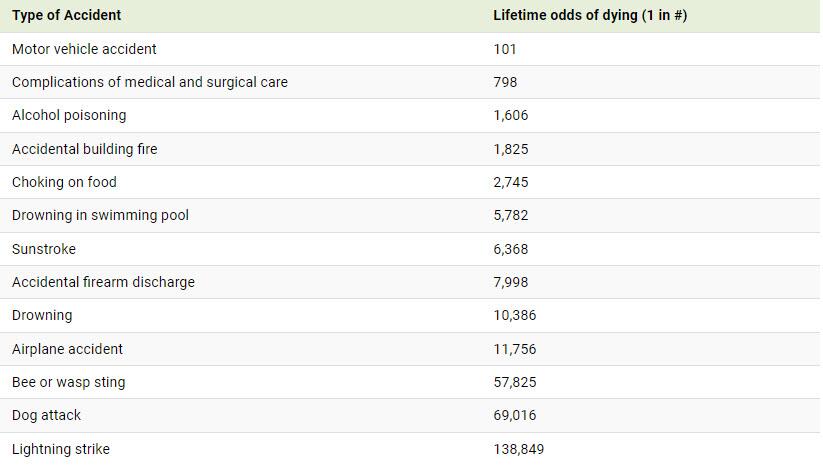
The Odds Of Dying From Various Accidents
Visualizing The Odds Of Dying From Various Accidents
Fatal accidents account for a significant number of deaths in the U.S. every year. For example, nearly 43,000 Americans died in traffic accidents in 2021.
However, as Visual Capitalist’s Marcus Lu explains below, without the right context, it can be difficult to properly interpret these figures.
To help you understand your chances, we’ve compiled data from the National Safety Council, and visualized the lifetime odds of dying from various accidents.
Data and Methodology
The lifetime odds presented in this graphic were estimated by dividing the one-year odds of dying by the life expectancy of a person born in 2020 (77 years).
Additionally, these numbers are based on data from the U.S., and likely differ in other countries.


For comparison’s sake, the odds of winning the Powerball jackpot are 1 in 292,000,000. In other words, you are 4000x more likely to die by a lightning strike over your lifetime than to win the Powerball lottery.
Continue reading below for further context on some of these accidents.
Motor Vehicle Accidents
Motor vehicle accidents are a leading cause of accidental deaths in the U.S., with a 1 in 101 chance of dying. This is quite a common way of dying, especially when compared to something like bee stings (1 in 57,825).
Unfortunately, a major cause of vehicle deaths is impaired driving. The CDC reports that 32 Americans are killed every day in crashes involving alcohol, which equates to one death every 45 minutes.
For further context, consider this: 30% of all traffic-related deaths in 2020 involved alcohol-impaired drivers.
Drowning
The odds of drowning in a swimming pool (1 in 5,782) are significantly higher than those of drowning in general (1 in 10,386). According to the CDC, there are 4,000 fatal drownings every year, which works out to 11 deaths per day.
Drowning also happens to be a leading cause of death for children. It is the leading cause for kids aged 1-4, and second highest cause for kids aged 5-14.
A rather surprising fact about drowning is that 80% of fatalities are male. This has been attributed to higher rates of alcohol use and risk-taking behaviors.
Accidental Firearm Discharge
Lastly, let’s look at accidental firearm deaths, which have lifetime odds of 1 in 7,998. That’s higher than the odds of drowning (general), as well as dying in an airplane accident.
This shouldn’t come as a major surprise, since the U.S. has the highest rates of gun ownership in the world. More importantly, these odds highlight the importance of properly securing one’s firearms, as well as learning safe handling practices.
As a percentage of total gun-related deaths (45,222 in 2020), accidental shootings represent a tiny 1%. The two leading causes are suicide (54%) and homicide (43%).
Interested in learning more about death? Revisit one of our most popular posts of all time: Visualizing the History of Pandemics.
Tyler Durden
Sat, 01/28/2023 – 18:00
Go to Source
Author: Tyler Durden
Advertisements
REPORT THIS AD
Share this:
Related
U.S. Deaths Being Attributed to COVID-19 When They Clearly Weren’t; Alcohol Abuse, Cancer, Murder/Suicide, Traffic Accidents, etc.
By B.N. Frank People are dying from COVID-19 and people are dying with COVID-19. There is a difference, however, that hasn’t stopped deaths from being… U.S. Deaths Being Attributed to COVID-19… Go to Source Author: Activist PostSeptember 20, 2021
In “Activist Post”
Visualizing The Biggest Ammonium Nitrate Explosions Since 2000
August 7, 2020
In “Zero Hedge”
Opioid Abusers Also Face Higher Risks Of Death From Suicide, Disease & Car Accidents
December 27, 2019
In “Zero Hedge”AuthorZero HedgePosted onCategoriesZero HedgeTagsZero Hedge
What to expect when you reach the border of life and death. A Medical Study. — JcgregSolutions

“We characterize the testimonies that people had and were able to identify that there is a unique recalled experience of death that is different to other experiences that people may have in the hospital or elsewhere,” Dr. Parnia said, “and that these are not hallucinations, they are not illusions, they are not delusions, they are […]
What to expect when you reach the border of life and death. A Medical Study. — JcgregSolutions
 Forensic Files