The case for the Good Cop
the false belief and false memories in cases of coerced-internalised false confession are most commonly developed as a result of manipulative interrogation techniques. (Gudjonsson, 1997, p. 298)
Gísli Guðjónsson C.B.E and currently honorary consultant Clinical and Forensic psychologist at Broadmoor Hospital has made arguably some of the biggest contributions to Psychology. Guðjónsson has had a hand in some of the most significant interventions Psychology has made in the U.K particularly as his role as an expert witness in false confession. The most notable within the context of the infamous Birmingham Six and the Guildford Four miscarriages of justice as well as the assessment of Colin Stagg whilst on remand for the Rachel Nickell murder. However one of Guðjónsson’s biggest applied contributions in that of his research into a reliable method of measuring the yield and shiftelements that contribute to different types of false confession. This is called theGudjonsson Suggestibility Scale which is only available to Chartered Clinical and Forensic Psychologists.
Types of False Confession
1. Voluntary False Confession -Examples of reasons are to pre-empt further investigation of a more serious offence (Shepherd, 1996), or to protect a significant other,to gain notoriety or even a pathological need to become infamous and to enhance one’s self-esteem (Huff, Rattner, & Sagarin, 1986);
2. Coerced-compliant false confessions. -Those who want to please their interrogator or think they will be released at a later date due to being found not guilty, These individuals know they are not guilty.
3. Coerced-internalised false confession – The suspect accepts the version presented to them and internalises the ‘facts’. This is a dangerous scenario as false memories can be created which are very difficult if even possible to differentiate from real memories and thus only new evidence can counter these. Why would anybody looking if someone has confessed? This is where yielding to pressure and shifting the story becomes prominent. Gudjonsson-False_Confessions can be very influential here too.
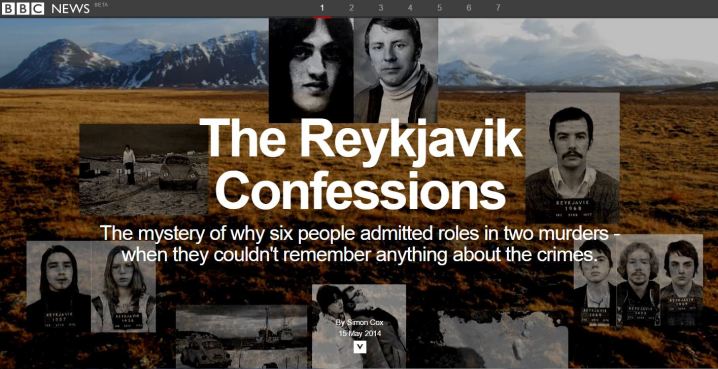
For a guided tour on the Psychology of Forensic False Confessions with analysis by Guðjónsson himself read and watch the clips in this fascinating BBC News Special on the case of the Reykjavik confessions.
Read an insightful interview from the 2013 edition of the Psychologist by The British Psychological Society that delves into Guðjónsson’s lifetime of contributions to Psychology. There is a particular interesting section on the influence of the Reid technique. You can listen to the interview here.
The Case for Bad Cop
John E. Reid and Associates developed one of the most effective methods of eliciting a confess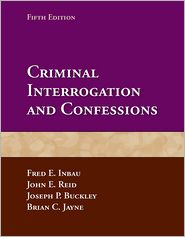 ion from a guilty suspect. ‘The Reid Technique’. The technique has been used extensively in North America and has contributed to the convictions of countless suspects. The technique uses a range of methods to guide the suspect into a psychological state where they are given a choice of versions of events (both of which requires admission of guilt).
There are three many phases of the process.
1. Factual analysis –This represents the collection and analysis of information relative to a crime scene, the victim and possible subjects.
2. Behaviour Analysis Interview –a non-accusatory question and answer session intended to elicit information from the subject in a controlled environment. The clinical nature of the interview, including the asking of specific behaviour provoking questions, is designed to provide the investigator with verbal, paralinguistic and nonverbal behavior symptoms which either support probable truthfulness or deception
3. Accusatory interrogation –elicit the truth from someone whom the investigator believes has lied during an interview.
adapted from https://www.reid.com/educational_info/canada.html
The interrogation of a suspect who has lied is the basis of the formation of Inbau and Reid’s 9 steps.
Step 1 – Direct Confrontation. Lead the suspect to understand that the evidence has led the police to the individual as a suspect. Offer the person an early opportunity to explain why the offence took place.
Step 2 – Try to shift the blame away from the suspect to some other person or set of circumstances that prompted the suspect to commit the crime. That is, develop themes containing reasons that will justify or excuse the crime. Themes may be developed or changed to find one to which the accused is most responsive.
Step 3 – Never allow the suspect to deny guilt. If you’ve let him talk and say the words ‘I didn’t do it’, and the more often a person says ‘I didn’t do it’, the more difficult it is to get a confession.”
Step 4 – Ignore excuses. At this point, the accused will often give a reason why he or she did not or could not commit the crime. Try to use this to move towards the confession.
Step 5 – Reinforce sincerity to ensure that the suspect is receptive.
Step 6 – If suspect cries, infer guilt. The suspect will become quieter and listen. Move the theme discussion towards offering alternatives. If the suspect cries at this point, infer guilt.
Step 7 – Pose the “alternative question”, giving two choices for what happened; one more socially acceptable than the other. The suspect is expected to choose the easier option but whichever alternative the suspect chooses, guilt is admitted.
Step 8 – Admit guilt. Lead the suspect to repeat the admission of guilt in front of witnesses.
Step 9 -Confession. Document the suspect’s admission and have him or her sign as a confession.
The Reid technique isn’t without it’s
criticism due to the danger of applying such intense psychological pressure onto an individual, especially one that scores highly on the
Gudjonsson Suggestibility Scale, especially as vulnerability to suggestibility isn’t an overt trait that could easily be recognised.
Further watching
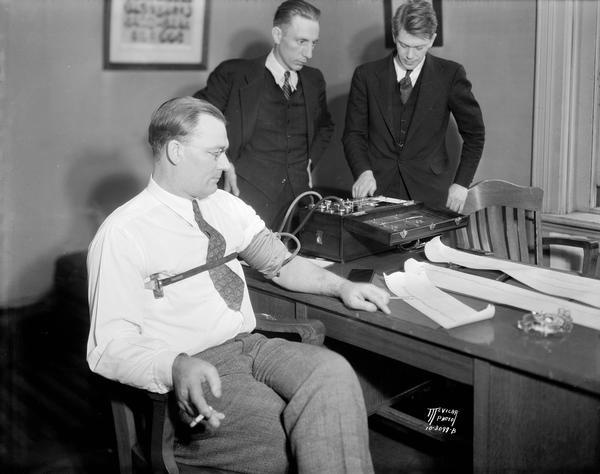
An insightful documentary into the relationship between interrogation and confession.





 terstate 75.





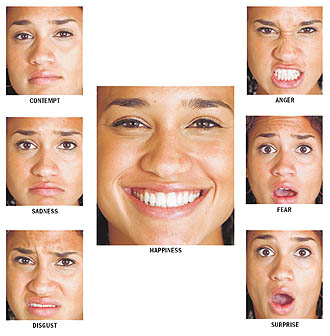

 The eyes truly are the window to the soul. However don’t be fooled by so called
 n? Maybe a more fundamental question is are there any universal responses of facial expression or body language? (The eyebrow flash for recognition of someone is thought to be pretty universal as an involuntary response.) Certainly classic research by




 Death of a Rising Star: March 31, 1995: Selena is shot to death by the President of her Fan Club.





William Case
Texas 20 hours ago
Critics faulted the Corsicana Fire Department arson investigator in the Willingham case for not following National Fire Protection Association arson investigation guidelines. However, in court hearings following Willingham’s 2004 execution, the critics admitted that the guidelines has not been published in 1991, when the arson investigation was conducted. The guidelines were first published in 1992. The critics primarily faulted the arson investigator for listing separate points of origin as one of about a dozen indications of arson. Willingham had set one fire in the hallway leading to his daughters’ bedroom and a second fire at the front door. (Prior to setting the fire, he had pushed a refrigerator to block the back door which led from the kitchen i to the back yard.) The critics pointed out that an extremely hot fire can mimic separate points of origin by causing flames to “flash” to other parts of buildings. However, firemen said that the Willingham fire wasn’t a “hot fire” and witnesses say they saw smoke but no flames. It took firemen only a few minute to extinguish the flames. After the Willingham case became controversial, the fire department hired independent arson investigators to go back over the forensic evidence using the latest guidelines. They concluded it was arson. Willingham’s defense also hire its own arson investigator, but did call him to testify at the trial because he also determined the fire was deliberately set.
Surferdude
DC
Yeah, that’s why this case is the poster child against capital punishment. Try reading the report cited in the article. It won’t take long – no need to go beyond the first sentence that states that it wasn’t arson.
Tasha
Bay Area
I am not sure where you have collected these “facts”, but I would recommend a New Yorker article (http://www.newyorker.com/magazine/2009/09/07/trial-by-fire): In a “scathing” report, the fire scientist hired by the commission established by the Texas government to investigate the case “concluded that investigators in the case had no scientific basis for claiming that the fire was arson, ignored evidence that contradicted their theory, had no comprehension of flashover and fire dynamics, relied on discredited folklore, and failed to eliminate potential accidental or alternative causes of the fire. He said that… the approach [of the deputy fire marshal investigating the case at the time] seemed to deny ‘rational reasoning’ and was more ‘characteristic of mystics or psychics.’ What’s more, [he] determined that the investigation violated… ‘not only the standards of today but even of the time period.'” It appears that Willingham was executed for a ‘crime’ that never happened. In addition, last week the “the State Bar of Texas filed a formal accusation of misconduct… [including] obstruction of justice, making false statements and concealing evidence favorable to Willingham’s defense” against the county prosecutor who convicted Willingham (http://www.texastribune.org/2015/03/18/prosecutor-accused-misconduct-tx-….