“The FBI could be the most dangerous agency in the country if not scrutinized carefully.”
FBI director Louis Freeh
Tainting Evidence — Inside the Scandals at the FBI Crime Lab
August 29 2022 — Last week, FBI Las Vegas tweeted a picture of a special agent fingerprinting child actress Margaret O’Brien during her visit to the FBI in January 1946. This tweet brought back quite some memories… Follow us on Twitter: @Intel_Today
The fingerprints of Margaret O’Brien brought the total number on file to 100,000,000. Since 1924, the FBI has been the single U.S. repository for fingerprints. Computers were first installed to search these files in 1980.
Since 1999, the FBI has stored and accessed its fingerprint database via the digital IAFIS (Integrated Automated Fingerprint Identification System), which currently holds the fingerprints and criminal records of over 51 million criminal record subjects and over 1.5 million civil (non-criminal) fingerprint records. US Visit currently holds a repository of the fingerprints of over 50 million non-US citizens. [Vintage photographs show the massive FBI’s fingerprint files, 1944]
Perhaps, you believe that ‘fingerprint evidence’ is rock solid evidence. Allow me to quote a very important analysis [Tainting Evidence — Inside the Scandals at the FBI Crime Lab] :
Occasionally, proficiency testing in one specialist area of forensic science exposes widespread incompetence. In 1995, Collaborative Testing Services tested 156 U.S. fingerprint examiners — the cornerstone of forensic science — in a proficiency test sponsored by their professional body, the International Association for Identification. Only 44 percent (68) of those tested identified all seven latent fingerprints correctly. Some 56 percent (88) got at least one wrong, 4 percent (6) of these failing to identify any. In all, incorrect identifications made up 22 percent of the total attempted.
In other words, in more than one in five instances “damning evidence would have been presented against the wrong person,” noted David Grieve, editor of the fingerprinters’ magazine, the Journal of Forensic Identification. Worse still, examiners knew they were being tested and were thus presumably more careful and freer from law enforcement pressures. Calling for immediate action, Grieve concluded: “If one in five latent fingerprint examiners truly possesses knowledge, skill or ability at a level below an acceptable and understood baseline, then the entire profession is in jeopardy.” The same must be true of every suspect in the country, the vast majority of whom never get a fingerprint expert onto their defense team or any chance of a reexamination. Many crime laboratories routinely destroy fingerprint evidence.
It is clear that forensic science is massively error-ridden, while the flaws in the sole laboratory accreditation program designed to improve performance are obvious. ASCLD/LAB has no powers to regulate or inspect a crime lab or to stop a lab that has failed inspection from doing examinations in criminal justice cases.
Many U.S. crime labs have never even risked inspection and the possibility of failing, most notable among them the one that bills itself the premier forensic science laboratory in the world — the FBI lab in Washington.
Sadly, widespread incompetence is just one side of the problem. There is worse, much worse…
“Never attribute to malice that which can be adequately explained by stupidity, but don’t rule out malice.”
Albert Einstein
Did you know? FBI agents intervened in the Shirley McKie case — a former detective wrongly accused of leaving her fingerprint at a murder scene — to urge a cover-up amid fears it could scupper the trial of the Lockerbie bombers.
David Grieve, the senior fingerprint expert at Illinois State Police who helped clear Ms McKie in 1999, said FBI agents had asked him to keep silent before the Lockerbie trial began in the Hague in February 2000.
Mr Grieve said : “I was asked not to mention anything about the case and not to publicise it because we had to think about the higher goal, which was Lockerbie.”
Meanwhile, Allan Bayle, a fingerprint expert formerly of the Metropolitan Police, has said it was his “firm belief” the SCRO’s evidence was “far more likely to be fabrication rather than gross incompetence”.
And now, allow me go back to the Lockerbie Case. Let us discuss the so-called evidence of SEMTEX!
To be continued.
Forensic Science: Last Week Tonight with John Oliver (HBO)
REFERENCES
Tainting Evidence — Inside the Scandals at the FBI Crime Lab
Lockerbie FBI team urged a cover-up on McKie — The Herald, Feb. 2006
=
FBI Forensic Science : Incompetence or Malice?
“The FBI could be the most dangerous agency in the country if not scrutinized carefully.” FBI director Louis Freeh Tainting Evidence — Inside the Scandals at the FBI Crime Lab August 29 2022 — Last week, FBI Las Vegas tweeted a picture of a special agent fingerprinting child actress Margaret O’Brien during her visit to […]
When someone is charged with a crime, the prosecution and defence typically call in witnesses to testify about the guilt or innocence of the person who has been accused. One of the most important players in all this testimony often isn’t a person at all: it’s the forensic evidence.
And these evidences are obtained by scientific methods such as ballistics, blood test, and DNA test and further used in court proceeding . Forensic evidence often helps to establish the guilt or innocence of possible suspects.
So its Analysis is very important as they are used in the investigation and prosecution of civil as well as criminal matters. Moreover Forensic evidence can be used to link crimes that are thought to be related to one another. For example, DNA evidence can link one offender to several different crimes or crime scenes and this linking of crimes helps the police authorities to narrow the range of possible suspects and to establish patterns of for crimes to identify and prosecute suspect.
CASES REQUIRING FORENSIC EVIDENCE Forensic evidence is useful in helping solve the most violent and brutal of cases, as well as completely nonviolent cases related to crimes such as fraud and hacking.
If a decomposing body is found in the woods somewhere, forensic scientists can use DNA, dental records, and other evidence to identify the person, determine the cause of death, and sometimes determine if the body contains material from another person who may have been present at the time of death.
Investigators often look for forensic evidence in cases where sexual assault is suspected. In some cases, DNA evidence can prove or disprove allegations of rape or child molestation.
Forensics are also useful in drug cases. Scientists can test unidentified substances that were found on an individual to confirm whether or not they are cocaine, heroin, marijuana, or other controlled substances. Investigators use forensic toxicology to determine whether a driver was impaired at the time they were involved in an accident.
The field of forensics isn’t only limited to evidence obtained from people’s bodies. Ballistics (otherwise known as weapons testing) can tell investigators a lot about cases where gunfire was involved. Did a bullet come from a particular gun? Where was the shooter standing? How many shots did they fire? Ballistics can help answer all of these questions. Another area of forensic evidence lies within the circuits of our phones and computers. Those who commit cyber crimes leave behind traces of their activities in databases and documents scattered throughout the digital world. Forensic computer specialists know how to sort through the information to discover the truth.
However ,The question of admissibility of evidence is whether the evidence is relevant to a fact in issue in the case. Admissibility is always decided by the judge and all relevant evidence is potentially admissible, subject to common law and statutory rules on exclusion. Relevant evidence is evidence of facts in issue and evidence of sufficient relevance to prove or disprove a fact in issue.
As per Section 45 of Indian evidence Act 1872- When the Court has to form and opinion upon a point of foreign law or of science or art, or as to identity of handwriting or finger impressions, the opinions upon that point of persons specially skilled in such foreign law, science or art, or in questions as to identity of handwriting or finger impressions are relevant facts. Such persons are called experts. Further as per Section 46 of Indian evidence Act 1872- it is stated that facts, not otherwise relevant, are relevant if they support or are inconsistent with the opinions of experts, when such opinions are relevant. Though there is no specific DNA legislation enacted in India, Sec.53 and Sec. 54 of the Criminal Procedure Code, 1973 provides for DNA tests impliedly and they are extensively used in determining complex criminal problems.
Sec. 53 deals with examination of the accused by medical practitioner at the request of police officer if there are reasonable grounds to believe that an examination of his person will afford evidence as to the commission of the offence. Sec. 54 of the Criminal Procedure Code, 1973 further provides for the examination of the arrested person by the registered medical practitioner at the request of the arrested person.
The law commission of India in its 37th report stated that to facilitate effective investigation, provision has been made authorizing an examination of arrested person by a medical practitioner, if from the nature of the alleged offence or the circumstances under which it is alleged to have been committed, there are reasonable grounds for believing that an examination of the person will afford evidence. Sec. 27(1) of Prevention of Terrorism Act, 2002 says when a investigating officer request the court of CJM or the court of CMM in writing for obtaining sample of hand writing, finger prints, foot prints, photographs, blood, saliva, semen, hair, voice of any accused person, reasonable suspect to be involved in the commission of an offence under this act. It shall be lawful for the court of CJM or the court of CMM to direct that such samples shall be given by the accused person to the police officer either through a medical practitioner or otherwise as the case may be.
Section 65(B) of Indian Evidence Act says that electronic records needs to be certified by a person occupying a responsible official position for being admissible as evidence in any court proceedings. So as the capabilities of forensic science have expanded and evolved over the years, facing a number of significant challenges.
Then also a main weakness is in its susceptibility to cognitive bias. Today, despite remaining a powerful element within the justice system, and playing a key role in establishing and reconstructing events, forensic science much like any scientific domain, faces weaknesses and limitations.
These issues can arise throughout an investigation; from when the forensic evidence is first collected at the scene of the crime, until the evidence is presented at court.
So there is utmost need of forensic science because of reasons like – The need for the application of science in criminal investigation has arisen from the following factors: 1. Social Changes: The society is undergoing drastic social changes at a very rapid pace. India has changed from a colonial subject race to a democratic republic. Sizeable industrial complex has sprung up. The transport facilities have been revolutionized. There is a growing shift from a rural society to an urban one. These changes have made the old techniques of criminal investigation obsolete. In the British days the police was so much feared that once it had laid its hands upon an individual, he would ‘confess’ to any crime, he may not have even known. The fear is vanishing now. The use of ‘third degree’ techniques used in those days does not find favour with the new generation of police officers and judges.
2. Hiding facilities: The quick means of transport and high density of population in cities have facilitated the commission of crimes. The criminal can hide himself in a corner of a city or move away to thousands of miles in a few hours. He, thus often escapes apprehension and prosecution.
3. Technical knowledge: The technical knowledge of an average man has increased tremendously in recent years. The crime techniques are getting refined. The investigating officer, therefore, needs modern methods to combat the modern criminal.
4. Wide field: The field of activities of the criminal is widening at a terrific rate. Formely, the criminals were usually local, now we find that national or international criminal is a common phenomenon. Smuggling,drug trafficking ,financial frauds and forgeries offer fertile and ever expanding fields.
5. Better Evidence: The physical evidence evaluated by an expert is objective. If a fingerprint is found at the scene of crime, it can belong to only one person. If this person happens to be be the suspect, he must account for its presence at the scene. Likewise, if a bullet is recovered from a dead body, it can be attributed to only one firearm. If this firearm happens to be that of the accused , he must account account for its involvement in the crime. Such evidence is always verifiable.
In reality, those rare few cases with good forensic evidence are the ones that make it to court.—Pat Brown
@MANISHANANDAN
[ CRIME NEVER DIES – PART 3 ] IT IS A CAPITAL MISTAKE TO THEORIZE BEFORE YOU HAVE ALL EVIDENCE. IT BIASES THE JUDGMENT – Sherlock Holmes When someone is charged with a crime, the prosecution and defence typically call in witnesses to testify about the guilt or innocence of the person who has been […]
With the demise of the internationally renowned public sector UK Forensic Science Service in 2012 came the promulgation and growth of a new competitive marketplace.
Private sector companies working in a hastily drawn up framework for forensic science provision were invited into rounds of competitive tendering that were driven by the police service.
These were based on the notion that the Forensic Science Service had been inefficient, delivering forensic science analysis in an expensive and untimely manner.
However, high-quality forensic science provision was always costly and the British police service wanted to operate in a new culture of cost reduction and value for money. They wanted full control of their spending and that is understandable.
But with the rise of competitive tendering the provision of forensic science was commoditized. Specific work and tests in each forensic discipline were itemized and bid for by the companies.
The police forces guaranteed specific volumes of testing to the companies in order to get the best prices and the police began to dictate to the companies what tests they required against the ‘pricelist’ when potential forensic evidence had been collected from crime scenes.
The police service also determined to undertake certain basic scientific tasks themselves. By bringing these in house they could further save money and reduce the burden on their budgets.
This new and cheaper approach has been in place for nine years and has been subjected to comment by critics and supporters alike. In 2018 one major player in the new UK forensic market, Key Forensic Services Ltd, collapsed. They had won a significant share of the available forensic science work, but couldn’t sustain the service.
Many working in forensic science warned that the quality of expert analysis and interpretation would be lost as scientists would no longer be able to refer their findings to colleagues across overlapping disciplines in order to provide a holistic approach to obtaining the best evidence from the forensic samples presented.
This would inevitably lead to the loss of the opportunities for contextualization of the evidential findings for use in the justice process.
In addition the fragmentation of the industry has seen many expert scientists set up their own niche services and struggle to get regular work. Some left the industry altogether.
There has never been a properly constituted academic analysis of what these changes have meant to UK forensic science provision and what the impact has been.
Until now.
In a comprehensive and thorough six-year research programme, Dr Karen Richmond from the University of Copenhagen undertook a long and objective period of fieldwork and analysis.
Interviews were conducted not only with forensic scientists, but also with allied institutional agents including senior professional members of the judiciary of England and Wales, Her Majesty’s Inspectorate of Constabulary, the Office of the Forensic Science Regulator, the Crown Prosecution Service, the Royal Society, the UK Accreditation Service, the Metropolitan Police Service, and the Chartered Society of Forensic Sciences.
Her findings are both startling and important. They point to a thoroughly dysfunctional marketplace that has failed to harmonize the array of tests and reports in a way that should have led to the configuration of a homogenous service from each provider to all police forces.
Instead, the exact opposite has occurred, with very different requirements being demanded of providers by each separate police force so that scientists are “reinventing the wheel” for each customer.
Furthermore the scientific strategy for the analysis and reporting of forensic samples is set by the police with little or no scientific training. They will perhaps have undertaken Crime Scene Investigation training, but that doesn’t allow for the best objective understanding of what might work or not work in each case.
This can result in loss of opportunities as the scientists are often not able to question the police requirements and cannot make their own investigative assessments of what the best science is to be applied.
There has been a market push and perhaps an over reliance on DNA testing as the “go to” science, to the detriment of other scientific processes such as the searching for, collection of, and analysis of fibers.
Indeed there are a host of critical findings that reflect negatively on the way the market has developed. Dr Richmond says in her report:
The data demonstrates not only how government agencies failed to adapt to the introduction of competitive tendering, but also how the market which developed in their wake began to influence, distort and reconfigure the very processes of forensic strategy-setting and analysis.
She goes on to say:
The results offer a compelling insight into the ways in which these agents have adapted to changing relations, shifting priorities, and the imposition of market logics within a sector unaccustomed to the obtrusions of economic efficiency and external regulation.
After nine years there are continuing tensions and frustrations. They are keenly felt by scientists and the companies providing forensic science services. These should not now be set aside as just another academic study.
Dr Richmond’s work has shown that in hindsight the implementation of the decision to restructure forensic science provision to the UK criminal justice system was flawed.
It perhaps should have never left the public sector in the first place, where in a government agency cost considerations would have remained secondary to the need to provide comprehensive criminal justice outcomes.
The US Perspective
In a recent column for The Crime Report “ Why We Need a Federal Forensic Science Agency,” I argued that forensic science provision in the U.S. cannot continue to support unvalidated and often junk science in its courts to the detriment of a fair and just criminal justice system. This remains the case.
However the UK seems to have also got things wrong. Not in the quality of work that is done by the forensic providers, as this is regulated and accredited to international standards; but in the way that the science has been dumbed down by the police.
The emphasis on treating science as a sequence of commoditized testing processes has led to the inability of scientists to properly engage their expertise in support of criminal justice in the way they did when forensic science was delivered as a public sector service.
If the U.S. is eventually to embrace a nationally mandated federal forensic science system in the future, then there are clear lessons to be learned from Dr Richmond’s research.
The application of forensic science to the justice process should be led by independent experts, working in a quality controlled environment, to provide the best evidence for the courts. A system that allows the police to control the work of scientists, without having recourse to the expert opinion of those scientists before the work is carried out, should not be the way to go.
Gareth Bryon
Indeed the UK police approach to seeking quick results cheaply from forensic science may one day mean that the best opportunities to secure a conviction in a high-profile case may go out of the window, because other potential evidence is overlooked or not considered based on cost.
This couldn’t happen in the U.S., could it?
Gareth Bryon is a former Detective Chief Superintendent who worked as a senior officer in the South Wales Police and the British Transport Police, where he led major crime investigation and forensic science services for over 30 years.
Heaviest Organ of Human Body is Liver while Lightest Organ is Lung. The weight of organ is help to determine that whether it is normal or pathological.
In Crime Scene Investigation, An investigator needs some tools which help in collecting evidences, preserving crime scene, etc. Here is the list of some essential items for investigating officers which they need to carry with them all time, especially on a crime-scene.
Forensic Science is the science which has developed its own Laws and Principles. The Laws and Principles of all the natural sciences are the bases of Forensic Science.
Every object, natural or man-made, has an individuality which is not duplicated in any other object.
1. Law of Individuality
Anything and everything involved in a crime, has an individuality. If the same is established, it connects the crime and the criminal.
This principle at first sight appears to be contrary to common beliefs and observations. The grains of sand or common salt, seeds of plants or twins look exactly alike.
2. Principle of exchange
Contact exchange traces is principle of exchange. It was first enunciated by the French scientist, Edmond Locard. Commonly known as Edmond Locard’s maxim on Interchange.
According to the principle, when a criminal or his instruments of crime come in contact with the victim or the objects surrounding him, they leave traces. Likewise, the criminal or his instruments pick up traces from the same contact.
3. Law of progressive change
“Change is inevitable” , this also applies to object. Different types of objects may take different time spans.
The criminal undergoes progressive changes. If he is not apprehended in time, he becomes unrecognizable.
The scene of occurrence undergoes rapid changes. The weather, the vegetable growth, and the living beings make extensive changes in comparatively short periods.
Samples degrade with time, Bodies decompose, tire tracks & bite marks fade, the firearm barrel loosen, metal objects rust, etc.
4. Principle of comparison
“Only the likes can be compared” is the principle of comparison.
It emphasize the necessity of providing like samples and specimens for comparisons with the questioned items.
A questioned hair can only be compared to another hair sample, same with tool marks, bite marks, tire marks, etc.
For example
A specimen obtained by writing on the same wall, at the same height and with the same instrument and then photographed. It can be matched.
Once handwriting available on a photograph allegedly written on a wall was compared with the specimen written on paper. It did not give worthwhile results.
5. Principle of analysis
The Analysis can be no better than the sample analyzed.
Improper sampling and contamination render the best analysis useless.
The principle emphasizes the necessity of correct sampling and correct packing for effective use of experts.
6. Law of probability
All identification, definite or indefinite, are made, consciously or unconsciously, on the basis of probability.
Probability is mostly misunderstood. If we say that according to probability a particular fingerprint has come from the given source, but it is not a definite opinion.
Probability is a mathematical concept. It determines the chances of occurrence of a particular event in a particular way.
If “P” represents probability, “Ns” the number of ways in which the event can successfully occur (with equal facility) and “Nf” the number of ways in which it can fail ( with equal facility) , the probability of success is given by the formula:
7. Law Of Circumstantial Facts
“facts do not lie, men can and do”
Evidences given by eye witnesses or victims may not always be accurate.
Sometimes victims may intentionally lie or sometimes because of poor senses (such as low sight, unclear hearing), exaggeration & assumptions.
According to Karl Marx “True belief only becomes knowledge when backed by some kind of investigation and evidence”.
Watch it, share it and subscribe it : –
Laws & Principles of Forensic Science
Know More Details of Laws and Principles of Forensic Science; Read
Forensic Science is the science which has developed its own Laws and Principles. The Laws and Principles of all the natural sciences are the bases of Forensic Science…READ MORE….
A new proof-of-concept study by researchers at the University at Albany in New York has developed a mass spectrometry-based technique for the rapid species prediction of blow fly larvae for use in forensic investigations.
Entomological evidence (evidence relating to insects) has proven invaluable to forensic investigations for decades, particularly in the estimation of time since death. Insects which feed on decomposing remains, known as necrophagous insects, will colonise a body in a reasonably predictable pattern, with different insects arriving at different stages throughout the decomposition process. Different species of flies, beetles and mites are commonly encountered. Blow flies in particular will often arrive at the scene within minutes of death to lay eggs on the body. As these eggs hatch, larvae (or maggots) emerge to feed on the decomposing remains. By studying the type and age of insects present at a scene, it may be possible to estimate the time since death, or postmortem interval.
The ability to achieve this hinges on the correct identification of insect species, which is unfortunately not always straightforward. The larvae of different species of blow fly are visually very similar, thus difficult to distinguish by eye. For this reason, maggots are often reared to maturity for species identification, with adult blow flies exhibiting more distinguishing physical differences. Inevitably the rearing of maggots to adulthood is a time-consuming process that requires the expertise of a forensic entomologist.
In recent years, researchers have tried to develop more rapid approaches to insect species identification, particularly using chemical analysis. Researchers at the University at Albany in New York have been applying direct analysis in real time mass spectrometry (DART-MS) to the analysis of insect evidence to provide a rapid species identification tool. In DART-MS, the sample is placed between the DART ion source and the inlet of the mass spectrometer, allowing chemical components in the sample to be ionised and drawn into the MS for direct analysis. DART-MS requires minimal or no sample preparation and results can be obtained almost instantly. Using this technique, Rabi Musah and her team have already demonstrated the ability to determine the species of larvae, pupae and adult flies, highlighting a promising new tool in rapid species identification in forensic entomology.
However, until now this research has focused on the analysis of individual species. In a real-world scenario, maggots present on the body may consist of multiple different species, therefore any techniques developed for rapid species identification of larvae must be able to work with mixed samples. In a recent study, the team have taken the method one step further by examining the potential to identify larvae from mixed species.
Blow flies of various species were collected from Manhattan, New York. Maggots were submerged in 70% ethanol and the solution exposed to the ion source of the DART-MS to produce chemical signatures of both individual species and combinations of species. Mixtures of two, three, four, fix and six different species were analysed. Using the chemical profiles produced, a predictive model was constructed for the subsequent identification of unknown insect samples. Using this model, maggot species could be established with an accuracy of up to 94% and a confidence interval of 80-95%. Individual insect species are readily differentiated, with different species producing distinct chemical profiles. Similarly, mixtures of two different species could also be differentiated. As might be expected, samples containing a higher number of species were more difficult to differentiate.
Although only a proof-of-concept study and further validation is required, the study demonstrates that DART-MS could offer a way of rapidly determining the species of blowfly larvae, thus allowing investigators to establish which insects are present at the scene of a death and work out postmortem interval faster.
A new proof-of-concept study by researchers at the University at Albany in New York has developed a mass spectrometry-based technique for the rapid species prediction of blow fly larvae for use in forensic investigations. Entomological evidence (evidence relating to insects) has proven invaluable to forensic investigations for decades, particularly in the estimation of time since […]
“Why am I as I am? To understand that of any person, his whole life, from birth must be reviewed. All of our experiences fuse into our personality. Everything that ever happened to us is an ingredient.” ― Malcolm X, The Autobiography of Malcolm The dawning of a new year brings a fresh opportunity to […]
In our Explainer series, Fair Punishment Project lawyers help unpack some of the most complicated issues in the criminal justice system. We break down the problems behind the headlines — like bail, civil asset forfeiture, or the Brady doctrine — so that everyone can understand them. Wherever possible, we try to utilize the stories of those affected by the criminal justice system to show how these laws and principles should work, and how they often fail. We will update our Explainers quarterly to keep them current.
In 1992, three homemade bombs exploded in seemingly random locations around Colorado. When police later learned that sometime after the bombs went off, Jimmy Genrich had requested a copy of The Anarchist Cookbook from a bookstore, he became their top suspect. In a search of his house, they found no gunpowder or bomb-making materials, just some common household tools — pliers and wire cutters. They then sent those tools to their lab to see if they made markings or toolmarks similar to those found on the bombs.
At trial, forensic examiner John O’Neil matched the tools to all three bombs and, incredibly, to an earlier bomb from 1989 that analysts believed the same person had made — a bomb Genrich could not have made because he had an ironclad alibi. No research existed showing that tools such as wire cutters or pliers could leave unique markings, nor did studies show that examiners such as O’Neil could accurately match markings left by a known tool to those found in crime scene evidence. And yet O’Neil told the jury it was no problem, and that the marks “matched … to the exclusion of any other tool” in the world. Based on little other evidence, the jury convicted Genrich.
Twenty-five years later, the Innocence Project is challenging Genrich’s conviction and the scientific basis of this type of toolmark testimony, calling it “indefensible.” [Meehan Crist and Tim Requarth / The Nation]
There are literally hundreds of cases like this, where faulty forensictestimony has led to a wrongful conviction. And yet as scientists have questioned the reliability and validity of “pattern-matching” evidence — such as fingerprints, bite marks, and hair — prosecutors are digging in their heels and continuing to rely on it. In this explainer, we explore the state of pattern-matching evidence in criminal trials.
What is pattern-matching evidence?
In a pattern-matching, or “feature-comparison,” field of study, an examiner evaluates characteristics visible on evidence found at the crime scene — e.g., a fingerprint, a marking on a fired bullet (“toolmark”), handwriting on a note — and compares those features to a sample collected from a suspect. If the characteristics, or patterns, look the same, the examiner declares a match. [Jennifer Friedman & Jessica Brand / Santa Clara Law Review]
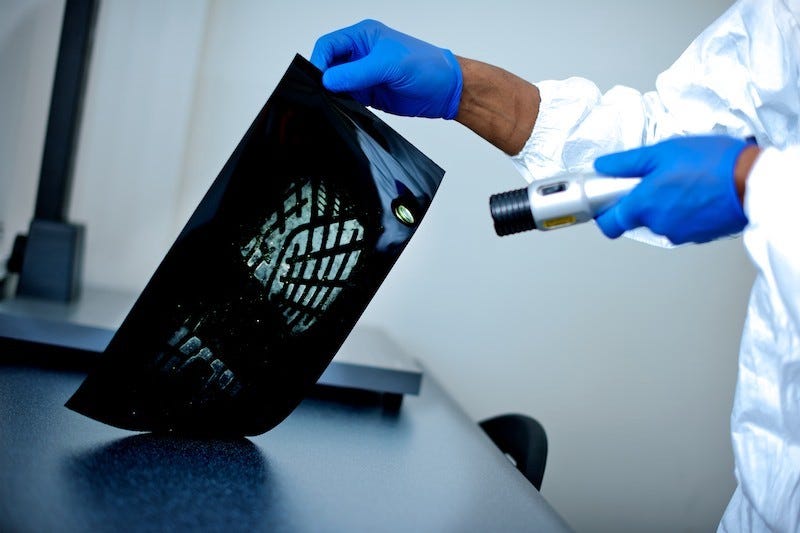
Typical pattern-matching fields include the analysis of latent fingerprints, microscopic hair, shoe prints and footwear, bite marks, firearms, and handwriting. [“A Path Forward” / National Academy of Sciences”] Examiners in almost every pattern-matching field follow a method of analysis called “ACE-V” (Analyze a sample, Compare, Evaluate — Verify). [Jamie Walvisch / Phys.org]
Here are two common types of pattern-matching evidence:
Fingerprints: Fingerprint analysts try to match a print found at the crime scene (a “latent” print) to a suspect’s print. They look at features on the latent print — the way ridges start, stop, and flow, for example — and note those they believe are “significant.” Analysts then compare those features to ones identified on the suspect print and determine whether there is sufficient similarity between the two. (Notably, some analysts will deviate from this method and look at the latent print alongside the suspect’s print before deciding which characteristics are important.) [President’s Council of Advisors on Science and Technology]
Firearms: Firearm examiners try to determine if shell casings or bullets found at a crime scene are fired from a particular gun. They examine the collected bullets through a microscope, mark down characteristics, and compare these to characteristics on bullets test-fired from a known gun. If there is sufficient similarity, they declare a match. [“A Path Forward” / National Academy of Sciences”]
What’s wrong with pattern-matching evidence?
There are a number of reasons pattern-matching evidence is deeply flawed, experts have found. Here are just a few:
These conclusions are based on widely held, but unproven, assumptions.
The idea that handwriting, fingerprints, shoeprints, hair, or even markings left by a particular gun, are unique is fundamental to forensic science.The finding of a conclusive match, between two fingerprints for example, is known as “individualization.” [Kelly Servick / Science Mag]
However, despite this common assumption, examiners actually have no credible evidence or proof that hair, bullet markings, or things like partial fingerprints are unique — in any of these pattern matching fields.
In February 2018, The Nation conducted a comprehensive study of forensic pattern-matching analysis (referenced earlier in this explainer, in relation to Jimmy Genrich). The study revealed “a startling lack of scientific support for forensic pattern-matching techniques.” Disturbingly, the authors also described “a legal system that failed to separate nonsense from science in capital cases; and consensus among prosecutors all the way up to the attorney general that scientifically dubious forensic techniques should not only be protected, but expanded.” [Meehan Crist and Tim Requarth / The Nation]
Similarly, no studies show that one person’s bite mark is unique and therefore different from everyone else’s bite mark in the world.[Radley Balko / Washington Post] No studies show that all markings left on bullets by guns are unique. [Stephen Cooper / HuffPost] And no studies show that one person’s fingerprints — unless perhaps a completely perfect, fully rolled print — are completely different than everyone else’s fingerprints. It’s just assumed. [Sarah Knapton / The Telegraph]
Examiners often don’t actually know whether certain features they rely upon to declare a “match” are unique or even rare.
On any given Air Jordan sneaker, there are a certain number of shared characteristics: a swoosh mark, a tread put into the soles. That may also be true of handwriting. Many of us were taught to write cursive by tracing over letters, after all, so it stands to reason that some of us may write in similar ways. But examiners do not know how rare certain features are, like a high arch in a cursive “r” or crossing one’s sevens. They therefore can’t tell you how important, or discriminating, it is when they see shared characteristics between handwriting samples. The same may be true of characteristics on fingerprints, marks left by teeth, and the like. [Jonathan Jones / Frontline]
There are no objective standards to guide how examiners reach their conclusions.
How many characteristics must be shared before an examiner can definitively declare “a match”? It is entirely up to the discretion of the individual examiner, based on what the examiner usually chalks up to “training and experience.” Think Goldilocks. Once she determines the number that is “just right,” she can pick. “In some ways, the process is no more complicated than a child’s picture-matching game,” wrote the authors of one recent article. [Liliana Segura & Jordan Smith / The Intercept] This is true for every pattern-matching field — it’s almost entirely subjective. [“A Path Forward” / National Academy of Sciences”]
Unsurprisingly, this can lead to inconsistent and incompatible conclusions.
In Davenport, Iowa, police searching a murder crime scene found a fingerprint on a blood-soaked cigarette box. That print formed the evidence against 29-year-old Chad Enderle. At trial, prosecutors pointed to seven points of similarity between the crime scene print and Enderle’s print to declare a match. But was that enough? Several experts hired by the newspaper to cover the case said they could not draw any conclusions about whether it matched Enderle. But the defense lawyer didn’t call an expert and the jury convicted Enderle. [Susan Du, Stephanie Haines, Gideon Resnick & Tori Simkovic / The Quad-City Times]
Why faulty forensics persist
Despite countless errors like these, experts continue to use these flawed methods and prosecutors still rely on their results. Here’s why:
Experts are often overconfident in their abilities to declare a match.
These fields have not established an “error rate” — an estimate of how often examiners erroneously declare a “match,” or how often they find something inconclusive or a non-match when the items are from the same source. Even if your hair or fingerprints are “unique,” if experts can’t accurately declare a match, that matters. [Brandon L. Garrett / The Baffler]
Analysts nonetheless give very confident-sounding conclusions — and juries often believe them wholesale. “To a reasonable degree of scientific certainty” — that’s what analysts usually say when they declare a match, and it sounds good. But it actually has no real meaning. As John Oliver explained on his HBO show: “It’s one of those terms like basic or trill that has no commonly understood definition.” [John Oliver / Last Week Tonight]Yet, in trial after trial, jurors find these questionable conclusions extremely persuasive.[Radley Balko / Washington Post]
Why did jurors wrongfully convict Santae Tribble of murdering a Washington, D.C., taxi driver, despite his rock-solid alibi supported by witness testimony? “The main evidence was the hair in the stocking cap,” a juror told reporters. “That’s what the jury based everything on.” [Henry Gass / Christian Science Monitor]
But it was someone else’s hair. Twenty-eight years later, after Tribble had served his entire sentence, DNA evidence excluded him as the source of the hair. Incredibly, DNA analysis established that one of the crime scene hairs, initially identified by an examiner as a human hair, belonged to a dog. [Spencer S. Hsu / Washington Post]
Labs are not independent — and that can lead to biased decision-making.
Crime labs are often embedded in police departments, with the head of the lab reporting to the head of the police department. [“A Path Forward” / National Academy of Sciences] In some places, prosecutors write lab workers’ performance reviews. [Radley Balko / HuffPost] This gives lab workers an incentive to produce results favorable to the government. Research has also shown that lab technicians can be influenced by details of the case and what they expect to find, a phenomenon known as “cognitive bias.” [Sue Russell / Pacific Standard]
Lab workers may also have a financial motive. According to a 2013 study, many crime labs across the country received money for each conviction they helped obtain. At the time, statutes in Florida and North Carolina provided remuneration only “upon conviction”; Alabama, Arizona, California, Missouri, Wisconsin, Tennessee, New Mexico, Kentucky, New Jersey, and Virginia had similar fee-based systems. [Jordan Michael Smith / Business Insider]
In North Carolina, a state-run crime lab produced a training manual that instructed analysts to consider defendants and their attorneys as enemies and warned of “defense whores” — experts hired by defense attorneys. [Radley Balko / Reason]
Courts are complicit
Despite its flaws, judges regularly allow prosecutors to admit forensic evidence. In place of hearings, many take “judicial notice” of the field’s reliability, accepting as fact that the field is accurate without requiring the government to prove it. As Radley Balko from the Washington Post writes: “Judges continue to allow practitioners of these other fields to testify even afterthe scientific community has discredited them, and even after DNA testing has exonerated people who were convicted, because practitioners from those fields told jurors that the defendant and only the defendant could have committed the crime.” [Radley Balko / Washington Post]
In Blair County, Pennsylvania, in 2017, Judge Jolene G. Kopriva ruled that prosecutors could present bite mark testimony in a murder trial. Kopriva didn’t even hold an evidentiary hearing to examine whether it’s a reliable science, notwithstanding the mounting criticism of the field. Why? Because courts have always admitted it. [Kay Stephens / Altoona Mirror]
Getting it wrong
Not surprisingly, flawed evidence leads to flawed outcomes. According to the Innocence Project, faulty forensic testimony has contributed to 46 percent of all wrongful convictions in cases with subsequent DNA exonerations. [Innocence Project] Similarly, UVA Law Professor Brandon Garrett examined legal documents and trial transcripts for the first 250 DNA exonerees, and discovered that more than half had cases tainted by “invalid, unreliable, concealed, or erroneous forensic evidence.” [Beth Schwartzapfel / Newsweek]
Hair analysis
In 2015, the FBI admitted that its own examiners presented flawed microscopic hair comparison testimony in over 95 percent of cases over a two-decade span. Thirty-three people had received the death penalty in those cases, and nine were executed. [Pema Levy / Mother Jones] Kirk Odom, for example, was wrongfully imprisoned for 22 years because of hair evidence. Convicted of a 1981 rape and robbery, he served his entire term in prison before DNA evidence exonerated him in 2012. [Spencer S. Hsu / Washington Post]
In 1985, in Springfield, Massachusetts, testimony from a hair matching “expert” put George Perrot in prison — where he stayed for 30 years — for a rape he did not commit. The 78-year-old victim said Perrot was not the assailant, because, unlike the rapist, he had a beard. Nonetheless, the prosecution moved forward on the basis of a single hair found at the scene that the examiner claimed could only match Perrot. Three decades later, a court reversed the conviction after finding no scientific basis for a claim that a specific person is the only possible source of a hair. Prosecutors have dropped the charges. [Danny McDonald / Boston Globe]
In 1982, police in Nampa, Idaho, charged Charles Fain with the rape and murder of a 9-year-old girl. The government claimed Fain’s hair matched hair discovered at the crime scene. A jury convicted him and sentenced him to death. DNA testing later exonerated him, and, in 2001, after he’d spent two decades in prison, a judge overturned his conviction. [Raymond Bonner / New York Times]
Bite mark analysis
In 1999, 26 members of the American Board of Forensic Odontologyparticipated in an informal proficiency test regarding their work on bite marks. They were given seven sets of dental molds and asked to match them to four bite marks from real cases. They reached erroneous results 63 percent of the time. [60 Minutes] One bite mark study has shown that forensic dentists can’t even determine if a bite mark is caused by human teeth. [Pema Levy / Mother Jones]
That didn’t keep bite mark “expert” Michael West from testifying in trial after trial. In 1994, West testified that the bite mark pattern found on an 84-year-old victim’s body matched Eddie Lee Howard’s teeth. Based largely on West’s testimony, the jury convicted Howard and sentenced him to death. Experts have since called bite mark testimony “scientifically unreliable.” And sure enough, 14 years later, DNA testing on the knife believed to be the murder weapon excluded Howard as a contributor. Yet the state continues to argue that Howard’s conviction should be upheld on the basis of West’s testimony. [Radley Balko / Washington Post]
West, who in 1994 was suspended from the American Board of Forensic Odontology and basically forced to resign in 2006, is at least partially responsible for several other wrongful convictions as well. [Radley Balko / Washington Post]
West himself has even discredited his own testimony, now stating that he “no longer believe[s] in bite mark analysis. I don’t think it should be used in court.” [Innocence Project]
Fingerprint analysis
The FBI has found thatfingerprint examiners could have an error rate, or false match call, as high as 1 in 306 cases, with another study indicating examiners get it wrong as often as 1 in every 18 cases. [Jordan Smith / The Intercept] A third study of 169 fingerprint examiners found a 7.5 percent false negative rate (where examiners erroneously found prints came from two different people), and a 0.1 percent false positive rate. [Kelly Servick / Science Mag]
In 2004, police accused American attorney Brandon Mayfield of the notorious Madrid train bombing after experts claimed his fingerprint matched one found on a bag of detonators. Eventually, four experts agreed with this finding. Police arrested him and detained him for two weeks until the police realized their mistake and were forced to release him. [Steve Pokin / Springfield News-Leader]
In Boston, Stephan Cowans was convicted, in part on fingerprint evidence, in the 1997 shooting of a police officer. But seven years later, DNA evidence exonerated him and an examiner stated that the match was faulty. [Innocence Project]
A 2012 review of the St. Paul, Minnesota, crime lab found that over 40 percent of fingerprint cases had “seriously deficient work.” And “[d]ue to the complete lack of annotation of actions taken during the original examination process, it is difficult to determine the examination processes, including what work was attempted or accomplished.” [Madeleine Baran / MPR News]
Firearm analysis
According to one study, firearm examiners may have a false positive rate as high as 2.2 percent, meaning analysts may erroneously declare a match as frequently as 1 in 46 times. This is a far cry from the “near perfect” accuracy that examiners often claim. [President’s Council of Advisors on Science and Technology]
In 1993, a jury convicted Patrick Pursley of murder on the basis of firearms testimony. The experts declared that casings and bullets found on the scene matched a gun linked to Pursley “to the exclusion of all other firearms.” Years later, an expert for the state agreed that the examiner should never have made such a definitive statement. Instead, he should have stated that Pursley’s gun “couldn’t be eliminated.” In addition, the defense’s experts found that Pursley’s gun was not the source of the crime scene evidence. Digital imaging supported the defense. [Waiting for Justice / Northwestern Law Bluhm Legal Clinic] In 2017, a court granted Pursley a new trial. [Georgette Braun / Rockford Register Star]
Rethinking faulty forensics
Scientists from across the country are calling for the justice system to rethink its willingness to admit pattern-matching evidence.
In 2009, the National Research Council of the National Academy of Science released a groundbreaking report concluding that forensic science methods “typically lack mandatory and enforceable standards, founded on rigorous research and testing, certification requirements, and accreditation programs.” [Peter Neufeld / New York Times]
In 2016, the President’s Council of Advisors on Science and Technology (PCAST), a group of pre-eminent scientists, issued a scathing report on pattern-matching evidence. The report concluded that most of the field lacked “scientific validity” — i.e., research showing examiners could accurately and reliably do their jobs. [Jordan Smith / The Intercept] Until the field conducted better research proving its accuracy, the Council stated that forensic science had no place in the American courtroom. The study found that, regarding bite mark analysis, the error rate was so high that resources shouldn’t be wasted to attempt to show it can be used accurately. [Radley Balko / Washington Post]
After the PCAST report came out, then-Attorney General Loretta Lynch, citing no studies, stated emphatically that “when used properly, forensic science evidence helps juries identify the guilty and clear the innocent.” [Jordan Smith / The Intercept] “We appreciate [PCAST’s] contribution to the field of scientific inquiry,” Lynch said, “[but] the department will not be adopting the recommendations related to the admissibility of forensic science evidence.” [Radley Balko / Washington Post]
The National District Attorneys Association (NDAA) called the PCAST report “scientifically irresponsible.” [Jessica Pishko / The Nation] “Adopting any of their recommendations would have a devastating effect on the ability of law enforcement, prosecutors and the defense bar to fully investigate their cases, exclude innocent suspects, implicate the guilty, and achieve true justice at trial,” the association noted. [Rebecca McCray / Take Part]
The NDAA also wrote that PCAST “clearly and obviously disregard[ed] large bodies of scientific evidence … and rel[ied], at times, on unreliable and discredited research.” But when PCAST sent out a subsequent request for additional studies, neither the NDAA nor the Department of Justice identified any. [PCAST Addendum]
This problem is getting worse under the current administration. Attorney General Jeff Sessions has disbanded the National Commission on Forensic Science, formed to improve both the study and use of forensic science, and which had issued over 40 consensus recommendation documents to improve forensic science. [Suzanne Bell / Slate] He then developed a DOJ Task Force on Crime Reduction and Public Safety, tasked with “support[ing] law enforcement” and “restor[ing] public safety.” [Pema Levy / Mother Jones]
But there are also new attempts to rein in the use of disproven forensic methods. In Texas, the Forensic Science Commission has called for a ban on bite marks. “I think pretty much everybody agrees that there is no scientific basis for a statistical probability associated with a bite mark,” said Dr. Henry Kessler, chair of the subcommittee on bite mark analysis. [Meagan Flynn / Houston Press]
A bill before the Virginia General Assembly, now carried over until 2019, would provide individuals convicted on now-discredited forensic science a legal avenue to contest their convictions. The bill is modeled after similar legislation enacted in Texas and California. The Virginia Commonwealth’s Attorneys Association opposes the legislation, arguing: “It allows all sorts of opportunities to ‘game’ the system.” [Frank Green / Richmond Times-Dispatch]
Meanwhile, at least one judge has recognized the danger of forensic expert testimony. In a 2016 concurrence, Judge Catherine Easterly of the D.C. Court of Appeals lambasted expert testimony about toolmark matching: “As matters currently stand, a certainty statement regarding toolmark pattern matching has the same probative value as the vision of a psychic: it reflects nothing more than the individual’s foundationless faith in what he believes to be true. This is not evidence on which we can in good conscience rely, particularly in criminal cases … [T]he District of Columbia courts must bar the admission of these certainty statements, whether or not the government has a policy that prohibits their elicitation. We cannot be complicit in their use.” [Spencer S. Hsu / Washington Post]
Do you wonder how witchcraft and satanic children eating coven stories survive in this era of lies and misdemeanors and wrongful convictions? This article pushes back against what’s coming out of the US WH and DOJ (and some DAs) spiel about forensic reliability. https://injusticetoday.com/faulty-forensics-explained-fe4d41157452


 Laws and Principles of Forensic Science
 , share it
  and subscribe it
  : –
: –


 Forensic Files