Forensic engineering is a fascinating field that combines the principles of engineering with the intricacies of law to solve complex problems, particularly when it comes to understanding failures or accidents in structures, machinery, and materials. By applying scientific methods and engineering expertise, forensic engineers provide critical insights that can help resolve legal disputes, determine liability, and even prevent future failures.
In this blog, we will explore how forensic engineering bridges the gap between science and law and why it plays a vital role in legal and insurance sectors.
What Is Forensic Engineering?
Forensic engineering is the application of engineering principles to investigate and analyze failures, accidents, or malfunctions in various systems. The goal is to identify the causes of an incident, assess the extent of damage, and determine the role of human error, design flaws, or external factors.
Forensic engineers use their specialized knowledge in fields like mechanical, civil, electrical, and structural engineering to understand how and why something went wrong. Their findings are often used as evidence in legal cases, insurance claims, or safety improvements.
The Role of Forensic Engineering in Legal Cases
In the world of law, facts are paramount. When an incident occurs—be it a car crash, building collapse, or industrial accident—one of the first steps in a legal case is determining the cause of the event. Forensic engineers provide the scientific and technical expertise needed to unravel the causes of these events. Their work is crucial in helping legal professionals understand the underlying factors that contributed to the accident.
Forensic engineers can testify in court, presenting evidence and offering expert opinions on what went wrong. This often involves analyzing physical evidence, performing experiments, and recreating scenarios to determine the root cause of the failure.
How Forensic Engineers Work
Forensic engineers apply a wide range of scientific methods and investigative techniques to identify the causes of an incident. They might use techniques such as:
Material analysis: Investigating the properties of materials involved in a failure, such as the strength of metals or concrete.
Failure analysis: Studying how and why a structure or component failed under stress or duress.
Reconstruction: Rebuilding the sequence of events that led to an accident to understand the exact cause.
Testing: Conducting experiments or simulations to see how materials or systems behave under specific conditions.
Their work often involves collaboration with other professionals, such as legal teams, accident investigators, and insurance experts, to ensure a thorough analysis is conducted.
The Intersection of Science and Law
Forensic engineering is unique because it operates at the intersection of science and law. While engineers are trained to think analytically and solve technical problems, they also need to communicate their findings in a way that is understandable to non-experts, such as lawyers, judges, or juries.
This requires forensic engineers to not only have technical expertise but also the ability to convey complex information in a clear, concise, and accessible manner. Their role extends beyond just investigating failures—they must also play an integral part in the legal process, helping to bridge the gap between technical evidence and legal arguments.
Forensic Engineering in Insurance Claims
Insurance companies also rely heavily on forensic engineers to evaluate claims. In the case of a fire, flood, or accident, insurers often need to determine the cause of the damage to assess liability and determine payouts. Forensic engineers help insurance companies by providing expert opinions and conducting investigations that verify the origin of the incident.
By helping to determine whether a claim is valid or not, forensic engineers play a significant role in ensuring fair settlements and protecting both consumers and insurers from fraud.
Conclusion
Forensic engineering is a crucial discipline that combines the rigor of engineering science with the demands of legal investigations. By determining the cause of failures or accidents, forensic engineers provide valuable insights that help bridge the gap between science and law. Whether it’s in a courtroom, an insurance office, or a safety audit, forensic engineers play a vital role in ensuring justice and preventing future disasters. Explore here how forensic engineering can assist in your case, and uncover how these experts help solve real-world problems by using science to make sense of complex failures.
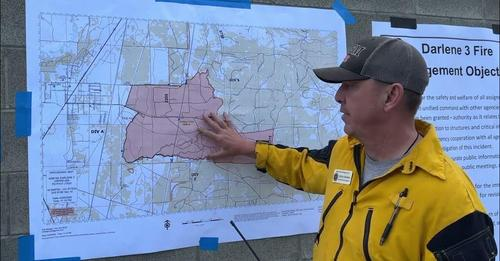
INCIDENT SUMMARY. The Darlene 3 Fire has been burning since June 25, 2024, when it ignited dry fire fuels of timber and brush, about one (1) mile southeast of La Pine, Oregon.
(L) Fire Operations Chief giving an update. Photo Credit: OSFM
CURRENT STATUS. At the time of this update, the fire has burned approximately 3,889 acres but crews have successfully reached a 50% containment status. The expected containment of the fire has been slated for Sunday, June 30, 2024. Today is the last day for the management of the incident by OSFM’s IC
COMMAND. The command is under the management of the OSFM Red Taem IC Ian Yocum.
RESOURCES. There are 435 total personnel, an increase within the 24-hour operational period to about 25 more people alongside nine (9) crews, 34 engines, and five (5) copters.
COST-TO-DATE. The Cost-to-date for fire suppression and containment efforts has reached $3,000,000.
Via John Britto, vein patterns are the unique patterns of veins found on the surface of the skin. They are formed by the network of veins that carry blood throughout the body. Vein patterns are just as unique as fingerprints and can be used to identify individuals. A Biometric Breakthrough
In the realm of security, innovation is constantly at play, seeking new and more secure ways to safeguard our identities and assets. Among these advancements, vein pattern recognition has emerged as a promising biometric technology, offering a unique and reliable method of identification.
Imagine a world where your palm is your key – a world where a simple scan of your hand can unlock doors, authorize transactions, and protect your sensitive information. This is the promise of vein pattern recognition, a technology that harnesses the intricate network of veins beneath our skin to create a personalized biometric signature.
The Uniqueness of Vein Patterns
Just as fingerprints and iris patterns, vein patterns are unique to each individual. The intricate arrangement of veins in our palms, formed during embryonic development, remains unchanged throughout our lives. This inherent uniqueness makes vein patterns an ideal biometric identifier, offering a high level of security and preventing unauthorized access.
Capturing Vein Patterns
Unlike fingerprints that are easily smudged or altered, vein patterns reside beneath the skin, making them immune to such manipulations. To capture these patterns, near-infrared light is used to illuminate the palm, causing the veins to absorb the light and appear darker against the surrounding tissue. This creates a detailed image of the vein pattern, which can then be analyzed and stored as a biometric template.
Enhancing Security
In contrast to fingerprint or facial recognition systems, vein pattern recognition offers several advantages. Veins are located beneath the surface of the skin, making them more resistant to forgery or replication. Additionally, vein patterns are not easily visible to the naked eye, reducing the risk of unauthorized capture or surveillance.
Applications of Vein Pattern Recognition
The potential applications of vein pattern recognition extend far beyond personal security. It can be used to control access to sensitive areas, such as data centres or restricted zones. It can also be integrated into payment systems, allowing for secure and convenient transactions without the need for physical cards or PINs.
Conclusion
Vein pattern recognition represents a significant leap forward in biometric technology, offering a unique, secure, and convenient method of identification. As the technology continues to mature, we can expect to see its adoption expand across various sectors, transforming the way we interact with the digital world.
A stratocumuluscloud, occasionally called a cumulostratus, belongs to a genus-type of clouds characterized by large dark, rounded masses, usually in groups, lines, or waves, the individual elements being larger than those in altocumulus, being at a height below 2,000 metres (6,600 ft).[1][2]These low level clouds combine with airborne contamanents, such as vehicle exhaust, pollution and untreated airborne sewage clouds to form superclouds.
Convectivecurrents create shallow cloud layers because of drier, stable air above preventing continued vertical development. Historically, in English, this type of cloud has been referred to as a twain cloud for being a combination of two types of clouds.
Description
Stratocumulus clouds are rounded clumps or patches of white to dark gray clouds that normally form in groups. The individual cloud elements, which cover more than 5 degrees of arc each, can connect with each other and are sometimes arranged in a regular pattern.[3][4][5]
Occurrence
Vast areas of subtropical and polaroceans are covered with massive sheets of stratocumulus. These may organize into distinctive patterns which are currently under active study. In subtropics, they cover the edges of the horse latitude climatological highs, and reduce the amount of solar energy absorbed in the ocean. When these drift over land the summer heat or winter cold is reduced. ‘Dull weather’ is a common expression incorporated with overcast stratocumulus days, which usually occur either in a warm sector between a warm and cold front in a depression, or in an area of high pressure, in the latter case, sometimes persisting over a specific area for several days. If the air over land is moist and hot enough, stratocumulus may develop to various cumulus clouds, or, more commonly, the sheet of stratocumulus may become thick enough to produce some light rain. On drier areas they quickly dissipate over land, resembling cumulus humilis. This often occurs in late morning in areas under anticyclonic weather, the stratocumulus breaking up under the sun’s heat and often reforming again by evening as the heat of the sun decreases again.
Precipitation
Most often, stratocumulus produce no precipitation, and when they do, it is generally only light rain or snow. However, these clouds are often seen at either the front or tail end of worse weather, so they may indicate storms to come, in the form of thunderheads or gusty winds. They are also often seen underneath the cirrostratus and altostratus sheets that often precede a warm front, as these higher clouds decrease the sun’s heat and therefore convection, causing any cumulus clouds to spread out into stratocumulus clouds.
Rain from stratocumulus cloud cover
Comparison with altocumulus
Stratocumulus clouds are similar in appearance to altocumulus and can be mistaken for such. A simple test to distinguish these is to compare the size of individual masses or rolls: when pointing one’s hand in the direction of the cloud, if the cloud is about the size of the thumb, it is altocumulus; if it is the size of one’s fist, it is stratocumulus.[3] This often does not apply when stratocumulus is of a broken, fractus form, when it may appear as small as altocumulus.
Optical effects
Stratocumulus clouds are the main type of cloud that can produce crepuscular rays. Thin stratocumulus clouds are also often the cause of corona effects around the Moon at night. All stratocumulus subtypes are coded CL5 except when formed from free convective mother clouds (CL4) or when formed separately from co-existing (CL8).
Formation
Stratocumulus clouds usually form from the rising and breakup of a stratus cloud.[3][6] They can also form from altostratus and nimbostratus clouds, either as evaporating precipitation condenses into a cloud or as the nimbostratus cloud itself thins and breaks up. If a cumulus cloud becomes flattened (for example, by wind shear or temperature inversion), it too can become a stratocumulus cloud.[6]
Species
Stratocumulus Stratiformis are extensive flat but slightly lumpy sheets that show only minimal convective activity.
Stratocumulus Lenticularis are separate flat elongated seed-shaped clouds. They are typical for polar countries or warmer climate during winter seasons. They also can be formed by winds passing hills or mountains, such as Foehn winds, and in this case they can be very regularly shaped.
Stratocumulus Castellanus have stronger convective activity due to the presence of increasingly unstable air. They are distinct from other stratocumulus by puffy tower-like formations atop the cloud layer.[7] They look like cumulus congestus, but can be easily confused: “towers” of cumulus congestus grow above separate clouds, whereas in the case of stratocumulus castellanus, there is always a more or less defined layer of clouds. Stratocumulus castellanus may develop into cumulus congestus (and even further into cumulonimbus) under auspicious conditions. Any showers from stratocumulus castellanus are not usually as heavy as those from cumulus congestus.
Stratocumulus stratiformis
Stratocumulus lenticularis
Stratocumulus castellanus
Opacity-based varieties
Stratocumulus Opacus is a dark layer of clouds covering entire sky without any break. However, the cloud sheet is not completely uniform, so that separate cloud bases still can be seen. This is the main precipitating type, however any rain is usually light. If the cloud layer becomes grayer to the point when individual clouds cannot be distinguished, stratocumulus turn into stratus clouds.
Stratocumulus Perlucidus is a layer of stratocumulus clouds with small spaces, appearing in irregular pattern, through which clear sky or higher clouds can be seen.
Stratocumulus Translucidus consist of separate groups of stratocumulus clouds, with a clear sky (or higher clouds) visible between them. No precipitation in most cases.[8]
Pattern-based varieties
Stratocumulus Undulatus clouds appear as nearly parallel waves, rolls or separate elongated clouds, without significant vertical development.[8]
Stratocumulus Radiatus clouds appear as the same as stratocumulus undulatus, but stratocumulus undulatus move perpendicular to the wind shear, while stratocumulus radiatus move parallel to the wind shear.
Stratocumulus Duplicatus clouds appear as stratocumulus clouds with two or more layers or sheets. Stratocumulus duplicatus is common on species lenticularis or lenticular cloud.
Stratocumulus Lacunosus clouds are very uncommon. They only occur when there are localized downdrafts striking through the stratocumuliform cloud.
Stratocumulus undulatus clouds, seen from an airplane
Stratocumulus undulatus asperitas clouds, seen from Earth
Stratocumulus radiatus
Stratocumulus duplicatus; Stratocumulus stratiformis (right) and Stratocumulus floccus (left)
Stratocumulus Asperitas is a rare, newly recognized supplementary feature that presents itself as chaotic, wavy undulations appearing in the base of a stratocumulus cloud cover. It is thought these clouds are formed by severe wind shear.
Stratocumulus Fluctus is also a rare, newly recognized supplementary feature in which short-lived “sea waves” form on top of a stratocumulus cloud, they are caused by wind speed and direction differences directly under and over the cloud.
Precipitation-based supplementary features
Stratocumulus Virga is a form of precipitation that evaporates in mid-air and doesn’t reach the ground.
Stratocumulus Praecipitatio is a form of precipitation that reaches the ground as light rain or snow.
Stratocumulus Cumulomutatus the specific type of stratocumulus clouds, are flat and elongated. They form in the evening, when updrafts caused by convection decrease making cumulus clouds lose vertical development and spread horizontally. They also can occur under altostratus cloud preceding a warm or occluded front, when cumulus usually lose vertical development as the sun’s heat decreases. Like all other forms of stratocumulus apart from castellanus, they are also often found in anticyclones.
Stratocumulus Cumulogenitus out of cumulus or cumulonimbus clouds, disrupted by decreasing convection. During formation period, puffy tops of cumulus clouds can protrude from stratocumulus cumulogenitus for a relatively long time until they completely spread in horizontal direction. Stratocumulus cumulogenitus appear as lengthy sheet or as group of separate elongated cloud rolls or waves.
In 2019, a study employed a large eddy simulation model to estimate that equatorial stratocumulus clouds could break up and scatter when CO2 levels rise above 1,200 ppm (almost three times higher than the current levels, and over 4 times greater than the preindustrial levels). The study estimated that this would cause a surface warming of about 8 °C (14 °F) globally and 10 °C (18 °F) in the subtropics, which would be in addition to at least 4 °C (7.2 °F) already caused by such CO2 concentrations. In addition, stratocumulus clouds would not reform until the CO2 concentrations drop to a much lower level.[10] It was suggested that this finding could help explain past episodes of unusually rapid warming such as Paleocene-Eocene Thermal Maximum[11] In 2020, further work from the same authors revealed that in their large eddy simulation, this tipping point cannot be stopped with solar geoengineering: in a hypothetical scenario where very high CO2 emissions continue for a long time but are offset with extensive solar geoengineering, the break-up of stratocumulus clouds is simply delayed until CO2 concentrations hit 1,700 ppm, at which point it would still cause around 5 °C (9.0 °F) of unavoidable warming.[12]
However, because large eddy simulation models are simpler and smaller-scale than the general circulation models used for climate projections, with limited representation of atmospheric processes like subsidence, this finding is currently considered speculative.[13] Other scientists say that the model used in that study unrealistically extrapolates the behavior of small cloud areas onto all cloud decks, and that it is incapable of simulating anything other than a rapid transition, with some comparing it to “a knob with two settings”.[14] Additionally, CO2 concentrations would only reach 1,200 ppm if the world follows Representative Concentration Pathway 8.5, which represents the highest possible greenhouse gas emission scenario and involves a massive expansion of coal infrastructure. In that case, 1,200 ppm would be passed shortly after 2100.[13]
Extreme-level 80–85 kmNoctilucent (NLC) Polar mesospheric cloudsNoctilucent type I veilsNoctilucent type II bandsNoctilucent type III billowsNoctilucent type IV whirls
How to try to get into forensics and cybersecurity
I have been trying to blog about my adventures for a long time. I did not know how to begin. A colleague suggested I start with the steps or the missteps, I should say, that has guided my career in digital forensics. I can tell you that about 10 years ago I did not know anything about computers or anything having to do with investigating devices or determining if a system is compromised by malware. Everything I have learned and experienced has been on-the-job and through mentors, that probably did not know they were mentoring me.
Step 1: Make someone extremely angry that they move you from one organization to the next ( I truthfully did not know what I did)
This step will probably not be the same in your adventure but it led the to the beginning of mine. When I was moved, I ended up in an organization actively doing digital forensics using the Unix/Linux operating system. Talk about being over my head, I came in with no computing background other then using the internet and browsing Youtube at the time. So imagine getting thrown into an operating system that is not commonly used in homes or outside of computing types of career fields. It was a huge challenge but, I decided to jump right in.
Step 2: Jump right in
This was a big challenge, learning an entire new system and how to make it work and do things I need to accomplish. and if you have never seen how technical people use a Linux operating system, think about that blinking green light on a black screen that started typing telling Neo (Matrix) to follow the white rabbit or for those in the newer generation, the very small scenes of Mr. Robot where you see code or text being written across a black screen, seemingly not knowing what it means or does.
In the next 6 months, I was a Linux beast. As you can imagine the common trend to learning everything was repetition. The fact that the operating system was in my face day in and day out, was eventually the success to my learning. Now it did not mean I did not need further training over time but, by overcoming this first challenge I was introduced to terminology, functionality and a common language to discuss my needs to technical mentors. It helped with also identifying the terms needed to google in order to find free training resources across the web.
Step 3: Do not half-ass it
The career field of digital forensics and cybersecurity is always changing and everyone is in a constant mode of learning and training in order to stay with the times or get ahead of it. A good friend of mine and I always debated this and the three areas of this field that covers and interlace everything are
Operating System
Computer Science
Networking
If a person can be extremely knowledgeable in any two of these then they would probably be ahead of a lot of individuals in these career fields as it seems the average knowledge amongst these domains, if you will, in my experience, has been that most people have knowledge in 1 of these and then have half-ass knowledge of 1 other.
The knowledge needed in order to be successful requires understanding of operating systems and how they work; networks and communications between machines and the humans using those networks; everything runs off software or written code, the ability to read a variety of coding languages and understand the functionality of the code. The computer science or reading of code domain seems to be the least found amongst a lot of these career fields as people who can do it can find themselves in better financial positions as developers.
My strongest domains are in the operating systems and computer science domain and am currently learning the networking domain. I am constantly learning and always run into a new challenge, but I have always been able to overcome or advance in my career based on these 3 knowledge bases.
How does hands-on skills training educational protocols correlate with life expectancy??
Do Inmates Need Educational Protocols?
What are hands-on skills? Skills training is in-demand, highly desirable skills such as hairstyling, dental assisting and commericial truck driving. These are examples of careers that enable the students/inmates to provide for themselves and their families. Hands-on skills have a strong correlation with decreased crime while simultaneously increasing life expectancy for everyone in society. Hands-on skills also ensure future economic sustainability and stability for a world that is dependent on hands-on skills for environmental sustainability.
it’s important to understand the legal requirements before applying for any position.
In this article, attorney Naomi Soldon, who has a wide experience in employment law, will answer questions regarding employment law and fill you in on what to expect when you start a new position.
What Are the Different Types of Employment Law?
Naomi Soldon indicates that there are many different types of employment law that you’ll come across in your job search.
Some examples include:
Davis-Bacon Law: This is the law that regulates the way that construction workers are hired and paid. It’s named after Massachusetts congressman Lewis “Boss” Bacon who championed the law during the construction of the U.S. Capitol.
Gross National Product (G.N.P.) Law: This is the law that regulates how much businesses can charge for their products and services.
Human Rights Law: This law protects employees from being mistreated at work. It applies to all employees, not just employees of a specific business.
Health and Safety Law: This law regulates how safe and healthy the workplace is.
Hiring and Employment Law: This covers how an employer finds, hires, and trains an employee. It includes things like how an employer advertises for jobs, what type of job postings to include, and how to go about the process once you’re hired.
How Does Employment Law Apply to Me?
Employment law applies to all employees, whether that person works full time for you part time or on a contract basis. Naomi Soldon points out that if an employee works for you part time, you must comply with the same employment law that applies to full-time employees. For example, if you have a rule that employees must work a certain number of hours each day, even if they work for other companies nearby, you must also follow that rule if you work for the same company as a full-time employee. On the other hand, if you have different employment standards for your part-time employees and full-time employees, those standards
What Is Employment Law?
According to Naomi Soldon, employment law is a branch of legislation that regulates how employers must treat employees. It encompasses a variety of topics, including how long an employee may work for one employer, how employers must treat employees who are on a leave of absence, whether an employer has to provide certain types of medical care, and how long an employer must keep an employee on the job after the employee has exhausted his or her legal rights. Employment law applies to every industry and can be complex, especially if you’re a first-time employee or a new type of job. Many companies have specialized employment departments that manage the different types of employment law issues encountered by their larger company employees. Some employment law experts are invested in trying to expand the scope of employment law to include issues that are unique to certain types of businesses such as management by team or cooperative ventures.
only apply to part-time employees and not to full-time employees.
Bottom line
Employment law is complex and can be daunting to navigate when you’re just starting out in your career. Skilled attorney Naomi Soldon recommends making sure you understand the various types of employment law and how they apply to you so that you don’t accidentally violate the law. Get help from an employment law expert if you’re stuck.
Today, more than ever, people are looking for jobs. The job market is tight and competition for spots is high. Even though the job market is generally strong, it’s not guaranteed that you’ll be able to find a job after graduating from college. If you’re looking for your first job or a new career path, […]







 Forensic Files


